Hugging a Butterfly

Today a friend shared a link to an article on the Scary Mommy website, on my Facebook page. I read it with tears in my eyes. The author writes about the slow process of realizing their son had needs that weren’t being met; diagnosing him with ADHD; and, finally, reluctantly, starting medication for him. His reaction after his first day of medication was what made me tear up. This is what his mom wrote:

For the first time in … well, maybe his entire life, Colin seemed truly relaxed. But not in a stoned, disconnected way; more like a relieved way. Like someone who has finally been unburdened from the baggage that has unfairly saddled them for so long.

“I feel so much better, Mom,” he told me. “Why couldn’t we have done this from the start?”

His reaction was very much what my own feeling was, when I started ADHD medication. Relieved. Unburdened. And so much better. Why did I wait so long to admit I needed help? Pride, fear, and inability to see clearly and objectively from the haze of my condition. Medication isn’t for everyone with ADHD, but this story struck home to me. Beautiful.

– See more at: http://www.scarymommy.com/hugging-a-butterfly/#sthash.ZCAANp23.dpuf

Hundreds and Thousands and Millions of Sprouts

Well, not quite that many, but dozens, anyway.

We have a big rectangular garden bed with rounded ends, built up with a brick wall to make it level on a slight incline, that’s perfect for veggies. We call it the oval garden, which isn’t quite satisfactory, since it’s not oval, but of course neither is it rectangular. Anyway. This garden was planted with scattered dahlias when we moved in last spring, and there were maybe half a dozen tulips at the far end. I shifted the dahlias when they started to sprout late in the spring, interfering with my rows of peas. They were shrimpy and insignificant. I doubted they’d survive. However, they not only survived, they thrived, producing vividly colored flowers until frost killed them off in the fall. I loved them — but there were far too many of them for the veggie patch. So I determined to shift them, and the tulips.

Obviously this should have been done in the fall, as soon as the foliage died off. But the ground froze before I got to them…and then the holidays were all-consuming…and I just didn’t get to it. So last week I decided to tackle the job at last, hoping I wasn’t too late.

Three tulip sprouts had popped up already. Not too bad, I thought. There were only about half a dozen last year. A little digging, and I’ll have them all out in no time. Ha. Hahaha. Little did I know that tulips multiply! There were DOZENS of the things lurking under the soil, all with yellow-green baby sprouts. I dug…and dug…and dug. Forkful after forkful of bulbs, from barely visible babies to great big fat ones. I filled half of our little red wagon with them. Here are a few pictures of the process: [I have placed pictures here six times now. Each time, in the previewed or published post, they appear at the top of the page instead. I give up. They look prettier there, anyway. Maybe tomorrow it will reset and they’ll remember where they’re supposed to be.]

I replanted as many as I could that afternoon before dark, burying them under trees and in beds all along our winding driveway. I have no idea if this was the correct solution, but since they’d already sprouted underground, putting them back into the ground seemed logical. Then I gave two dozen more to a friend. And then I spent an hour or so the next day planting even more of the things, with Niko’s help. So. Very. Many. (Yes, he’s wearing shorts. And orange-on-orange. How could I deny his need to be a pumpkin that day?)

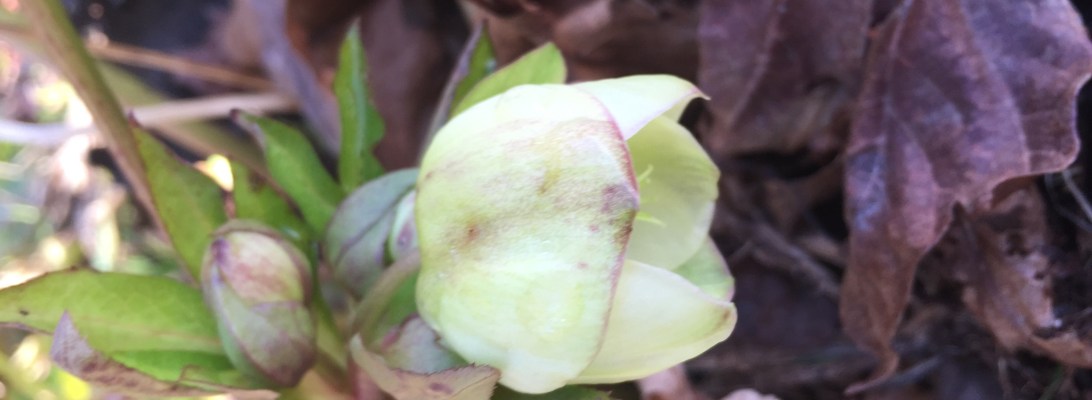
While I was planting out the tulips, I got distracted by weeds. My ADHD took over, and before I knew it I’d weeded a whole bed while the last six bulbs waited to be planted. And then I was distracted from my distraction by these lovely blooms that my weeding uncovered:

And by these shoots — young rhubarb! Exciting!

Baby rhubarb in January, thriving under leaf mulch and burlap.

Then I tackled the dahlias. These should be easy, I thought. They were so small last spring. Easy peasy. WRONG. They multiply, too! The tubers were monstrous, many-bulbed things, with each bulging root system easily eight inches across. I got as much dirt off as possible, and lay them on paper in a big feed bucket the size of a small pond. (Seriously, you could feed a whole herd of horses from that thing.) I’ll divide and plant those monsters when the frost danger is past…and no doubt I’ll have some to give away, too.

One final tidbit: Sofia sound asleep after an exhausting afternoon of riding on my back while I dug things up and buried other things.

Sound asleep. Relaxing on Mom's back is exhausting!
Sound asleep. Relaxing on Mom’s back is exhausting!

Next project: a long raised bed of overcrowded gladioli to dig up, divide, replant, and (of course) share with friends. Should be easy, right?

“You’re Pretty, Mommy.”

Lately Niko has been giving me kind compliments. “I like your hair, Mommy,” he’ll say, petting me gently as if I’m a shaggy-haired dog. Sometimes he’ll tell me out of the blue, “I like you!” or ” I love you soooo much!” Or, “You smell so good!” he’ll tell me as he lays his head on my shoulder for a hug. The last time he pulled that particular one out, I hadn’t managed to get a shower for about three days and was sweaty and dusty after sweeping, mopping, and vacuuming the house, so I think he has a long way to come as far a distinguishing a good human smell from a less marvelous one. But the thought is sweet, anyway.

A couple of days ago, he announced, “I think Daddy should bring you some pretty flowers when he comes home.” (Aaron was on a business trip.)

“Really?” I asked. “Why do you think that?”

“To show you how much he loves you,” he explained. “Because he loves you lots.”

It made me think. Kids Niko’s age, while they’re working on establishing a personal identity, are still little imitators. Niko’s sweetness and kindness weren’t created in a vacuum. His outpouring of love to me is in direct imitation of his dad. And it’s dawning on me that this is, in fact, a gift to me from my amazing husband.

When I fix Niko a just-right sandwich and he says, “OH! Thank you, Mom! That is so nice of you to make me a sandwich!” I realize that he’s been paying attention to his dad, who thanks me every single time I serve a meal…even if it’s burnt. Or late. (Or both.) Even if he’d have done it better himself. Every time.

When Niko gives me those sometimes inaccurate compliments on my hair or the way I smell, it’s because he hears his dad say the same thing. “Your mom is so beautiful, isn’t she?” Aaron will say to Niko, and Niko answers, “Yes! You’re pretty, Mom!”

Or Aaron might say to Niko, “Your mom is really special. I love her a lot. Do you love her too?” And Niko says, “I love you soooo much, Mom!”

So when my son gives me these funny, adorable compliments, it’s because his dad is teaching him how to express love and admiration. His dad is teaching him that love shouldn’t be hidden away. And in doing so, my husband is giving me the gift of a quirkily loving child.

I couldn’t think of any better gift.

Sautéed Wild Mustard Greens with Dock, Garlic and Onions

I’m going to have to keep my eyes open for some of these. I bet they grow around here!

Kelly's avatarLittle Fall Creek

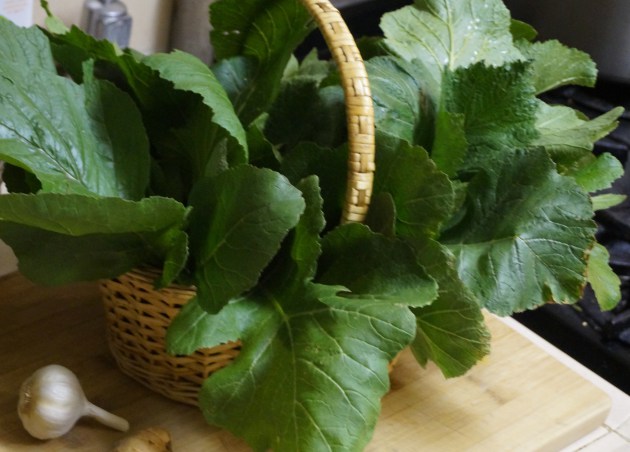
We gather wild greens from the field daily, and mustard is currently the  star attraction– buds as broccoli, flowers and young greens in salads, and cooked older leaves. I think these hold up even better, in flavor and texture, to sauteing than does spinach. We often mix with dock leaves for a bright lemony accent.

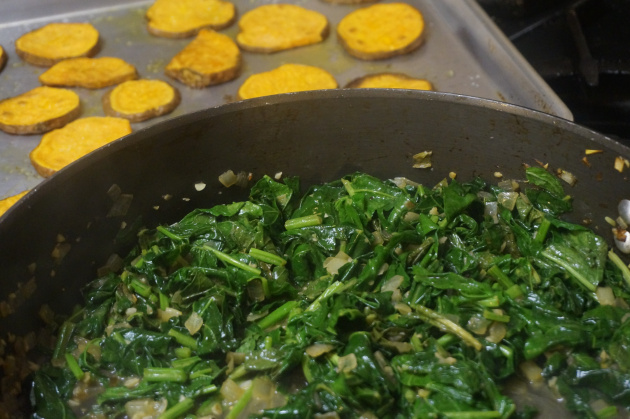
Mustard greens are easy to prepare, incredibly healthful, and delicious. They are a wonderful side to all sorts of meat, fish, polenta, or grain. We enjoyed them last night with fried pork chops and sweet potatoes.

Sautéed Wild Mustard Greens with Dock, Garlic and Onions

The dash of hot sauce adds no heat to speak of– only a bit of vinegar and spark of extra flavor. Serves 3-4.

2 T butter

1 white onion, chopped medium

4 cloves garlic, minced

1/4 cup dry white wine

3 large handfuls of large mustard leaves, stems trimmed…

View original post 145 more words

A Lying Liar and a Singer Sewing Machine

Recently I read (and watched) a story about the first lie the author ever told as a child. Years later, the author — now a teacher — still vividly remembers the experience. Reading his story, I realized that my own first lie is just as indelibly branded on my memory.

I was four years old. It was my family’s first year living in a tiny cabin next to the Stikine River in British Columbia, where we trapped furs for income, hunted and fished for meat, and grew a huge garden full of vegetables that we preserved for winter food. In that remote place, there was no electricity, unless we used precious fuel to run a generator — something we did only on laundry days to run our ancient cylindrical wringer washing machine.

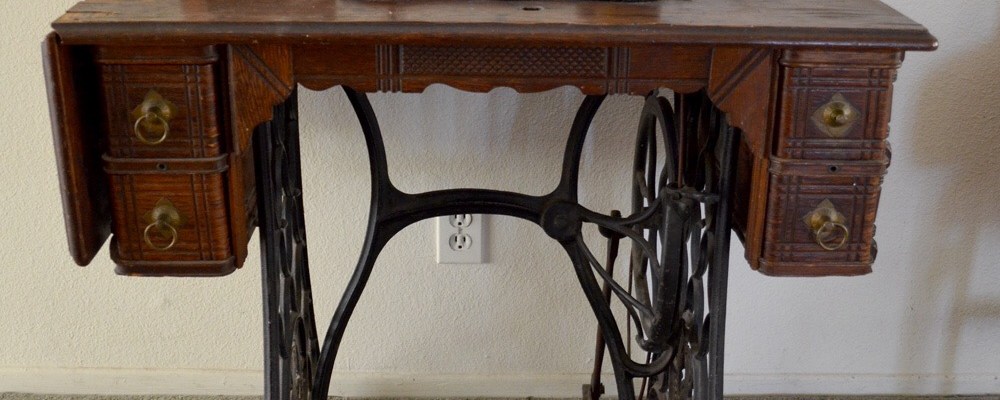
My mother’s sewing machine was a worn but elegantly beautiful foot-treadle-powered Singer sewing machine with a wooden cabinet and a painted metal head, which I called the “horse.” She doesn’t have it anymore, but I found a picture of a nearly identical machine (this one has a wooden cover that’s shown in a different photo; my mother’s allowed the top to rotate down into the cabinet) at Copycat Collector:

A beautiful Singer sewing machine.

I loved the whir of the flywheel and belt and the rhythmic thump of the treadle when my mom sewed. But most of all, I was fascinated by the shining blur of the speeding needle.

My mother had been sewing one afternoon while I watched, when she found she needed something outside. “I’ll be back in a minute,” she said. “DON’T TOUCH THE SEWING MACHINE.”  I had just learned how to time one minute on the clock. I sat myself down on a chair below the pear-shaped wooden clock my dad had made, and kept my eyes fixed on the second hand. It went all the way around one time, but my mother was nowhere to be seen. Perhaps I’d been mistaken in my attempt to count off a minute. I watched again. Still no mother. Clearly, she had gotten lost and was never returning.

Tears welled up, my chin wobbled, and I opened my mouth for a hearty wail — which was stopped, abruptly, by my realization that I was not just motherless, I was unsupervised. I could do whatever I wanted. I could…I could…

I could touch the sewing machine.

I approached the shining, forbidden machine slowly, carefully. Reached out one finger. Stroked the painted design. Strummed the leather belt. Examined the shining silver balance wheel (that’s the small wheel at the end of the head, for those that care). I gloried in the machine’s beauty, now all mine. Finally, I ventured to touch the most dreaded part of the never-to-be-touched sewing machine: the needle. I slid my finger under the point, relishing the delicate scratch of the sharp tool. Then I rested my finger below the needle, on the toothy feed dogs (the teeth that pull the fabric forward), and eyed the wheel speculatively. When turned by hand or by the belt connected to the treadle down below, the silver balance wheel put a series of hidden cogs into motion, causing the needle to flash up and down. I’d seen my mother turn the wheel many times with a practiced hand, to position the needle correctly or to boost the motion when starting a seam so as to put less strain on the leather belt. I was tall enough to stretch one hand to the wheel while resting my finger under that seductive needle. My mind raced with the possibilities. Finally, motherless, I could do what I’d always (I now knew) wanted to do: race the needle.

I was positive I could do it. Surely my finger could move faster than the needle. I would turn the wheel slowly at first, for practice. But I failed to take physics into account. Turning the balance wheel slowly still caused the needle to flash oh, so very quickly, right into my waiting finger. It slashed a red furrow into the side of my finger, which quickly welled with blood. I stared, aghast. My beloved machine had betrayed me. Suddenly, being motherless lost its appeal. I opened my mouth and bellowed: “MOMMMMMMYYYYYY!”

Instantly, like magic, there she was, wrapping me in her arms, soothing my tears, prying my hand open to see the source of the blood, and demanding sternly, “Did you touch the sewing machine?”  And I, weeping with the shock of the needle’s cruelty, streaming blood from a needle-shaped gash in my finger, sobbed, “N-n-n-noooooo!”

For years afterward, I believed that I’d successfully convinced my mother that I hadn’t touched the machine. I wrestled with guilt and shame: I had lied to my mother. I had deceived. I was almost certainly going straight to hell. The experience was so wrenching — the lie, not the gash — that I never lied again. Ever. I bent the truth slightly on occasion; I evaded; I distracted and misdirected when necessary; but I never a lie. To this day, I can’t do it. It’s simply impossible. I relive the horrified, ashamed ache in my belly that came with the lie, and I just can’t manage it. And it’s all because I was betrayed by a beautiful piece of mechanical art.

Glamour Girl

I have a problem. Maybe it’s vanity, maybe it’s rigidity of routine, but whatever the cause, it’s this: I cannot leave my home without makeup. In fact, if I don’t apply makeup even on a day I plan to spend home alone with kids and no husband, washing dishes and digging in the garden, I still feel oddly incomplete. It feels like something minor yet nearly essential is missing, like a fingertip or an earlobe. It feels simply wrong.

I wish I weren’t like this. I wish I didn’t feel the need to extra-feminize and perfect my face for even the most simple human encounter. I wish I weren’t still writhing in shame for having greeted the UPS carrier yesterday with a face bare of makeup except for mascara and tinted lip balm (plus, unfortunately, Capri-length yoga pants paired unflatteringly with too-long socks). I wish I could wear cosmetics as a deliberate, occasional choice, rather than a compulsion.

I remember when my rigid routine began. I was maybe fourteen. Makeup was new to me, and I was at the age when kids on the Christian commune where I grew up were sometimes given occasional, informal lessons on etiquette and rather old-fashioned comportment. For girls, this involved exercises like walking with books on our heads, standing with our feet angled just so, practicing lowering ourselves gracefully with knees together and spines straight to retrieve a dropped item, and setting a table correctly.

And we learned to apply makeup. Just like the lessons in comportment, this was informal — and not, I realize now, meant to be part of that curriculum. One of the “aunts,” as we called many of the women around our mothers’ ages, was a Mary Kay consultant, and she would sometimes hold parties at which the teenage girls were especially welcome. She’d show us, step by step, exactly what to do: how to apply makeup in a ladylike and reasonably modest manner. She gave us pointers like “Never wear eyeliner without lipstick” and “Always put on foundation.” And she told us, gently, firmly, and repeatedly, that a lady always applies makeup before leaving her home.

I know she wanted to give us an edge in life, the advantage of beauty and confidence. She couldn’t have known to what ridiculous extent I would internalize her advice. I don’t know why I was so susceptible to suggestion in this area, but somehow her iron-strong will, clothed as it was in charm and elegance, imposed itself on me.

My mother rarely wore any significant amount of makeup, but she had no problem with my own dabbling. She even showed me the basics and helped me buy and apply my first cosmetics. And, possibly knowing that I was in danger of being influenced away from her nearly-feminist tendencies, she gave me her own makeup advice: “Use makeup to highlight your best features, not to paint on a new face.” It’s good advice, I think. Thanks to her, I keep my makeup minimal, sometimes nearly invisible. But it’s there.

These days, Sofie is extra-needy in the morning before breakfast, and I often find myself applying makeup with her on my hip. She watches in the mirror, smiling to see our faces together. Her baby hands reach out for my tools. Occasionally her success results in mascara-blackened fingers or a scraping of blush under her tiny fingernails. Sometimes I hand her a fluffy brush, and she chuckles as she strokes first her face, then mine. I love sharing these moments, but part of me cringes.

I want you to be braver than I am, I want to tell her. I want you to be bold. I want your confidence in yourself to be unconnected to your makeup skills. I want you to show the world your real face without shame.

But another part of me looks forward to teaching her how it all works. First foundation, next cover-up, now blush… Never wear eyeliner without lipstick… Use lip liner so your lipstick doesn’t smudge. I want to dive with her into a new world of grown-up glamour. Nail polish, high heels, the perfect stockings for that special party dress.

In the best scenario, we’ll find balance. She won’t hear a lovingly firm, well-meaning, Southern-tinged voice in her head, telling her that a lady should never leave her house without makeup. I’ll remind her that cosmetics should be used to complement her best features, not give herself a new face. And I’ll give her my own advice: “Only wear makeup if you feel like it. Take a break now and then. Be brave. Don’t let anyone else tell you how your face should look.”

And maybe, just maybe, Sofia will go into the world with confidence and beauty, free from the need to change her face to satisfy someone else’s idea of what women should look like.

IMG_2197.JPG

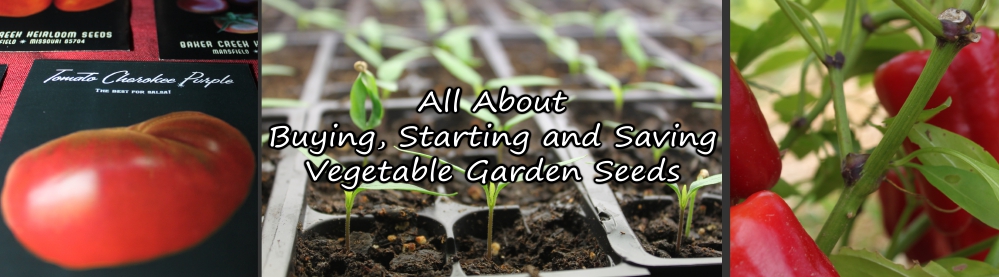
All About Buying, Starting and Saving Vegetable Garden Seeds

This article on saving seeds caught my eye. I like the idea of that level of self-sufficiency. I like thinking about the plants in my garden, and the food we eat, coming entirely from our own plants, with no in-between seed purchases. Something to think about.

oldworldgarden's avatarOld World Garden Farms

Ever since last Sunday’s Farm Update article on our Top 8 Vegetable Plants, (see: 8 Must-Grow Varieties ) our inbox has been inundated with questions about our seed starting, growing and saving process.

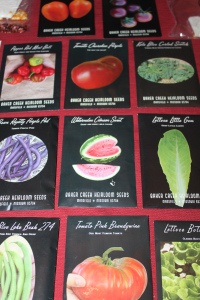
Some of our heirloom seeds from Baker Creek Some of our heirloom seeds from Baker Creek

Every question from where do we get our seeds – to when and how we start them indoors – to how and what seeds we save from year to year.  So we thought we would take today’s farm update to share our seed saving and growing process, and help to answer some of the questions that have been coming in to the blog.  We have also included links in each section to more in-depth articles on each topic. So here we go:

How and Where Do You Buy Your Heirloom and Organic Seeds?

Probably the most asked question to our email inbox and blog last week was “Where do you buy…

View original post 936 more words

Saving Seeds

This article on saving seeds caught my eye. I like the idea of that level of self-sufficiency. I like thinking about the plants in my garden, and the food we eat, coming entirely from our own plants, with no in-between seed purchases. Something to think about.

Read it here: All About Buying, Starting, and Saving Vegetable Garden SeedsIMG_1947.JPG

(Image from http://www.howtosaveseeds.com)

Brew Time

Aaron is brewing! Last week he started a hazelnut brown ale, and this morning he bottled it. Today’s project: racking (transferring) this week’s lemongrass lime Kolsch into a new carboy for its secondary fermentation. Even this early in the process, the hazelnut ale has a smooth, warm flavor, and the Kolsch has a light, citrusy, summery taste. They’re going to be a superb addition to our collection of home-brewed ales.