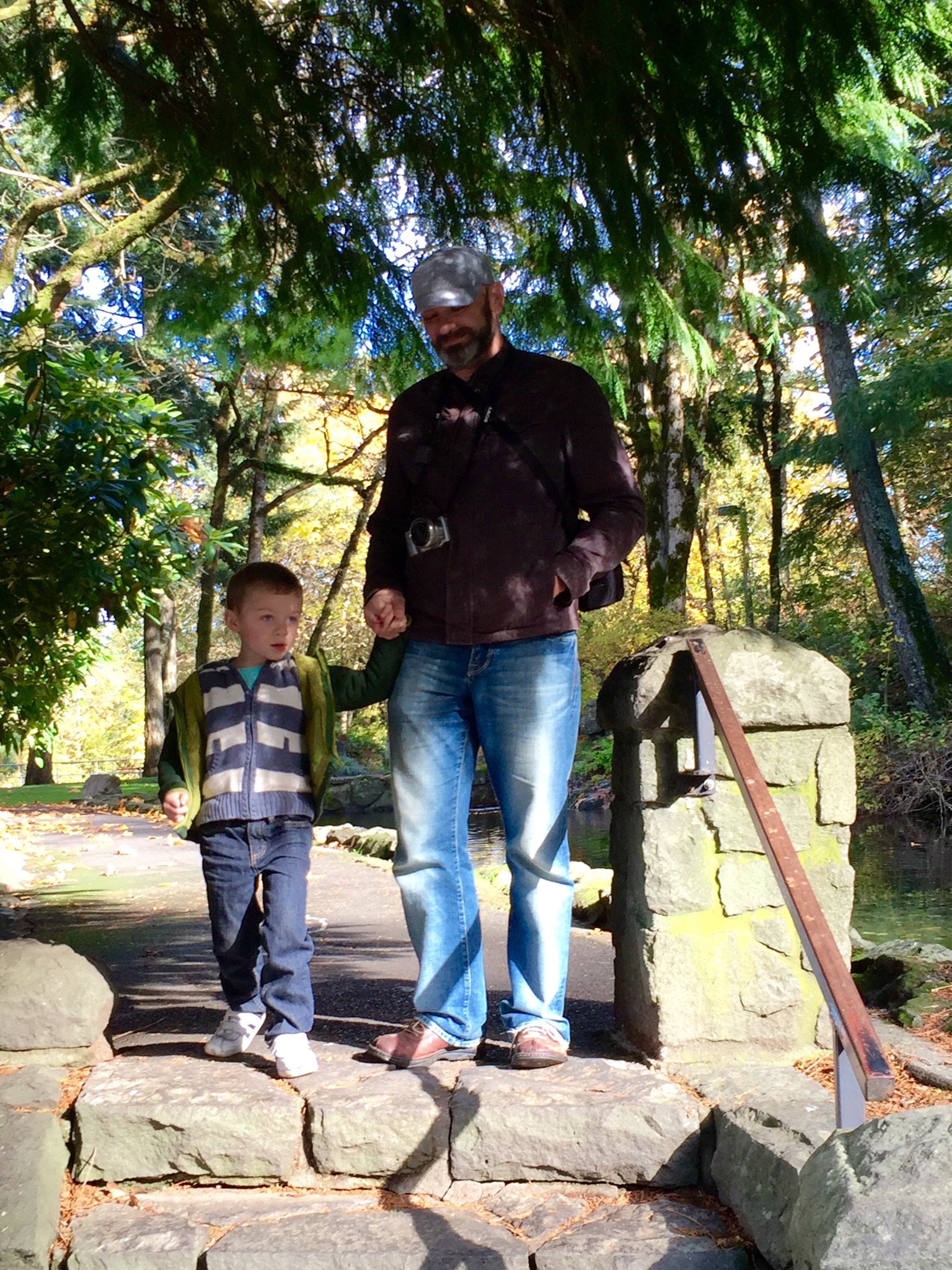
Niko’s Princess

Early last week, as I was dropping Niko off for a morning of preschool, a dark-haired little girl rushed up to us and stood in front of Niko, swishing her long purple princess costume dress back and forth. “Hi, Niko!” she gushed. “Do you think I look pretty? I feel soooooo pretty!”

The little girl was familiar to me. I knew her due to her adoring Niko so much that she’d once tackled him to the ground for a hug. I’d noticed that she’d been wearing the same princess costume the last four times we’d seen her — that’s over a week, since we do preschool just three times a week. The first time, Niko was upset because she’d worn the dress “with just underwear!”

“You’re supposed to wear clothes FIRST,” he’d told her. I could tell this was a serious infraction in his mind.

“I have clothes,” she insisted. “I have UNDERWEAR.” This did not satisfy, even when she demonstrated the presence of the underwear, at which point their teacher hastily intervened.

That day, as she swished her dress in front of Niko, she held out one leg. “Look, Niko,” she said. “I’m wearing pants with my costume.”

“Oh,” said Niko, a little flatly. “You look so sparkly.” He seemed a bit puzzled by the whole thing, but willing to admire anyway.

After the two walked away, his teacher, laughing, whispered to me that the child’s mother had explained the reason for the princess costume. “She dresses herself every day. She wears that costume for Niko! She calls herself Niko’s princess.

I laughed too, shaking my head. But even though it was funny, it bothered me a little. Not the insistence on one particular garment — we’ve been fortunate enough to escape that battle so far, but I understand it. No, what triggers a little alert light in my mind is the idea that she’s choosing her clothes based on what Niko likes… or what she thinks he likes, anyway. It’s a little worrying to see a small child so fixated on another person that she adapts her clothing choices to suit his preferences.

I somehow feel that I’d like to blame society or the media or a faulty family model for this willing sacrifice of a girl’s preference for a boy’s. I feel strongly about a woman’s right to her own body, including what she puts onto it. It’s possible that this little girl may be witnessing a situation in which an adult in her life is modeling some kind of self-imposed personality smothering, or being actively smothered. Or maybe she sees it on some grown-up TV show. It ruffles my quietly feminist feathers to see this tiny girl already changing her entire approach to clothing based on what she believes a little boy likes. If I were more committed to social justice, or a more aggressive champion of women’s rights, I might find myself writing an impassioned plea to society to free our little girls from the burdens of male expectations.

However, while such scenarios are entirely possible,  life is rarely so easily categorized. It’s not always feminists against the world, no matter what it sometimes feels like. An equally likely explanation for her extreme behavior is that maybe she just really, really likes Niko and wants his attention. In her little mind, wearing what he likes could be a perfectly logical method of attracting and holding his typically fleeting interest. After all, her mom seems like a confident, self-possessed woman, not a timid, self-effacing mouse; it’s doubtful that she is modeling being stifled by the patriarchy.

In fact, despite my puzzlement over her daughter’s obsession with my son, I sympathize with her mom and feel that we might have a bit in common. I’m holding to a tiny bit of hope that she might be my very first preschool parent friend. Unfortunately, this may have been jeopardized by Niko’s reaction to his friend’s attire last time we saw them. The two were being dropped off at the same time, and Niko and I walked in to see her dressed in a charming outfit featuring sparkly leopard print — the first non-princess clothing in, I believe, three weeks. I recognized the gargantuan effort the mom must have expended to get her into a different garment. It was apparent that a pinnacle in parental persuasion had just been reached; I knew I was looking at a milestone of mothering achievement. My mouth opened to compliment the little girl on her pretty outfit, reinforcing her mom’s triumph, but Niko was too fast. His eyes widened in outrage as he demanded indignantly, “WHY AREN’T YOU WEARING YOUR PRINCESS COSTUME?” Little girl’s head and mom’s shoulders drooped simultaneously, and though the teacher and I both rushed in with positive reinforcement, I fear the damage was done.

I can hardly wait to see what Niko’s princess is wearing today.


(The featured photo is not mine, but since I grabbed it from an anonymous eBay posting, I don’t know who to credit for it. Sorry.)


Symptom of Childhood

It was supposed to be funny. A T-chart, headed with “Symptoms of ADHD” on one side and “Symptoms of Childhood” on the other, with identical items listed in each column. “So true!” was my friend’s comment with the post. The point, of course, was that all children have short attention spans and are wiggly, and putting a label on these things is silly. In other words: ADHD doesn’t really exist. She didn’t mean any harm, maybe even felt she was championing a child’s right to be a child.

But as I stared at it, I felt like I’d be kicked in the stomach. Looking at it, I couldn’t breathe. I felt the old guilt and shame rushing back, the accusing voices that had tormented me for years from my own mind. If you cared enough, you’d be able to be on time…remember what you’re supposed to be doing…finish your work on time. If you really wanted to, you’d hear when you’re being called…pay attention in class… stop staring off into space…keep your room tidy. If you had enough faith, you’d be able to pray and conquer these issues. Just like everyone else must be doing.

The first time I met a child with an ADHD diagnosis was my first year teaching. He was the sweetest fifth-grader in the world. Kindhearted, generous, well-mannered, and so very anxious to please. He was friendly, full of goodwill toward even the marginal kids, and well liked. But spacey, so spacey. Twitchy. Impulsive. Words would fly out of his mouth at the most inappropriate times, and he’d drop his shaggy blond head onto his desk in embarrassment as classmates turned to look. Small sounds like pages rustling or pencils scratching distracted and irritated him. Writing topics eluded him. To get started on work, he needed me to crouch next to his desk, softly talking him through the process: “Look, here’s a list of topic ideas. Do any look interesting? Okay, now jot down three big details. Do you think you’re ready to fill in small details?…” Mind you, I’d already walked the entire class through the concept, working through an example together, giving time to choose topics. He just…hadn’t heard. Or the task was too overwhelming. Or he couldn’t focus through the sounds of others working.

When he did get started, as long as nothing distracted him, he was singleminded and incredibly creative. Reading his stories, I’d laugh out loud, and look up to see a pleased grin on his face. He didn’t lack intelligence or skill; he simply couldn’t focus without help.

When I first met him, I didn’t know he had ADHD. Our records weren’t computerized at the time, and student files were all kept in the school office. You had to check them out, and you couldn’t keep them in your classroom overnight, so they had to be returned by 4 – giving little time for a newbie like me to sift through the thick stacks of data, assuming I’d even known what to look for. Having been hired the day before school started that year, I didn’t even know at first where to look for these files or what to expect to find in them — and while I wanted to learn about my students, I had other priorities, like developing my first lesson plans, organizing my classroom, and completing beginning-of-year paperwork, schedules, discipline plans — things the other teachers had already finished before school started. So I didn’t know about his diagnosis, but soon I started to wonder.

Then one day soon after school started, he arrived with hair uncombed, jacket disordered, his normally cheerful demeanor anxious and scattered. He couldn’t sit still. He hopped up to get tissue he didn’t need or to get yet another drink from the water container I kept in our relocatable classroom, interrupted, acted uncharacteristically hurt and then borderline belligerent when another student disagreed with him. By mid-morning he hadn’t completed a single task and was distracting other students, causing disruptions. I called him over to me. Head hanging, ashamed, he didn’t even wait for me to ask. “I’m so sorry, Mrs. Malapanis, I’m really sorry, I’m trying but I forgot my medicine this morning and it’s just really hard.”

I took a deep breath. “I know what it’s like not to be able to focus,” I told him gently. “And doing it without medicine must be so hard. But when you don’t have your medicine, it doesn’t mean you can give up. It means you need to find other ways to focus.” I helped him with a few tricks that often helped me: I moved him to a desk away from other students, where the light was dimmer. I asked him to close his eyes and breathe slowly as he thought about the task he needed to complete. And he tried hard, really hard, and by lunch time had nearly finished one task.

The episode jarred me deeply. I felt the tiny seed of disquiet that had been disturbing me lately begin to grow. Why did I identify so strongly with this child? Why did I feel that I did, indeed, know exactly how he’d felt that day?

I didn’t know much about ADHD. The university’s education program focused more on compliance with IDEA (Individuals with Disabilities Education Act) than on recognizing or managing specific disorders, and in the triad of Christian communes where I’d grown up and attended school, if anyone spoke of it at all, it was with scorn. “Those kids just aren’t disciplined enough. They need a better routine. Their parents aren’t doing their job. Public school teachers are too permissive, too lazy to take the time to understand their students. ADHD is a fake disorder. It’s a sign of degenerate times. You don’t see OUR kids running around a classroom like that.”

Actually, that last part was more or less true. Classes were very small in our school — when I was in 6th grade, our 6-student class was the biggest in the history of the school. Students got a lot of individual attention. Even during a group interaction, being one of three or even six students is very different than being one of thirty. So a lot of the issues that a child with ADHD could display in a large, busy classroom might look different in a school like the one I attended. (There’s a good reason that teachers work with students they have concerns about in small groups.)

I’d been taught to believe that ADHD was a fake disorder, a way to pretend a child wasn’t simply badly brought up. The diagnosis was an easy way out for teachers too: medicate a child instead of connecting and managing differences creatively. And supposing a child did have a Real Problem, it was nothing a little prayer, faith, and love — and a bit of effort on the child’s and parents’ part — couldn’t fix.

But poor discipline or laziness were not what I saw here. This boy had loving, dedicated, hardworking parents. His good manners and old-school courtesy were clear signs his parents were doing their job well. And his forgetfulness, his habit of blurting at inappropriate times, his difficulties controlling his body — these things caused him significant distress. He worked harder to overcome them than any other student ever did. There was no laziness here, no lack of caring.

Meanwhile, my own performance in the classroom was suffering. My desk was piled high with unfinished paperwork. I was weeks behind with grading assignments. Some weeks I didn’t even have formally written lesson plans — I just taught the lessons I knew were supposed to be taught each day, with little preparation. I was working 60-80 hours each week, staying at the school late each night, returning after supper many nights or working at home until well after midnight, and working through the weekends — but with little to show for it. I would lose whole hours of time, drifting, getting nothing done. While class was in session, the noise in my classroom was intolerable to me. Visitors commented on how quiet and calm my room was, yet the pencil-borrowing, page-number-reminding murmurs and the rustle of pages, clicking of pens, squeak of shoes on chair legs, and even noisy breathing were enough to constantly disrupt my chain of thought. When students were in gym or art, the hum of the lights and the voices on the playground took their turn distracting me.

[I’d like to add here that despite my personal struggles, my students thrived. I was distracted, yes, but I’m also fairly creative and extremely dedicated. And teaching — getting concepts across — is a knack that I have, not to mention a deep and sincere love for my students. I can’t say that my issues didn’t affect them, because obviously they did. But my students were learning and progressing despite those issues, because I worked my ass off to make sure they did.]

For my third year, I was reassigned to second grade. We had a new principal that year who took a different approach to managing her teachers, including frequent informal observations.  Not long after I returned from maternity leave (Niko was born in October, and I returned after the Christmas break), she called me to her office and told me that my performance was inadequate. She helped me lay out a plan for improvement, including observing in my neighbor’s classroom and having my neighbor observe me and give feedback.

I was stunned and humiliated. But I knew she was right. I needed help, and the worst part of it was that I had known it for some time. I just wished I’d taken the initiative to ask for support instead of having it mandated. That meeting was a turning point for me. It forced me to confront the fact I’d pushed to the back of my mind: I had a problem. A real problem.

The teacher next door is one of my favorite people in the world. She has a heart big enough to engulf every single needy person she encounters. She could embrace the world if somebody could suspend time to allow her to meet every individual in it. This woman spearheads reading committees and student needs meetings. She was passionate about advocating for children with special needs, going so far as to fill out complex paperwork for other teachers if it meant their students would get help. On top of all that, she has a wicked sense of humor and can deliver a pointed one-liner that will keep you giggling all day. She’s the teacher I want to be when I grow up.

So, going to her and pouring my heart out wasn’t hard. She listened sympathetically. “Are you okay?” she asked. I shook my head. “No,” I said honestly. “But I will be. I want to figure this out.” She gave me a fierce hug. “We’ll get you through this,” she promised.

I kept mulling over what had happened. That day back at the beginning, when I told my student that I knew what he was experiencing, had stayed with me, a constant thought buzzing in the back of my head. Now, I pulled it out and took a good hard look at it, along with all the other things I had been pushing aside. It was time to confront the truth.

As usual, I managed this with my typical lack of grace. I was sitting in the deserted library, chatting with my newly-appointed mentor. We’d talked of this and that, until the conversation turned to family. She told me her mother was very ill and had just been diagnosed with cancer. I was listening, truly, but here’s the thing with my brain: there are ALWAYS at least two (usually more) things happening in there. Part of me was reacting with sympathy and concern to her life changing, heartbreaking news. But the quiet place in the back of my mind was roiling with my newfound truth, and it chose that very moment to send  it blurting out through my mouth. It went like this —

She: “My mom was just diagnosed with cancer. I’m having a really hard time dealing with it.” Me: “I think I have ADHD.”

She didn’t even blink. Didn’t pause to shake off the discomfort of having the topic changed from her heartbreak to my needs. Didn’t grimace in irritation. She reached out, put her hand on my knee, and said, “Oh, honey, yes, you do. You sure do.” I writhe in shame every time I think of it, but I think I’ve never loved her more than I did in that moment.

Later, I took an online questionnaire posted by a doctor — not mine — to help his patients determine if they need help. I took the completed pages to my doctor and told him my story, including the confirming opinion of the experienced teacher next door. He glanced over the pages and raised his eyebrows. “If even half of this is accurate,” he told me, “I have no problem prescribing medication.” He went over my options: I could go the traditional route, with highly controlled stimulants. They’re typically very effective, but they also require an appointment with a psychologist and follow-up appointments each time the prescription needs renewed, and they run the risk of being addictive. We chose a medication called Strattera, which was developed to help people experiencing depression, but was instead more successful at dispelling symptoms of ADHD that many of the test patients were also experiencing.

The procedure was simple, but it was the hardest thing I’ve ever done. It meant abandoning a lifelong conviction that my problems were solvable if I just cared enough; prayed hard enough; tried a little bit harder. I’d been taught that depending on medication for behavioral issues, or for mental health, was a failure  of faith. I felt that I was giving up, that I was succumbing to weakness of character. I wallowed in waves of shame, disappointment, sadness.

And then I started taking the medication. It’s supposed to take 4-6 weeks to see effects, but within a week my desk was clean and organized. I had figured out a more effective way to manage discipline. I had designed half a dozen new, adaptable worksheets for my students to use when analyzing books. The clutter in the corners of my classroom was disappearing. I found, as more weeks passed, that I could distinguish between mischievous noise and working noise. When I was giving one-on-one assessments, I could focus on the student in front of me and still know what the rest of the class was doing. The sound of pencils scratching no longer sent me into shutdown mode.

There were other changes, too. When I folded laundry, I was no longer compelled to line up the stripes in kitchen towels perfectly. I no longer needed to design complex color patterns as I stacked folded socks and underwear. If clothes were hung on hangers of a different color, I didn’t grind to a standstill. I hadn’t actually realized these were issues; I still don’t know why I did them, or why the medication affected these odd behaviors. All I know is that I was more clear-minded, more focused, less anxious, than ever before. And something else happened: the cycles of depression that circled back through my brain once or twice a year simply…didn’t. I have not had a single episode since starting Strattera.

I still have ADHD. I still forget things, still get distracted. Time doesn’t make sense to me — it doesn’t progress for me the way it seems to for other people. Sometimes I blurt out things that only make sense to my hundred-thoughts-a-second brain. My desk is never truly clean; neither is my house. Even now, I function best when I have at least three projects and two books going at once, so I can abandon one for the next when my attention runs out and still get something accomplished. But the medication has done something that no effort on my part has ever done — it’s given me the ability to cope. I can manage my symptoms now, even use some of them to my advantage. I’ll always have ADHD, but I’m okay with that.

And I want other people to be okay with it too. Suggesting that it’s a fake diagnosis doesn’t do anyone any favors. Facing its existence, facing that a person with ADHD might need the extra help of medication to deal with otherwise insurmountable difficulties, is the kinder approach. I struggled for thirty years. Thirty years of secret shame, self-hate, and a growing conviction of my own inferiority, before I discovered that I actually could be organized and focused — I just needed more help than I was getting. Children with ADHD greatly benefit from the awareness of the disorder, as do adults.

Speaking personally, my realization that I have ADHD has been like a key to a previously unknown library of management strategies. I’ve been able to find ways of coping that I didn’t know about before. I now recognize, for example,  that trying to power through a work session after my mind has started to drift isn’t a useful approach. Instead, I take breaks when I start to lose focus. I go do a different project, stand up and walk around, do the dishes — and instead of giving these behaviors a negative label (Procrastination! Laziness! Lack of staying power!), I recognize them for what they are: my own way of getting things done. I keep a to-do list, both mental and physical, if there’s something I’m worried I’ll forget to finish, and I try to make things on the list a priority when I move on to something new. I make sure I have another project started so I don’t spin my wheels when I need to stop my current project. And it works, more or less. Am I as efficient as someone without ADHD? Almost certainly not. Am I more efficient than I was before the medication and the new approaches? You bet your boots I am.

I have ADHD. I’ve come to terms with that fact. And even though I cringe when people deride the disorder as a simple lack of discipline or low level of commitment or just not caring, I’m not going to wither in shame whenever I see one of these references. My ADHD isn’t going anywhere, and neither am I. For better or worse, here we are, inextricably entwined. Get used to it.

A note: I couldn’t find the original T-chart I mentioned in the first paragraph. The one pictured as the “featured image” sends a similar, though broader, message. I found it over at Grounded Parents, in an excellent post called “Internet Meme Demolition Derby: Childhood is not a Disease!” It’s well worth a read.

Most Wonderful Time: Christmas Past and Present

Sparkling beaded garland stretches around a green tree, white lights are sprinkled across the green branches, while the shimmer and glitter of painted-glass ornaments catch and reflect the glow. Under the tree is a red-and-copper tree skirt I sewed several years ago when the perfect tree skirt refused to appear in shops. On the table, ornament-shaped candle holders dusted with gold and red glitter rest atop my grandmother’s hand-woven table runner next to tiny vases filled with wintry twigs and berries. A gold paper star in the window, lit from within by an electric tea light, sends out a gentle glow. Brightly-decorated nutcracker soldiers guard the fireplace, while a jolly ceramic snowman stays safe from a curious baby behind the sturdy iron screen. High on a shelf, a silver Advent calendar is ready to count down to Christmas. A tall Santa in stately robes presides over the living room’s festivities from the next shelf. Down below, a winter village has escaped from the pages of Charles Dickens’s books, the windows and street lights gleaming convincingly. Cheery colored lights embrace the front windows and the edge of the roof. Our favorite carols flow through the air. A baby’s dimpled hand stretches cautiously toward the twinkling lights, eyes wide with wonder, turning toward us for reassurance. A small boy dances around the room, pausing periodically to inspect the new finery. Talk of gifts and cards, wrapping paper and ribbon, and a chance of snow next week, all twine through the air, merging with sparkle and glow to form an unmistakable feeling: the holiday season is upon us.

I’ve only been celebrating Christmas for about twelve or thirteen years, so the candles and lights and music feel new and exciting to me, too. I don’t stare and dance like my children, but I revel in the explosion of holiday decor all the same.

I grew up in a peaceful, prayerful commune that was strictly nonobservant of all holidays — well, except for Thanksgiving. Christmas wasn’t as bad as Halloween, the devil’s day, but we still regarded Christmas celebrants with a certain amount of sorrow and pity. We pitied all those foolish people who’d never figured out that Jesus was born at harvest time, not in the middle of winter. We felt a certain scorn for those who didn’t know that the season was a continuation of Druidic and Pagan and Roman holidays, all in celebration of other gods. And hadn’t anyone pointed out to them that Santa is an anagram of Satan?

It never occurred to me that people might simply not care about all those valuable facts.

People crave light and color, especially green, in midwinter. It’s especially notable in northern climates, where winter is dull and grey. The shortness of those monochrome days does something to the psyche. And the month or so leading up to the Winter Solstice is the perfect time to push back at the darkness. People like to claim that “Jesus is the reason for the season,” but if that were really the case, we’d be celebrating in October-ish and our motifs would be straw, tiny babies, and pregnant mothers; not glittering lights and shining gold and silver. Solstice has been celebrated for millennia; Christmas is a newcomer to the scene. The darkness, my friends, is the reason for the season. Darkness, and a craving for light. And there’s no shame in admitting that.

I remember the winter my mom’s best friend got (re)married. She has been like a second mother to me, and her generous spirit makes her well loved in the trio of communes where I lived. We wanted her wedding to be perfect. A winter wedding was uncommon, so we had no season-appropriate decorations ready to be reused, no fresh flowers to brighten the rooms. Someone had the bright idea to twine green garland and white twinkle lights around the stairway banister in the main house on our farm. “But won’t that seem a little… Christmassy?” someone worried. Everyone considered the problem for a moment. As one, we all silently decided: we didn’t care. The garland and lights went up, not just on the banister, but on the front porch rail as well. The following year, those decorations quietly appeared again in November. And again the year after that. No one called them Christmas lights. No one even mentioned them. But our winter-starved eyes drank in the glow and the green, like stranded desert travelers bask in the cool of an oasis.

These days, long after my departure from the farms, everyone is a bit more relaxed about the holiday. They have a big Christmas dinner with lots of visitors from the village. Some families put up trees and even share gifts. You can occasionally hear Christmas carols, maybe even in the church service. You could look around a living room on Christmas Eve and never know you were on a highly conservative religious commune. It’s almost…normal. It doesn’t surprise me. That first garland meant that full-blown Christmas was an inevitable eventuality. Once you experience the lifting of the spirits that comes with the lights and glitter, it’s hard to go back.

As I look around my cozy living room, at my little ones awed and delighted by the new festive decorations, I feel the reassurance that back home, they’re doing the some of the same things. It’s a connection that is strangely meaningful to me — strange, that is, considering how far removed my life now is from what it was. I guess it’s a little personal sign that says: It’s okay. No matter how far you go, you’ll always be connected; this will always be home. And there it is. Connection: the second “reason for the season.” The sense that we are together, even when we’re apart. That our love doesn’t have to grow thin as the physical distance stretches between us. Family is family, and always will be.

Abracadabra MOMMY!

His small face was filled with confident hope — no, with absolute faith. He KNEW this was going to work. He held a shiny black straw that the uninitiated might not recognize as a wand. One hand was lifted dramatically; the other held the wand at the ready. He took a deep breath, smile of anticipation growing, as he shouted, “Abracadabra MOMMY!” and tapped my thigh gently.

I’d had no warning. I was lying on the floor as Sofie crawled back and forth over my stomach, occasionally standing to take a hesitant step and then toppling back onto me. Niko had been running around the living room tapping toys. “Abracadabra!” Whatever magic he’d seen with his toys had satisfied him — but only temporarily. Now, he was trying it on a living being.

I saw the glow dim, just a little. “It didn’t work,” he said, genuinely puzzled. I knew that look. Not betrayal, not disillusionment. Not quite. Because he didn’t really believe it. Clearly, something was amiss, but he wasn’t certain what was wrong.

And I wasn’t quite sure how to help him. I’ve read my fair share of parenting books and texts on child development: compulsive reader + Barnes & Noble children’s department employee + a degree in education provides ample opportunity to read all about raising small people. But not a single one gave a tutorial on helping your child succeed in casting magical spells.

“Maybe,” I suggested carefully, “maybe you need more words.”

“More words?”

“Well, for a magical spell, you need to say exactly what you want to happen.” His face cleared. This made perfect sense to him.

“Abracadabra make Mommy disappear!” Again, the gentle tap with the little wand.

Well, now I knew what was supposed to happen. But once again, it hadn’t. He gazed at me hopefully, not ready to give up.

“I think maybe you need some more magical tools,” I told him. “Like…maybe…that blanket?”

His face showed his internal conflict. He considered this for several seconds, expression unchanging as he mulled over the implications of the need for the blanket. Then the 10000000-watt smile returned. “Okay!” Off he went, back he came with his beautiful cars-and-trucks quilt made by a talented friend. He draped it tenderly over my body, folding it back so my face still showed. Then: “Abracadabra make Mommy disappear!” Tap.

I pulled the blanket over my face as quickly as I could. “Did it work?” I called to him.

“Yes! It worked, Mommy! You disappeared!”

Not long ago, this story would have ended differently. Until recently, Niko has had no concept of pretending. He would be sitting on his rocking horse, galloping for all he was worth, and I’d say to him, “Where are you going on Rocking Horsie?” (Another area in which he is lacking in talent is the naming of toys.) And he would skewer me with his scornful gaze: “I’m not going anywhere. Rocking Horsie isn’t a real horse.”

Or he’d climb into a box in the middle of the living room. “This is a rocket ship!” he’d tell me. “Oh, where is that rocket ship going to take you?” I’d ask. Again, that gaze of incredulous scorn: “We’re in the living room, Mommy. It’s not a real rocket ship.”

Last night, Niko was able to transition nearly seamlessly from a deep conviction that Mommy was going to literally disappear with his magic words, to a joyful game of pretend. Watching him enter wholeheartedly into the imaginative play without missing a beat, without collapsing into an anxious and brokenhearted mess because his spell didn’t work, filled me with delight.

I think I’ll remember this moment for the rest of my life. That moment when I realized that my son DOES know how to play. And I know who to thank for it. Not me. Not his dad. It’s his preschool teacher. His kind, accepting-of-all-comers (even that boy who was always hitting), generous-hearted teacher, who makes time in the day for imaginative and dramatic play.

Unlike me, she doesn’t lose patience with his reluctance to pretend, walking off to do something more fulfilling than playing with a highly literal child. Instead, she shows him examples of what imaginative play looks like, calling out the names of children who are succeeding: “Look, Daisy is pretending to be a lion. She’s purring because she’s a happy lion. Doesn’t that look like fun?”  I haven’t seen this exact scenario happen, but I know from my interactions with her at drop-off and pickup time that this is what she’s doing, all day long. Looking for the goodness in each child and announcing it. “Look at George! He’s walking in line without waving his arms!” “Oh my, look what a good job Dakota is doing cleaning up the blocks.” Each child glows with the observations. And all of them improve with her positive words — the successful ones strive to do even better, while the ones who aren’t there yet work hard to arrive. [Side note: of course, I used made-up names.]

Yes, I know who to thank for the changes I’ve been seeing in Niko. I’m so happy he has a teacher who is gifted with the ability to recognize the best in each person who comes her way. I’m so very happy to see my son playing imaginatively, with abandon and joy. Thank you, Teacher Mary, for giving Niko and me such a precious gift.

Niko loves riding the scooter at preschool.

Words Not To Say In Front Of My Kids

This made me chuckle — reminded me, in fact, of my teens, when nobody could say “Why, yes, I do do art on Tuesdays” without being subjected to uproarious laughter from me and my cohorts.

dysfunctional literacy's avatarDysfunctional Literacy

I tell my kids they can think anything they want, but there are some things they'd better not say. (image via wikimedia) I tell my kids they can think anything they want, but there are some things they’d better not say. (image via wikimedia)

I told my daughters this morning that they’d need to take a sack lunch to school tomorrow, and they laughed at me.  I wasn’t expecting them to laugh.

It took me a moment to realize why they thought sack lunch was funny.  When I was their age (around 35 years ago), sack lunch wasn’t funny.  I carried a sack lunch to school every day, and nobody laughed.  I think I even called it a sack lunch.  Everybody called it that.  But somewhere along the way, kids picked up on the word sack, and a new source of humor was created.

Now I can’t say sack in front of my daughters; I have to say “brown paper bag.”  If I had two sons, maybe it wouldn’t matter much.  But…

View original post 915 more words

Ice, Wind, Leaves

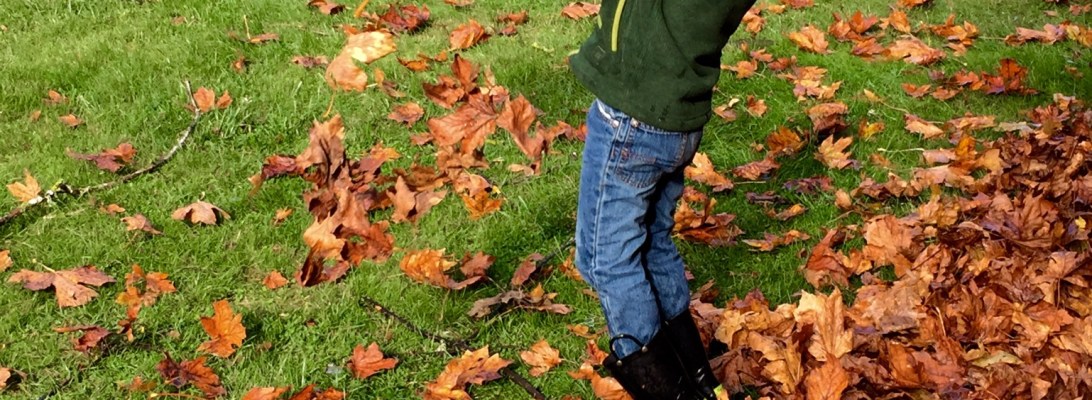
Early last week we had a small ice and wind storm. It was worse in other areas — friends who live about half an hour away got actual snow, and their schools were closed. We got a pebbly ice coating on our porch and back door, a layer of ice on our ponds and plants, and leaves and small branches in drifts in odd places.

The leaves blew into big piles against walls and in corners, leaving the lawn mostly leafless. They piled up on the surface of the ponds. Our puppy, Cody, tried to walk through what appeared to be a pile of dry leaves and instead fell through them into the goldfish pond — a moment which, regrettably, I failed to capture.

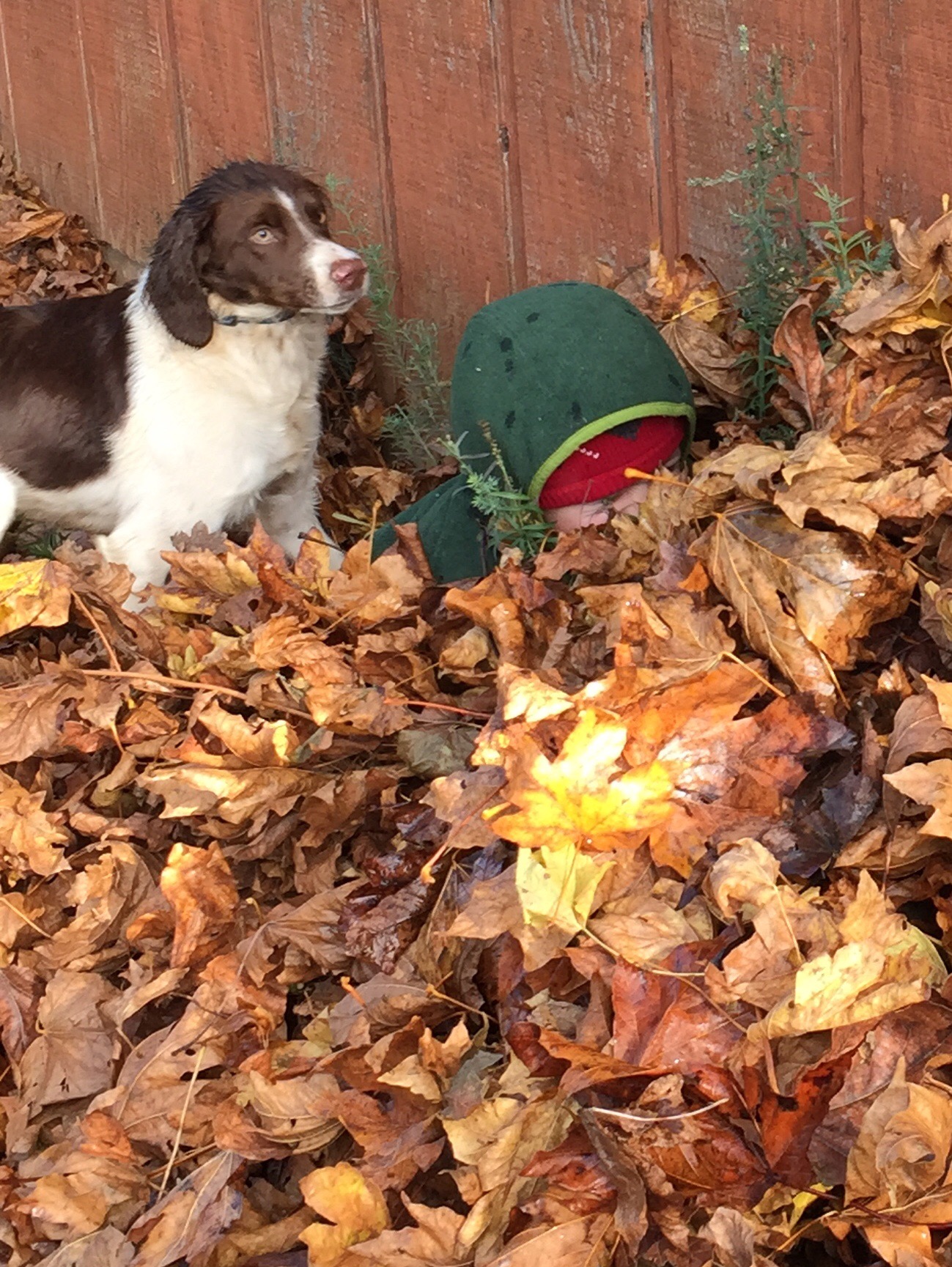
Niko was thrilled by the leaves. Entranced. Giddy. We and the puppy walked over to the shed on Wednesday to finish storing water lily roots for the winter, and he stopped and stared when he saw the three-foot drift of leaves against the wall. “Mommy. Look! At the LEAVES!” And then, amazement turning to joy, he was in the pile, Cody leaping after him. He disappeared completely — all that was visible was his nose and the top of his head.IMG_1196

He spent a quarter hour leaping, running, tunneling through the leaves. Tossing them into the air and dancing under them. Flinging them at the dog and shouting with laughter when Cody, bewildered by the featherweight barrage, tried to dodge. So much joy.

Yesterday we did some outside work. I took care of uprooting dead green bean vines and cutting back the blackened dahlia stems and asparagus fronds. (Asparagus makes pretty red berries. I had no idea.) And Aaron got out our new leaf blower/vacuum/mulcher and cleaned up the giant piles of leaves.

Niko had been tagging around with Aaron, happy to be helping Dad, but while Aaron was getting the leaf vacuum ready, he was inside getting a drink. So he had no warning that his beloved leaves were about to disappear. We came around the corner of the house together to see this:IMG_1238

And poor Niko froze in horror, his mouth open, a look of panic on his face. Then his disbelief turned to grief and rage, and he started howling: “No, Daddy, NO! Please don’t! I WANTED TO PLAY IN THOSE!”

But between the noise of the engine and the headphones, Aaron couldn’t hear (and, having only a short time to work, would probably have finished the job anyway), and every leaf got sucked up and mulched. I guess Niko will just have to wait for the next wind storm.

It’s Not National Geographic Material, But…

I was fifteen when my dad gave me my first camera. I was speechless with delight — I remember the sensation of actually gasping for breath in surprise and joy. Gifts were rare in our family: we eschewed Christmas, birthdays, and worldly possessions, so a spontaneous gift like this was even more meaningful than it might have been for an ordinary kid.

My father has always had a gift for both photography and drawing, sometimes combining them by making sketches and even embroidery patterns based on the photos he takes. He has his camera with him nearly everywhere he goes. My dad and his camera were fixtures in my childhood and especially in my teens, when his interest in “real” photography took off. On long road trips with my mom, they periodically stop so my dad can photograph scenery or flowers while my mom stretches her legs. When he visited us in Alaska, he would go on early-morning drives to capture shots of things he’d seen as we drove around the Anchorage area: the tidal flats, a field of blue-flags (also known as wild irises), a train running between the inlet and the mountains. He’ll sit quietly while family visits, unobtrusively shooting photo after photo of interactions and games. He’s never published his photos, unlike my uncle (his brother), who also loves nature and photography, and shares his photos on a website he calls Wild Sky Photo. He just loves taking the pictures. I think that camera was a way for us to connect, to share a passion.

It was the night before a high school trip that my dad gave me the camera. Our entire high school — all ten of us — were traveling from our group of three small religious communes in Northwest Ontario to a collection of communes in British Columbia. We’d been preparing for months with individual, original, inspirational speeches, and practicing two or three new songs. We would provide the church services as we visited the northern groups. That was something of a tradition in our network of communes — being prepared to share inspirational messages, but especially sharing music. Singing was integral to our way of life, and somebody was always writing or discovering a new song. It was just considered a courtesy to share it with other groups whenever you traveled.

But the real highlight, to us, was the road trip. Ten kids in two vans. Music of our own choosing — and someone was sure to bring along some carefully selected secular music, and if we were absolutely angelic, perhaps we could convince our chaperones to allow us to play it as we rode along. Then there was the hotel stop along the way — giant sleepovers aren’t any less fun when you’re being raised as a highly conservative, long-skirted, Bible-studying commune dweller. The frosting on the road-trip cake was the visits with people we only saw rarely. My cousins and I were excited to see another set of cousins on one of the British Columbia communes, but there were other friends and acquaintances as well, plus who knew how many new friends.

And I photographed it all. I used up all the film my dad had given me by the end of the second day, and had to buy more at gas stations and convenience stores along the way. I snapped photos of the scenery. Of pillow fights. Of friends hugging. Teens sleeping, puppy-piled in the vans. Volley-ball games, girls still in their long, awkward skirts. Campfire sing-alongs. I overcame my habitual shyness to walk right up to people I barely knew so as to frame them better for shots. My viewfinder became my key, allowing me to break through crippling terror of crowds and strangers.

I still have most of those photos. They aren’t good ones. I knew nothing at all about photography, and my camera was a basic point-and-shoot model. No zoom, no focus. Most of the pictures are blurred. Sometimes you can’t really tell who’s in the photos or what’s happening. But there were some gems. Going through them a few years ago, I was surprised to find a picture of my sister-in-law’s husband in Renaissance costume, playing the piano and singing in an informal rehearsal for a show. This was about four years before I met my husband, and I hadn’t even known the young man’s name — I just had been struck by the picture I saw and wanted to keep the memory.

These days I use a beautiful silver Canon, a digital camera that has a zoom lens and a second, long lens that can be interchanged. I still don’t know much about photography. But I’ve learned a few things along the way, and now I find joy in photographing my children and garden. Lately I’ve been learning to use the long lens. It’s proven to be a steep learning curve for me. It reminds me of the slow, stumbling trial-and-error experience with that first little camera. Most of my photos of the birds at our feeder are a little blurred, often badly lit or poorly framed. I still save some of them as a learning reference, just like we save our preschoolers’ early writing attempts.

Now, when I look through photos on my computer or phone as I’m preparing to edit and choose some to share with family on Facebook, I find myself thinking of my dad and his role as a recorder of my childhood. It’s a good role, I think, and one that I’m happy and proud to be carrying on in my own little family. I’m not a photographer; this isn’t a photography blog. But still, I find an unexpected peace in freezing those moments of my children playing, a perfect bloom, a bird on a branch, even a plate of good food. I delete more photos than I keep. I miss more shots than I take. I don’t know how to do some of the techniques I see from trained and experienced photographers. But those photos I do take and keep are treasures to me.

And here, just because today I’m thinking about photographs and family and treasures, are a few photos of my favorite treasures: my kids.

Exhibit A: Sofia’s 11-month photo shoot. We’ve done this every month since she was born. My eventual goal is to collect one from each month of her first year into a collage frame for her room. We did this for Niko, too. He’s four. No collage frame yet. Maybe some day…

Exhibit B: My adventurous boy, later the same day as Sofia’s photo shoot. He wanted to sit on top of the well, just like he had a month before when Garrett Beatty of Nuro Photography came to photograph our family. I agreed — but only if he let me take his picture. Later, he decided to gather some wood to take inside. The power went out the next day in an ice storm, so I ended up being thankful for his impulse.

Exhibit C: These are the first shots I’ve ever taken with a long lens. Please remember that I don’t work for National Geographic. And I’m just learning. But still, I’m pretty darn proud of these fuzzy photos.

First Fire

Wind is up, temperature down (around 45-50 degrees now), power out for the second time today. Our heat is electric, as is our whole kitchen, so we won’t be settling in with hot chocolate and warm cookies — but the former owners left us with a spotless fireplace and sizable wood pile, so today I made our first fire! It’s doing a pretty good job heating the house. I’ll just have to keep Sofia away, since we don’t have a screen for it. Hopefully the house doesn’t get too cold tonight as we anticipate our first frost. IMG_1147.JPG

Bonneville Hatchery

This is one of the most beautiful fall weekends we’ve had yet. Anticipating sunshine, we decided to take a drive east toward the Columbia Gorge. One of our favorite stops is Multnomah Falls, or Bridal Veil. But on a sunny weekend, it can be so busy and crowded that you spend more time avoiding stepping on strangers’ toes and protecting small bodies from being jostled than you do walking the trail or admiring the misty waterfall. So we chose to go about fifteen minutes past the falls, to the Bonneville hatchery. A friend had recommended it several times, and we thought we ought to see what it was like.

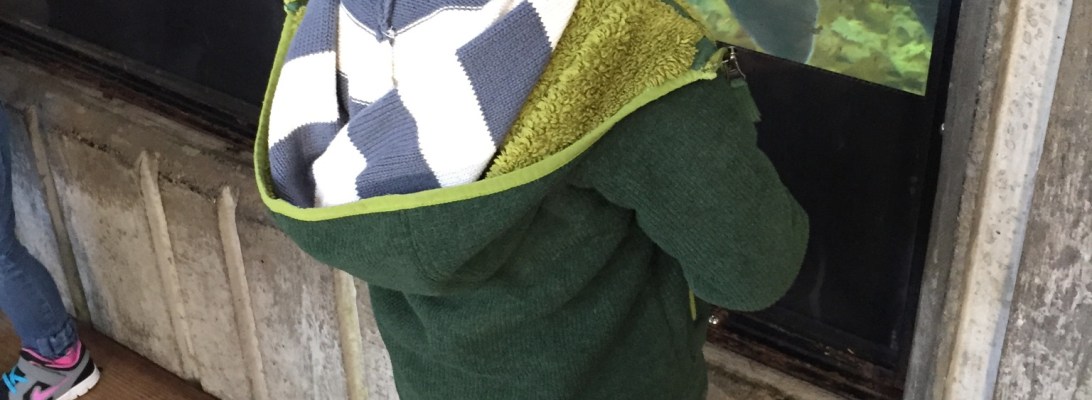
Turns out, it was perfect for a morning stroll with a small family. Sofia was completely content snuggled up in her Ergo carrier, and Niko was gratifyingly wowed by the giant sturgeon that glided inches from his nose. “Is that a SHARK?” he shouted.

One thing I love about Oregon is the bright array of fall colors. The hatchery is designed to encourage strolling, and the bright oranges, reds, and yellows reflected in the peaceful streams and ponds were beautiful.

And, since we got a fairly early start, we still have the whole afternoon to relax and work at home. Who knows, maybe I’ll finish freeing my root bound water lilies!

IMG_1072.JPG

IMG_1079.JPG

IMG_1089.JPG

IMG_1064.JPG