Drying Fruit and Memories

This summer, as our fruit (blueberries, cherries, raspberries, apples) began to ripen, Aaron came home one weekend with a dehydrator. It’s round and shiny-white, shaped like a donut with a too-small center hole, and has four drying trays plus a fruit leather tray liner and a liner for jerky. So I’ve spent the summer’s end learning to dry fruit. My greatest success by far has been apples, both slices and leather. You can see my method for drying apples here.

Now, I’m no stranger to drying fruit. For seven years, between ages four and eleven, I lived with my family (and another family for three years, plus assorted winter visitors for the next few years) on a remote homestead in British Columbia, Canada. My father trapped during the winter, and we used the money he earned from furs to buy supplies we needed to live each year. Yes, one shopping trip per year. And we had no refrigerator or freezer. No electricity at all, except for the weekly laundry day when we

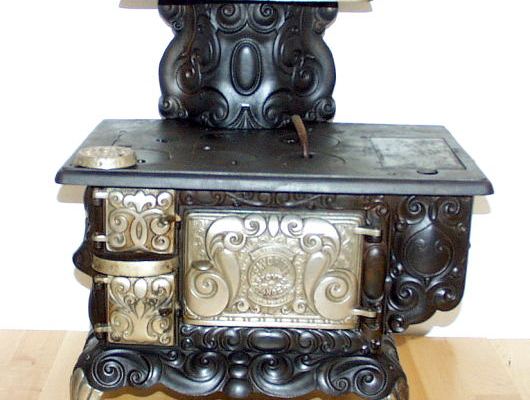
This is very close to what our machine looked like, except my mother never looked that excited to use it. Nor did she wear a white-collared dress while operating it.

would start up the generator to run the ancient wringer washer – a big improvement from the manual James washer that sat out back behind a shed. Fuel had to be boated down the Stikine River in huge 50-gallon drums in our 20-foot skiff, so we didn’t use that generator any more than we absolutely had to.

With no refrigeration or weekly shopping trips, we had only what fresh food we could forage or hunt from the forest, catch in the river, or grow in our garden. I know that sounds like the life of Hansel and Gretel, pre-stepmother, but it’s what we did. And we dried or canned as much as we could for winter, since we wouldn’t have access to any fresh food once hunting season was over. I liked the dried food best – it had less mush. Raspberries. High-bush cranberries (properly known as lingonberries). Saskatoons. Strawberries. Thimbleberries. And we occasionally had crab apples from a neighbor (which here means, anyone living within a 30-mile radius). Once we even had bananas.

At some point, my dad built a drying shed. He dug a square pit, about 3 feet deep, and put a barrel stove in the bottom of it – that’s a stove made from a large metal barrel. They’re actually pretty effective. You can get kits for them, with a door and legs and hardware for a chimney. This stove was rustic looking, not like the nicer one he made for our cabin, which had heat-resistant black paint covering it and a big flat silver tray fitted onto the top for heating a giant pot of water for laundry and baths. The one in the drying shed had whatever flakes of paint still clung to the original barrel, interspersed with large areas of gently rusted steel. No one cared what this one looked like. He built walls around the pit once the stove was in, with a tightly-fitting door covering the whole front side. The walls had supports all around for sliding trays made of window screen material. We would put whatever we were drying – meat, vegetables, fruit – onto the screens, slide them in, and let them sit with the stove gently heating them until they were dry.

I asked my mom how she dried fruit before my dad built the drying shed – I was

Our stove was less ornate , white-enameled, and had an enclosed warming oven where this stove has a shelf. Otherwise, it looks pretty familiar.

small enough at that point that I don’t remember much as far as culinary skills. She thinks she used the warming oven in our big cast-iron range (think Blueberries for Sal, and you should have a good picture of our stove). So I’m guessing all you readers with modern kitchens, but lacking a dehydrator or a niftily-built drying shed, could still use my method for drying apples – you would just need to turn your ovens on low.

No, I’m no stranger to drying fruit. But my memories are nearly useless living, as I do, in a rural area less than half an hour from a major city. Drying fruit should be accompanied by the aroma of smoke in the air, the unique smell of cranberries (I know, I KNOW, lingonberries, sorry) ripening amid fallen leaves. Drying fruit comes with the creak of a wooden door, the rush of earth-metal-fruit-scented air in my face, the smooth glide of a screen pulling free from the rails. Using a dehydrator, after a drying shed or a cast-iron range, feels somehow artificial. Perhaps I feel I’m not working hard enough. In any case, the apples are delicious, and while I miss the nostalgic connection to my roots, I’m happy to have the ease of my shiny new dehydrator – all I need now is more trays for bigger batches!

You can click here for a more modern approach to drying apples!

Why Teach?

Right now I’m a stay-at-home mom. But I’m also a teacher, or was before we moved from Alaska to Oregon and saved so much money on housing that we only slightly miss the absence of my paycheck, and I plan to be again sometime in the next few years. I guess it’s safe to say that I’ll always be a teacher. That’s just who I am. Just ask my 4-year-old. He still wonders where Mommy’s school is, a year and a half after moving away from our home in Anchorage.

 Here is a piece I wrote back in 2010, before Niko was born. It’s an honest look at how it feels to be in the classroom each day with what often feels like very little return – until That Moment. This is why I teach.


Not long ago, a young friend who thinks she wants to teach asked me what it’s really like to be in the classroom. I was honest — maybe too honest. I told her about the long hours of work (50 to 80 per week, in my case), taking only a few short, begrudged, guilt-laden breaks on weekends between bouts of grading and planning. I told her of the frustrations of feeling that the required curriculums and government-mandated tests and paperwork and bureaucracy all combine to make it less likely, rather than more likely, that students will achieve. I added that while I love the teaching part of the day, I spend easily half my time filing paperwork and performing meaningless tasks that have nothing to do with helping my students learn.

“Is it actually worth it?” she wondered. I had just finished my first week back after a wonderful summer, and I hadn’t met my students yet, so my response reflected my own doubt as I assured her that yes, indeed, it is. Really. Truly. Pinkie swear.

And it is. Sure. There are wonderful, delightful, fulfilling moments in every day. There are the spontaneous hugs for no apparent reason – even in fifth grade, where I spent two years, but especially in second grade. There are priceless comments, questions, and observations from these young minds for which I can take no credit, but still gain enjoyment from. That look of wonder — “You really think that about me?” when I pleaded with a boy to take the test for our gifted program: a boy who suffered from ADHD, post-traumatic stress disorder, oppositional defiance disorder, and genius. The look of amazed joy on his face when he qualified, as I knew he would, and the change in his attitude afterward. The dawning light on a little face when for the first time they glimpse the myriad shifting patterns in a simple addition/subtraction grid. A class of students which, when I gave them half an hour of free art time at the end of the day because I Needed Some Time (I’m not ashamed to admit it) to finish entering some data before the deadline clubbed me over the head, spent their own gift of time making me adorable, crumpled, painstakingly scrawled cards and gifts. Yes, it is worth it. Sometimes it’s hard to remember, but it is.

More recently, another friend who is in the first stages of UAA’s education program appealed to me for a little help finishing a paper with a specific page requirement. The topic, naturally, was “Why Do I Want to Be a Teacher?” I gave her some worthwhile advice: Try adjusting the margins and the font just a teeny, itty-bitty bit – just not enough to attract notice and inspire your professor to check the paper’s settings. That could buy you a little space. Try plugging in a couple of stories in the intro and referring to them in the conclusion. That’ll give you at least another half-page, maybe a whole page… And as I gave her this highly valuable advice (and I hope she remembers it, because it’s gotten me A’s on many a paper), I wondered what on earth was wrong with me. Of course, I couldn’t tell her why she wanted to be a teacher — only she could do that. But couldn’t I at least have shared with her some of my own triumphs and joys? Maybe given her a little glimpse of the inspiration that keeps me going? Because I do love teaching. And it is worth it. Really. Come on, it is.

By the way, I hope she keeps that essay. I hope she saves it on every computer she encounters, on flash drives, external hard drives, discs, the Cloud, and whatever method of saving data the future brings. I hope she prints it and frames it and hangs it where she has to see it every day. For two reasons. First, she will be submitting that same essay so many times she will feel like she is vomiting her words onto a screen repeatedly. I guarantee she will need that essay at least five times over the course of her college education and even more times throughout her career. Secondly, and more seriously, there are moments when you wonder: Why am I doing this? And the reminder that there was once a younger, more energetic, more eager you, whose ideals had not yet begun to tarnish, is invaluable. There will be days that she will absolutely need that reminder. Days at the end of an 80-hour work week when the weekend looms ahead of you menacingly, beckoning you to try to Do Everything I Didn’t Get Done This Week: go ahead, try it, I dare you…Mwahahaha. Moments when you read articles labeling teachers as lazy and greedy and you want to cry, knowing how much time and energy and love you give these children and how unlikely it is that these authors will ever have any comprehension of what you do. Meetings with parents who think you aren’t doing enough to keep their underachieving child challenged, who can’t understand that you can’t excuse a child from regular classroom work because it’s “too easy” when you have seen no actual evidence of his ease at completing the work, meetings that conclude with the assurance that you are indeed lazy and greedy. Yes, she should keep that essay. She’ll need it.

I’ve been thinking about these two friends and wishing I had expressed more sincerity in my promises that “it’s worth it.” Wondering if I’m getting burned out without realizing it. Longing for that old feeling of apprehensive self-assuredness I once had: “I’m going to change the face of teaching. I don’t know how, but I will. I’ll be different.”

And then, yesterday, I gave a spelling test to my second-graders. I reminded them of the importance of Being Silent During Tests. I assured them that if anyone was unable to remember this, I would help them by Taking Away Their Test. And then I gave the first word: fox. Papers rustled, pencils scratched, desks squeaked as the little fingers busily and proudly wrote the word. In the midst of this busy silence, a voice erupted: “Mrs. Malapanis! Mrs. Malapanis! I wrote the spelling word! I wrote fox!”

Heads turned, eyes looked accusingly at this child whose face was a beacon of hope, joy, and pride. Her smile glowed like a lighthouse’s flame. Faces turned back to me as they waited expectantly for me to Take Away Her Test. But all I could do was smile mistily back at her and say, “Oh, sweetie, I am so proud of you. Let me see.” And she had indeed written fox — a word that any second grader, most first graders, many kindergarteners, and I dare say a few preschoolers could have written. I hugged her as I once again assured her how happy I was at her accomplishment.  And I did not Take Her Test Away. Because this child had come to me six weeks previously unable to identify the letters in her own name. She had had no idea that groups of letters separated by spaces were words. She hadn’t known that we read and write words moving across the page from left to right. This little girl had barely been able to hold a book correctly. But today, she wrote fox. All on her own. She heard the word, recalled the letters that made the sounds, wrote them, and read the word she’d written. She had an epiphany. When you’re having an epiphany, the threat of Having Your Test Taken Away is as nothing. She wrote a word and she wanted the world to know.

And her teacher was having an epiphany at the same time.

Yes, it is worth it. Nothing will ever take away the joy of that moment.  It’s worth it. Thanks to that little girl, I finally remembered why I’m doing this.  She is the reason that I Want To Be a Teacher.

Headband Holder

Of course, there’s a backstory…

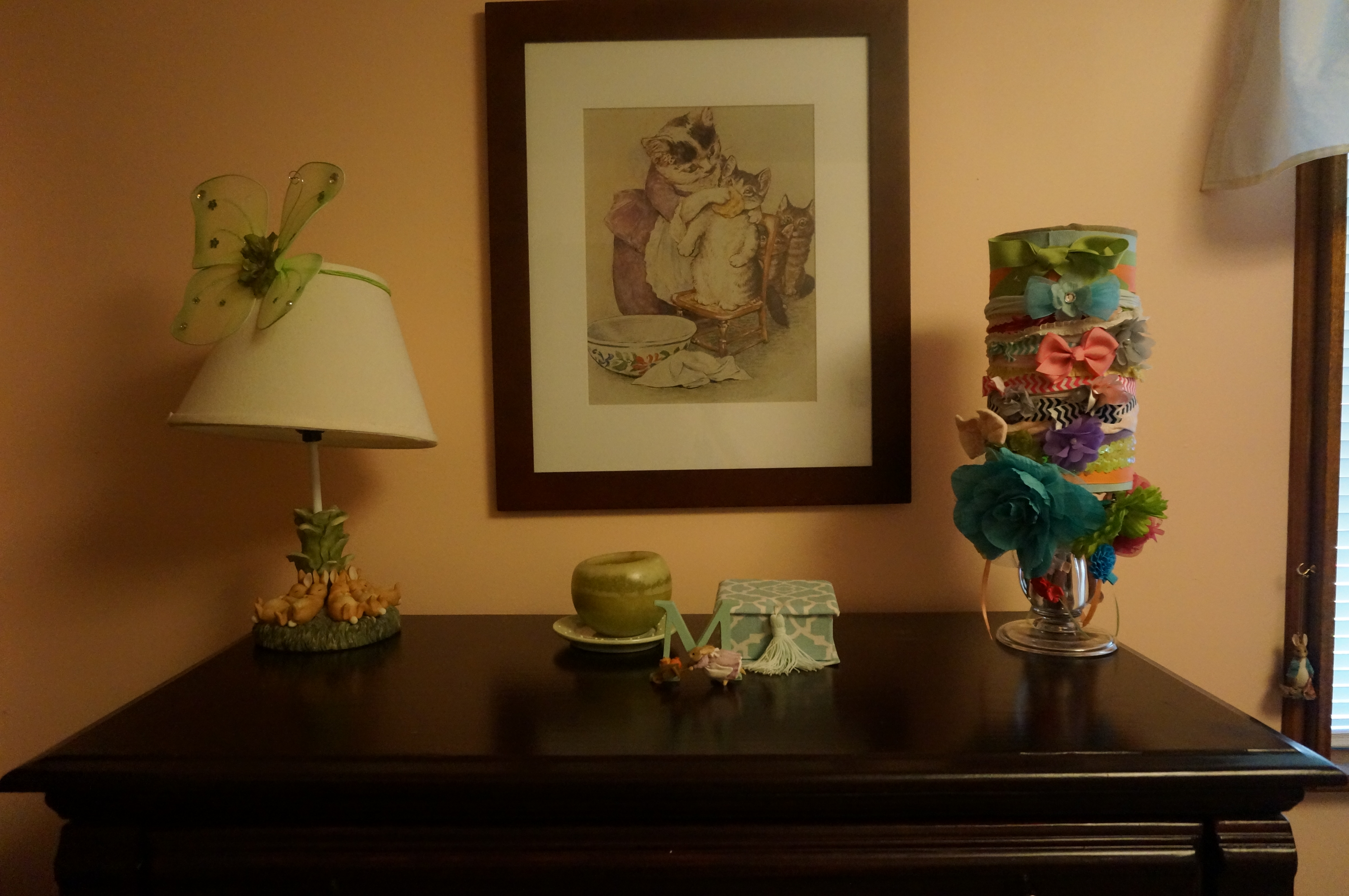
Finished headband holder, serving its purpose of taming frilly bows.

I planned this headband holder for Sofia’s hair accessories some time ago because,while I never feel she has quite enough of the things, they were bursting from their modest little box like the tentacles of a frilly, pastel squid. I had seen a picture of a similar one on a friend’s Facebook page and thought, I could do that. I made sure that the next time we needed oatmeal, I bought a canister instead of getting it in bulk, as I usually do. The canister sat like a cardboard judge in Sofia’s closet for months after that, mutely accusing me of falling into my typical habit of starting projects and never finishing them. It was eventually joined by a heavy glass candle holder I found for 40% off at Target, just the right size to hold the oatmeal canister. Together, their recriminating glares made me cringe every time I opened the door. But I just didn’t have the time to make the project. It would involve, for one thing, going to Jo-Ann Fabrics with a potentially grouchy baby and a preschooler. Jo-Ann has tiny carts, barely big enough for one child to sit in, certainly not adequate for a baby carrier in addition to a lanky 3-year-old.

Meanwhile, I slowly worked my way through the last few boxes of nonessentials that had come over from the rental house we’d lived in our first year here in Oregon. I noted the reemergence of my glue gun and observed that the contents of my ribbon box included some of just the right color. All that was missing was the fabric. And I really, really was not interested in making a pilgrimage to one of my favorite stores accompanied by two small people with a total of four grabby arms and four unpredictably wiggling legs and two sets of lungs and vocal cords and hungry tummies. So. The various components of the project sat, silently judging, while the headbands continued to spiral inexorably from the box. We were at an impasse.

And then. And then. And THEN. Oh my. My darling, my beloved firstborn, who persists in being taller than I can ever manage to remember, got a pair of scissors from the dresser in the master bedroom (I swear last time I looked at him he couldn’t reach the top of it), and experimented with them in our closet. Aaron’s clothes bore the brunt of the experimental snips. He lost a pair of really nice dress pants, a pair of linen pants, and an expensive triathlon suit.

Aaron wasn’t there for the pillage of the closet. He travels as a consultant and is gone during the week. I texted him to tell him what had happened and to ask if he wanted me to attempt to salvage the linen pants by trimming them into shorts. He declined. “Just throw them out. They’re ruined.”

Aaron is not an optimist.

I, however, had already noted what a nice color the pants were. How well they would coordinate with the pale coral and soft green of Sofia’s room. How sturdy, how adaptable the fabric. And of course I did not throw them away.

Making the project…

First I slit the leg of the pants along one seam. I trimmed the bottom hem off – it

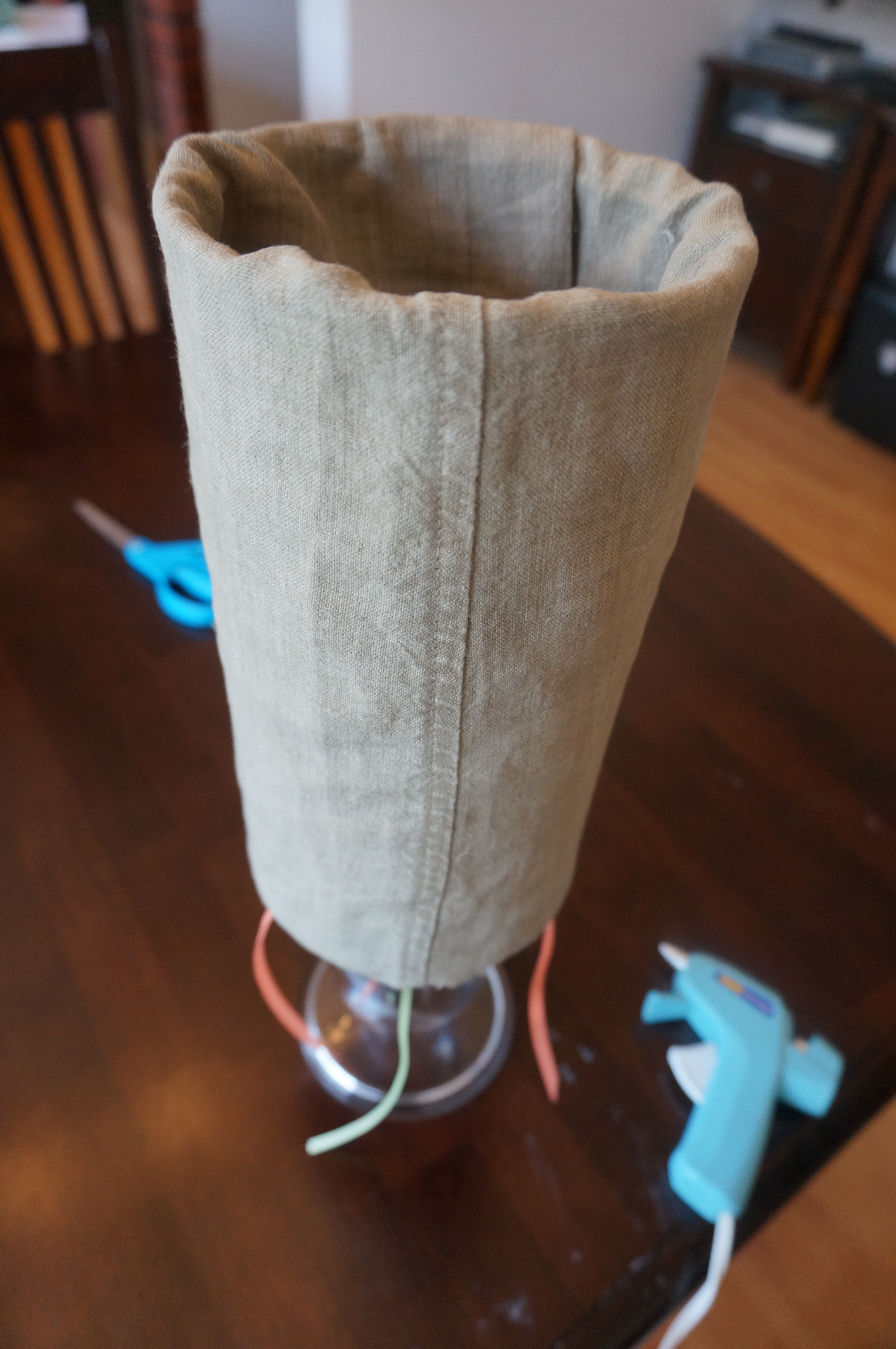
The trimmed pant leg, ready to be glued on.

was scrunched a bit, and I really didn’t need it. Then I laid the oatmeal canister on the fabric and measured off enough fabric along the leg to cover its length twice, and cut that much off the pant leg. I centered the canister on the back seam and wrapped the fabric around it, trimming enough from both sides that it would overlap by an inch or two on the front. That gave me just the right amount of fabric to cover the outside and the inside of the can.

Next, I drizzled a line of hot glue along the length of the oatmeal can, and placed it on the fabric so that the bottom was about an inch from the bottom of the fabric, and the glue was lined up with the seam in the fabric. Making sure I was leaving enough fabric to overlap, I folded over the edge of one side of the fabric and glued it down to make a finished edge for the top. Then I squeezed glue all the way around the top and bottom of the can and rolled it over the fabric, toward the unfinished edge first and then toward the finished edge. With the finished edge on top, I just needed one more line of glue to tack it down so it overlapped the unfinished edge. Then I tucked the excess fabric down into the can so there was no cardboard showing.

In order to be able to have easy access to barrettes as well as headbands, I used

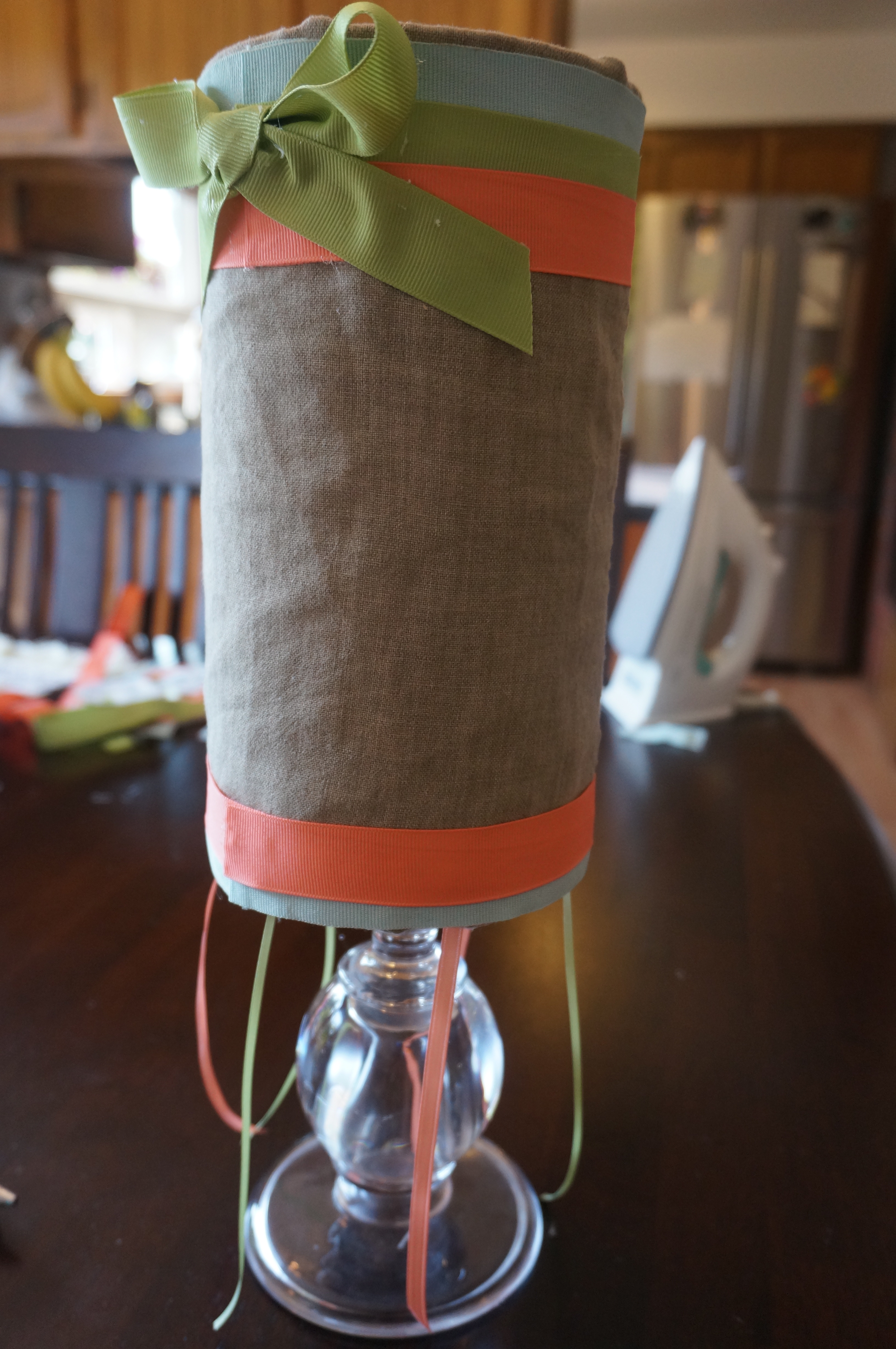
Covered with fabric and mounted on the pedestal with dangling ribbons.

the glue gun to tack six lengths of narrow coral ribbon to the glass base, evenly spaced around the perimeter. A hefty squeeze of glue around the top of the glass base, right on top of the ribbons, secured the fabric-covered can to the pedestal.

I chose three colors of grosgrain ribbon (the kind that’s coarsely woven and sturdy, rather than being satiny). The coral is just a few shades brighter than the paint we used on Sofia’s wall, and the green and blue came from nursery accessories Sofia inherited from Niko. I had removed the ribbons from storage boxes and replaced them with coral ribbon to make them more girly. Now they were coming in handy to help tie this new item in with the

Complete with colorful ribbons to finish off the edges.

rest of the room. I overlapped all three shades at the top, with the green in the center. Just as I had done with the fabric, I folded over one end of each ribbon and tacked it down with glue to make a more finished look. At the base I used more coral to cover the unfinished edge. Then I made a pretty, but simple, bow from the green ribbon. Making it as flat as possible, I glued it onto the green ribbon on the can, and tacked down the ends and the loops so they wouldn’t get in the way of the headbands I wanted to put onto the can.

The finished headband holder, serving its destined purpose of taming rebellious headbands.

The stretchy elastic headbands go around the can nicely. Barrettes dangle from the ribbon. Later, plastic, open-ended headbands can hang over the sides. If I need to, I can use the inside for more storage.

And that’s it. All done in the space of one nap time. I do believe that’s the best ending ever to a story of a preschooler on the rampage with scissors.

Oatmeal Bath Soak

Sofia is suffering from her first-ever real diaper rash. She’s 9 months old and, unlike her brother (who had some incredible rashes that would have had me in a panic if my NICU-nurse husband hadn’t known exactly what to do), has always had soft, smooth skin. She’s had temporary redness on occasion, but never full-blown rash – until now. And, true to the old adage that it never rains but it pours, Niko is having a now-rare eczema outbreak – he had them frequently in Alaska, but his skin has cleared up significantly since moving to Oregon. It’s pretty mild, but I’d like to take care of it before it escalates.

So, it’s time to whip up a batch of oatmeal bath soak! My recipe is based on the ingredient list from a number of (ridiculously expensive) soaks I purchased or was given back when Niko was just tiny. Mine is actually a bit more effective, I think, than the ones I purchased, and costs me quite a bit less. I used it with a lot of success when Niko was in the diaper rash stage, as well as when he was breaking out frequently with eczema on his face.

The first step is to visit a store with a good bulk section to stock up on some herbs and other ingredients. For a small batch like I’m doing today, I use about ½ cup each of calendula flowers, comfrey leaves (you could also use the flowers), and lavender buds. Usually I also add about ½ cup each of powdered goat’s milk and powdered buttermilk. I’m not putting them into this batch because Sofia is very sensitive to dairy in her diet (well, my diet, since she’s nursing), and I’d rather not find out the hard way if she’s also sensitive to it on her skin. I always have oatmeal on hand, but if you don’t, look for it in the bulk section too. Get some baking soda in bulk as well – you need about ¼ cup of it, and it costs much less in bulk than getting it in the grocery section. (I use it in so many things, like room freshener and laundry stain remover, that I always keep lots on hand.) Finally, I like to add a few drops of lavender essential oil. You can find it fairly easily in the “natural” section of many grocery stores. It gives the soak a pleasant smell, and it adds to the healing effect.

Ingredients for bath soak

Next, it’s time to get the ingredients into a workable form. I start by dumping about 2 cups of oatmeal into a blender. It needs to be processed until it’s a fine powder, known as colloidal oatmeal. To make sure it blends evenly, I stop the blender periodically and shake it down. When it is soft and silky feeling, it’s done.

Now I blend the dried herbs. I pour them all in together, about ½ cup of each, and give them a good whirl. They blend more easily than the oatmeal, but it still takes some time to get them to a fine powder. It doesn’t work well to process them with the oatmeal, because the textures are so different. You end up with big chunks of dried herbs, which is unattractive and tends to clog the drain.

Finally, I mix the oat flour, powdered herbs, and ¼ cup each of baking soda and corn starch together, as well as the buttermilk and goat’s milk powders if I’m using them. Shake 4-5 drops of lavender oil over the mixture and mix again. Store it in a sturdy ziplock bag or a glass jar that seals. Don’t overdo the lavender: it can be quite strong, and you don’t want your home to reek like a perfumerie for the next six months.

There are two ways to use it in the tub. When I was first making it, I would dump it right in to the water. It made a sludgy mess, and I would have to scrub the tub afterward, but it worked just fine.

Then I got the idea to use cheesecloth sachets. I just toss the bag into the water as the tub is filling, and leave it in during the bath. The tub still needs to be rinsed, but it’s not nearly as messy. It is a good method for Niko in particular, because his eczema is always on his face, and I can use the sachet like a washcloth and apply the bath soak directly to the problem areas. When the bath is over, I squeeze the water out of the sachet, open it up, and turn it inside out over the trashcan. Then I rinse it in the sink, and it’s ready to use for the next bath. After a couple of baths, or if you know you won’t need it again for awhile, wash it in the delicate cycle. If you don’t want the trouble of washing it out, you could probably use paper tea bags. I’ve seen them in cooking supply stores and in spice and tea shops. They’re easier to find in the fall, when stores are marketing cider spices to simmer in apple juice. I feel like they would be less effective because they wouldn’t allow the oatmeal to disperse as well, and oatmeal is one of the main soothing factors. I haven’t tried it, though.

Soothing bath soak in a cheesecloth sachet

Here is the recipe in a more traditional format.

Oatmeal Bath Soak

Ingredients:
2 cups oatmeal
½ cup calendula flowers
½ cup comfrey leaves
½ cup lavender buds
½ cup powdered buttermilk
½ cup powdered goat’s milk
¼ cup cornstarch
¼ cup baking soda
4-5 drops lavender essential oil

Instructions:
1. In blender, process oatmeal until it is a fine powder [known as colloidal oatmeal]. Pause frequently to scrape or shake down the sides.
2. Use blender to process calendula flowers, comfrey leaves, and lavender buds into a fine powder.
3. Combine powders with remaining dry ingredients in a mixing bowl or large ziplock bag. Add lavender oil a little at a time to desired scent, mixing thoroughly each time you add some.
4. Store in zipped plastic bag or tightly closed container. Add generous scoop to bath to soothe itchy skin or rash.