Sweet Funny Valentine

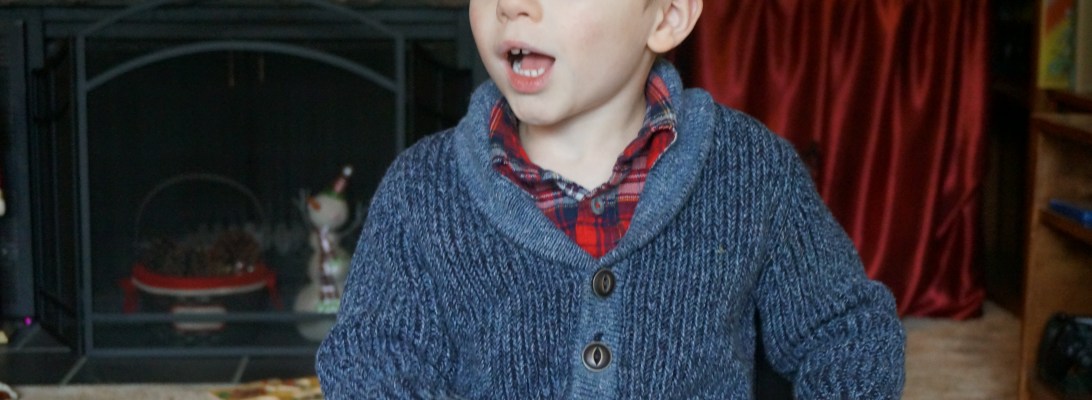
At four years old, Niko’s understanding of “Valentimes” Day is pretty sketchy. “Why is there an arrow in that heart?” he demands. I tell him that there’s a story about someone named Cupid who had a special arrow that he would shoot into people, making them love each other. “But that’s not nice. He shouldn’t shoot people. That hurts.” I explain that it’s a SPECIAL arrow that doesn’t hurt. He’s not convinced. “He shouldn’t hurt people,” he insists.

He feels a certain sense of power, I can tell, selecting Valentine cards for first his classmates, his teachers, then a few family members. He takes the responsibility very seriously, pondering each choice as if it will change lives around the world and through all of history. I have to practice my slow breathing in order to keep myself from ripping the cards from his hands and snarling, “Just let me do it!” I know my impulse is wrong. Bad mom. But I do let him make his choices despite my impatience, so there’s that.

I never experienced this holiday as a child, though I do remember looking forward to February because of the bags of cinnamon hearts you could buy. I grew up in a Christian commune, part of a group known as the Move which held as a minor part of its flexible, ever-shifting doctrine the concept that holiday celebrations were worldly and sometimes pagan and ought to be avoided if one wished to truly dedicate oneself to God. Valentine’s wasn’t actively frowned upon like Christmas and (Lord preserve us) Halloween, but neither was it encouraged or promoted in any way when I was a child. So I never decorated Valentine shoeboxes or prepared cards for an entire class or fretted over whether I, too, would receive candy and cards from friends. I don’t feel I missed anything, particularly — but it’s one more point of connection with my son that’s missing. It’s not an essential one, but sometimes I wonder how many of these disconnected experiences can build up before we have so little in common that we can’t communicate. A silly worry, maybe, but it’s there.

This anxious thought buzzes around in my head, along with Are these cards too big for the shoeboxes? Will other families send candy, or will we be the Bad Parents handing out sugar? Will Niko be able to stay calm during a classroom celebration?  and Did I remember to turn off the oven? as Niko painstakingly scrawls his name in each card. I can never think about just one thing, never truly focus on the task at hand — always my mind is busy with many ideas, questions, worries, plans, all bouncing in different directions until I simply can’t continue. Partly ADHD, partly motherhood, I guess. Luckily, I’m working with a four-year-old, and our attention spans run out at about the same time. We put the stack of cards carefully aside while he colors in another card and I help his baby sister hold a crayon on a piece of scrap paper. He peppers me with questions. “Why do we love each other on Valentimes? Is today Valentimes? Will it always be Valentimes? Can I make a card for you? I want a card that says Niko.”

I try to explain that yes, ValentiNNe’s Day (stress on the NNNNNN as a tactful pronunciation correction…) is a special day for loving each other, but really we always love each other, and that he will have lots and lots of cards that say Niko once all his classmates bring their cards to school. He isn’t entirely convinced, but he’s enjoying writing the cards, so he accepts this for now.

After school Wednesday, the day of his class’s Valentine celebration, his face shines with the aura of a child who’s had an excellent time. On his head is a red heart-festooned headband, with heart-tipped antennae bobbing on the front.He didn’t make it; he wasn’t feeling especially participatory, but he wanted to wear one, and a kind friend made one for him. He touches it carefully, with pride, telling me about his antennae that he can smell with, pointing out the heart cutouts, adjusting it on his head. Then he shows me his little mailbox, crammed full of tiny cards. His face reflects his amazement. “Look at all my cards!” His amazement grows when we open them at home, and he discovers that some of them have special treats: a deconstructable little hamburger, a Spiderman and a heart eraser, sticky gel clings, a lollipop.

My love bug
My love bug

Clearly, this holiday is going to be a favorite. Love, arrows, antennae, candy…how much better can a day get? I don’t miss celebrating it when I was little, but at the same time, I’m glad I get the chance to see the pleasure on my son’s face as he looks over his little cards and gifts, evidence that another child was thinking about him, too.

Happy almost-Valentine’s Day!

Glamour Girl

I have a problem. Maybe it’s vanity, maybe it’s rigidity of routine, but whatever the cause, it’s this: I cannot leave my home without makeup. In fact, if I don’t apply makeup even on a day I plan to spend home alone with kids and no husband, washing dishes and digging in the garden, I still feel oddly incomplete. It feels like something minor yet nearly essential is missing, like a fingertip or an earlobe. It feels simply wrong.

I wish I weren’t like this. I wish I didn’t feel the need to extra-feminize and perfect my face for even the most simple human encounter. I wish I weren’t still writhing in shame for having greeted the UPS carrier yesterday with a face bare of makeup except for mascara and tinted lip balm (plus, unfortunately, Capri-length yoga pants paired unflatteringly with too-long socks). I wish I could wear cosmetics as a deliberate, occasional choice, rather than a compulsion.

I remember when my rigid routine began. I was maybe fourteen. Makeup was new to me, and I was at the age when kids on the Christian commune where I grew up were sometimes given occasional, informal lessons on etiquette and rather old-fashioned comportment. For girls, this involved exercises like walking with books on our heads, standing with our feet angled just so, practicing lowering ourselves gracefully with knees together and spines straight to retrieve a dropped item, and setting a table correctly.

And we learned to apply makeup. Just like the lessons in comportment, this was informal — and not, I realize now, meant to be part of that curriculum. One of the “aunts,” as we called many of the women around our mothers’ ages, was a Mary Kay consultant, and she would sometimes hold parties at which the teenage girls were especially welcome. She’d show us, step by step, exactly what to do: how to apply makeup in a ladylike and reasonably modest manner. She gave us pointers like “Never wear eyeliner without lipstick” and “Always put on foundation.” And she told us, gently, firmly, and repeatedly, that a lady always applies makeup before leaving her home.

I know she wanted to give us an edge in life, the advantage of beauty and confidence. She couldn’t have known to what ridiculous extent I would internalize her advice. I don’t know why I was so susceptible to suggestion in this area, but somehow her iron-strong will, clothed as it was in charm and elegance, imposed itself on me.

My mother rarely wore any significant amount of makeup, but she had no problem with my own dabbling. She even showed me the basics and helped me buy and apply my first cosmetics. And, possibly knowing that I was in danger of being influenced away from her nearly-feminist tendencies, she gave me her own makeup advice: “Use makeup to highlight your best features, not to paint on a new face.” It’s good advice, I think. Thanks to her, I keep my makeup minimal, sometimes nearly invisible. But it’s there.

These days, Sofie is extra-needy in the morning before breakfast, and I often find myself applying makeup with her on my hip. She watches in the mirror, smiling to see our faces together. Her baby hands reach out for my tools. Occasionally her success results in mascara-blackened fingers or a scraping of blush under her tiny fingernails. Sometimes I hand her a fluffy brush, and she chuckles as she strokes first her face, then mine. I love sharing these moments, but part of me cringes.

I want you to be braver than I am, I want to tell her. I want you to be bold. I want your confidence in yourself to be unconnected to your makeup skills. I want you to show the world your real face without shame.

But another part of me looks forward to teaching her how it all works. First foundation, next cover-up, now blush… Never wear eyeliner without lipstick… Use lip liner so your lipstick doesn’t smudge. I want to dive with her into a new world of grown-up glamour. Nail polish, high heels, the perfect stockings for that special party dress.

In the best scenario, we’ll find balance. She won’t hear a lovingly firm, well-meaning, Southern-tinged voice in her head, telling her that a lady should never leave her house without makeup. I’ll remind her that cosmetics should be used to complement her best features, not give herself a new face. And I’ll give her my own advice: “Only wear makeup if you feel like it. Take a break now and then. Be brave. Don’t let anyone else tell you how your face should look.”

And maybe, just maybe, Sofia will go into the world with confidence and beauty, free from the need to change her face to satisfy someone else’s idea of what women should look like.

IMG_2197.JPG

All I Want For Christmas…

Christmas felt different this year. This year, at the age of four, Niko was more aware of the onset of Christmas than previous years yet. For one thing, he understands time a bit better, and the anticipation was agonizing. Grandma and Grandpa’s visit seemed unbearably far away, and, when wrapped gifts finally appeared under the tree, he inquired every day when it would be time to open them. The excitement, the longing, the anticipation — all were new.

This was the first time our son really thought about Christmas in terms of gifts. It was difficult for me, in a way, to see how much space gifts occupied in his mind. My family and my church didn’t celebrate Christmas at all as I was growing up, and I was raised to believe that one of the vices brought by Christmas is the avarice and materialism displayed by overindulgent gift giving. I’ve moved past that particular part of my upbringing, and I love Christmas now — lights, ornaments, gifts, and all. But despite my current embracing of the holiday, I cringed a bit at Niko’s obvious desire and worry that he might not be getting what he wanted. Since he saw some of his baby sister Sofie’s gifts but none of his ahead of time, the accumulation of Sofia’s gifts seemed to far outweigh his, and he was desperately worried that we had forgotten to get him any. On the other hand, his little Christmas list remained modest and consistent. I asked him some time ago what he wanted. His response was prompt and clear: “I want an Olaf snowman and an Olaf book and a toy dog.” Each time afterwards that we asked him for his Christmas list, he repeated the same items with only minimal variation. As anxious as he was over the gifts, he really had only three simple items that he desired.

But it wasn’t all about the anxiety of anticipation. He rejoiced in the colored lights, thrilled at the responsibility of plugging in the tree lights each morning, and delighted in learning Christmas songs at preschool. Opening the doors of the Advent calendar each night (well, many nights — I wasn’t that great at remembering to do it) was a ritual that he loved. In fact, he loves everything about the holiday. He loves the sparkling candles, the colorful ornaments, the hope of snow.

One day Niko, Sofia, and I went shopping at an outdoor mall we’d never visited before, and there was a giant lit tree in the center square with two lovely snow fairies posing for photos with passersby. His eyes lit up with amazement: “FAIRIES! Those are REAL fairies! Can we take a picture of them for Dad?” (His dad travels often, so Niko thinks in terms of taking pictures so Dad can see whatever it is we’re excited about.) He was absolutely amazed, and even more excited when he got to stand by them and have a picture taken. I’m pretty sure that was a highlight of his Christmas.

We saw Santa numerous times over the holiday, and Niko was never quite convinced that it was a person wearing a costume; he hasn’t really accepted our story of a kind man named Nicholas who lived long ago, whom we now remember as Santa Claus. He’s pretty sure Santa is real, and Mom and Dad just haven’t caught on yet. Every time he spied Santa his face would beam with pleasure. “There’s Santa!”

So it wasn’t all about the presents. Not even close. I’ll admit, though, I worried a little that Niko would be so overwhelmed by all the gifts we and his grandparents had gotten for him that he would forget gratitude, that he would become numb to the joy of finding something new in each package. But Niko is the master of being amazed, and he was thrilled with each and every gift.

To my delight,one of his favorite gifts was a fox face cut from an old shirt of his, that I sewed into a pillow and that he’s slept with every night since Christmas. It was inexpertly sewed, but still, the fox was a highlight. About a year ago, that shirt had been almost new. He’d sneaked away with his scissors one day and snipped all over the front of it. When I saw what he’d done, I was upset, and so was he, because he hadn’t realized how destructive the scissors were. He thought he’d never see that fox again. On Christmas Day, when he pulled the fox- shaped pillow out of his stocking, he recognized it right away. He smiled with his entire body as he hugged the little pillow. I guess the reason his pleasure over that pillow delighted me, too, is that it shows he isn’t entirely captivated by shiny new THINGS. He understood the value of the fox pillow immediately; realized that I’d taken something he’d destroyed, and lovingly transformed it into a huggable bedtime cuddle friend.  He understood that the pillow represented time spent, and hard work, and thoughtfulness, and he responded accordingly. His understanding and gratitude are now one of my favorite Christmas memories.

As it turns out, all I really wanted was to see genuine joy on my son’s face. I saw that, and suddenly all my worries about materialism and avarice evaporated. Watching open his Christmas presents was the most fun I can think of!

Here are some of Niko’s amazed faces:

Guilt Trip: In Search of Perfection

Guilt. I can’t seem to escape it. I’m not talking about shame, the sense of sorrow and regret that comes with specific wrongdoing. No, I’m talking about, in the words of Merriam-Webster’s online dictionary, “feelings of culpability especially for imagined offenses or from a sense of inadequacy : morbid self-reproach often manifest in marked preoccupation with the moral correctness of one’s behavior.” (A tip of the hat to my mother/English teacher for forcing us to write all those definition compositions.) In other words, I’m constantly pursued by a sense of culpability…even when I’m doing the right thing.

Example: Right now I’m writing this post, having just finished loading and starting the dishwasher, doing some much-needed photo editing work in preparation for a project, and getting lunch for the kids. I should be enjoying this short-lived bubble of peace while both children eat and I don’t have to nurse anyone, change a diaper, or field a thousand questions. But no, even though writing is my most fulfilling personal indulgence (maybe because?), I can’t truly enjoy the moment. Instead, the back of my brain is filled with a jangle of accusations. You should be finishing that tablecloth you started for the Christmas village table. Aaron’s gifts aren’t wrapped yet. The bathroom mirrors are still smudged. Why haven’t you cleaned that smear on the wall next to the high chair yet?

Even when what I’m doing is a useful chore, I’m followed by the guilt. It’s like a persistent toddler clinging to my leg, unreasonable and impossible to nudge away. Did I choose to spend some time hanging clean clothes in closets? The guilt tugs — “What about the baby clothes you still haven’t finished organizing?” Maybe I walk down the lane to retrieve the trash bins — “But look at the weeds in that garden bed! What is WRONG with you?” If I’m not careful, the million demands, each choice accompanied by anxiety about all the other undone things that I didn’t choose, can become so overwhelming that I retreat, usually into a book. Then I simply don’t finish any of it.

If possible, it was even worse when I was teaching, before I put that on hold to focus on being a mom. For one thing, I was responsible for twenty-five or thirty people, and responsible TO even more. For another thing, every choice I made to accomplish something meant that I was neglecting not just other tasks, but other people. If I spent six hours scoring my students’ writing assessments on a 6-point rubric and entering their scores into a spreadsheet that calculated their progress from the last time I did this same activity, that was six hours that I wasn’t spending with my son and husband. If, on the other hand, I spent just half an hour grading spelling tests and math timed tests and then went for a snowy walk with my family, that walk was two hours I wasn’t using to plan the next week’s lessons. There was no winning. Ever.

I’m sure that my ADHD is in part to blame for the constant awareness of ALL THE THINGS! that need to be done. But there’s more to it than that, and today I’m going to venture into the dangerous land of theology to talk about that extra dimension of anxiety and guilt. The more I think about it, the more I believe this needs to be said.

You see, I grew up in a highly religious setting, in one of a network of Christian communes, known as the Move, scattered across North America (there are a couple on other continents, as well). Some of this religious upbringing was beneficial; some, not. I’m thinking of two particular doctrines that are a common thread throughout all the groups and, I think through other fundamentalist-type churches as well: the doctrine of perfection, and the doctrine of death to self.

Perfection. It sounds so innocuous. So desirable. To the devout, the lure of being perfect in God’s eyes might be irresistible. It sounds so … well, so godly. It sounds like a worthy pursuit. “Be perfect, as your heavenly Father is perfect,” said Jesus (Matthew 5:48), and it’s hard to argue with that. Those living in the Move, and perhaps those in similar churches, hear the message preached regularly. I heard it more times than I could count as I grew up. Here are the words of one of the church’s leaders, Buddy Cobb, taken from the same Wikipedia page I linked to above: “Therefore, what are you saved by? His life! What are you saved from by His life? Saved from living your own life; and when you live your own life you are always living in sin.” The idea is that every single aspect of a life ought to be given over to the pursuit of God; one ought to be entirely immersed in God, leaving nothing of the original sinful human.

It might be hard to see how embracing a doctrine of perfection could be harmful. But I’m here to say clearly and loudly, though with love and apologies to my family, that it is a poison. It creeps into every aspect of an otherwise healthy life, tainting good and pure choices with fear. Fear that this activity does not bring sufficient glory to God. Fear that what I’m doing might be too self-celebratory, too lacking in the edification of the spirit. Fear that the new skirt that looked so appropriate in the dressing room might be a fraction of an inch too short for the high standards of modesty, that my friendship with someone might override my “relationship with God,” that my pleasure in a school assignment done well might be a source of sinful pride. Once you become convinced that God demands absolute perfection, every action comes under scrutiny lest an accidental sin slip past, darkening your soul with a stain that must be scrubbed out through prayer and invoking of Jesus’ blood. Every choice has to be held up to the light and examined: Could I be doing something more godly, more useful, less selfish? The fear becomes all-consuming, blotting out the joy of a well-lived life.

But here’s the thing: This is not the life that Jesus lived. Jesus did not second-guess his every action. Nor did he recommend that his followers do so. He preached compassion, kindness, and living a life of purposeful goodness. Here is the context of the “Be perfect” command: Rather than adhering scrupulously to the law passed down over the course of two thousand years from Moses, Jesus asked his followers to fulfill the spirit of that law. Instead of being satisfied with refraining from murdering, his followers were told to not even insult another person. If an enemy sues you for your coat, give them your shirt also; if someone hits you in the face, offer them the other side to hit as well. Love your enemies. Be peacemakers. The whole point is not to live less of a life, but to live more. It isn’t about being restrained by a series of religious prohibitions; it is about accomplishing the original purpose of the law, to be guided toward God. Yes, Jesus said we ought to be perfect. And when, like a well-brought-up church-school student, we check Strong’s Concordance to see what the word “perfect” originally meant, we see that it means brought to its end, finished, complete, mature. Jesus was telling his followers that they should be living to fulfill their potential. I’m sorry, but Jesus did not once tell his followers to stop making their own decisions. Jesus did not say that living your own life is sin. That is a twisting and a perversion of what should have been a freeing message.

It’s especially damaging when combined with a second doctrine, that of “death to self.” This doctrine explains that the human self is miserably sinful. The only way to achieve rightness with God is by constantly denying oneself. A good rule of thumb when adhering to this doctrine is that if you like something, it’s probably your “flesh,” or human nature, guiding your desire, and you should quickly abandon it and go read your Bible for awhile. Of course, it’s a bit problematic if you happen to be a teenaged girl reading The Message, a uniquely down-to-earth and clear translation of the Bible, and you stumble upon the Song of Solomon. What could be more spiritual than reading the Bible? And what could be more fleshly than this beautiful and erotic love poem? That’s a dilemma, for sure. Anyway, the idea here is that to be perfect, we must deny ourselves. Constantly.

If you take these two doctrines seriously, you end up starving your soul of the good and beautiful things that God put into this world for our enjoyment. You like chocolate cake? Go on a chocolate fast! Feel like lingering outside to watch a lovely sunset? How trivial! Go wash the dishes and pray for stronger commitment to God! Have eyes for that cute boy? Pray all night for purity of mind. Enjoy a good romance novel? Better burn those books…No, who am I kidding, just tuck them under that loose floorboard, you can writhe in miserable contrition tomorrow when you’re done reading the last one. My point? We aren’t meant to be starved of earthly enjoyment. God did not create the earth as one giant temptation, to see how long we could go before giving in and enjoying something. I find it hard to understand how some Christian sects ever came to embrace that doctrine, considering that our founder (I’m talking about Jesus) was known for being a “wine-bibber,” enjoying a good party, and being frequently found in the company of harlots and other people of low repute. But somehow they did. I grew up being told routinely that all personal desires were wrong, and that God demanded utter perfection from me.

I know my mother will protest that she didn’t teach me this, and she’s right. My mother is an excellent example of a person who takes all this with a great big grain of salt. My parents don’t live a life of constant self-denial, nor do they fret endlessly over whether each choice they make is godly. They just live. But, as I tell them, when a child is raised communally, parents are only one source of input. When you attend three to four devotional times per day, two or three church services per week, and Scripture-infused classes at school, your parents’ practical example fades into the background and is overwhelmed by the desire to live up to all that goodness you’re bombarded with throughout the day. I know, logically, that most people, even in The Move, don’t actually take the dual messages of perfection and death to self literally or even all that seriously. If you ever stop in to the farm for breakfast when the world’s best Danish pastries are being served (crisp, light, melt-in-your mouth deliciousness), you’ll know that self-denial is not a big part of everyday life. But that doesn’t mean that the messages aren’t damaging. They are. For someone who’s grown up immersed in those messages, they’re inescapable. They are part of the blueprint of my brain. They’ve imbued my soul with a persistent stain of guilt that no amount of rightdoing will eradicate.

Of course, I’m well aware that I’m responsible for my perception of the teachings, for my own internalization of them, and for my inability to shake loose from the effects. I’m not out to point fingers of blame or to minimize my own culpability here. I am here to ask that we carefully consider the end results of teaching people that one’s own desires are wrong simply by virtue of being their own desires; that God demands literal perfection and absolute freedom from sin; and that the only way to achieve perfection is to sacrifice individuality on the altar of God’s will. If the logical consummation of following a doctrine is a life tormented by anxiety and formless guilt, then there’s something wrong with that teaching. It’s time to stop systematically telling children that the only way to please God is to reject everything that makes them happy.

Photo credit: Wikimedia Commons

Remembering Aunt Robin

Right about the time this message first makes its way into the world, my family back home in Northwestern Ontario will be remembering the life of Aunt Robin, who isn’t really my aunt but has always, nonetheless, been in my mind one of “the aunts.” It’s not to be a memorial service, my parents told me firmly. Aunt Robin didn’t want it to be a big deal. Not long ago, when a friend who lived “in town” — that is, outside the borders of the triad of communes where I once lived and where she lived right up to the end — when he passed away, his family held a gathering that must have been more like a family reunion than a memorial service. People coming and going, visiting, eating, while a photo montage played to one side. When she heard this description, Aunt Robin insisted that her own memorial be like that. No speeches, no teary memories. Just friends enjoying each other.

That’s pretty typical of Aunt Robin. Her joy was in watching her family enjoy themselves, not in being the focus of attention. I remember she had a particular smile that came out when she watched her good cooking being enjoyed. She would sit quietly after the meal was served, and look out over the tables in the big dining room. Each table could seat a couple of nuclear families plus some singles, but nobody was hampered by table boundaries — everyone would be turning to interrupt and add to conversations at other tables, calling across the room to ask a question or tell news. There’s a particular tone to the conversation of a large group of people who are enjoying the food that’s in front of them. I don’t know how to describe it except that it’s different from the sound the same people make when the food isn’t as enjoyable. Anyway, I’m pretty sure Aunt Robin knew the sound too, because she’d look out over her big noisy family, and a quietly satisfied smile would come over her face. It wasn’t a smile of pride, but one of pleasure. Seeing us happy made her happy.

Aunt Robin didn’t want a big deal, with teary accolades from a podium. No fuss, no drama, just friends gathering to remember. So instead of listing off all the things that made her amazing (there were a lot), I’ll just tell one story. The kind of story you might tell in a gathering of friends to say goodbye to a loved one.

I was eleven, and freshly transplanted from a remote trapline in Northern British Columbia to the commune after seven years away. I had early memories of communal life, and I’d visited other groups during our time away, so the transplant wasn’t the cultural shock it might otherwise have been — but still, after seven years spent mostly in seclusion with one’s own family, a crowd of thirty or more people at every meal is an adjustment. What made the adjustment more difficult during those early days of our return was an uncomfortable feeling that the adults had some expectation of me that I wasn’t meeting. I couldn’t put my finger on it, and I was far too shy to ask anyone. I just knew I was doing something wrong.

I remember standing in the roomy kitchen at the island counter. Aunt Robin had asked me a question, and as I answered, my eyes slid away to gaze somewhere near her shoulder. I didn’t put any thought into this action — it’s just the way I interacted. She leaned in close, her hand gently patting mine, and whispered, “It’s okay to look at my eyes when you talk to me, you know.” She said it with not a trace of sarcasm or malice. She just wanted me to know that it was okay. It jolted me, the realization that THIS was what the other grown-ups weren’t telling me. Maybe they, like me, couldn’t put their finger on what was different about me. But Aunt Robin, a gifted observer, saw it. She knew it was making me stand out, causing discomfort. And with that gentle whisper, she helped me fit in.

It wasn’t until years later, as an adult, that I read that it’s common in northern First Nations and Alaska Native groups for children to avoid eye contact with their elders, out of respect. I hadn’t known that, but I must have picked it up living in an area with a high Tlinget population. It was a cultural difference that most people living farther south wouldn’t know about. I don’t know if Aunt Robin did — probably not — but she was perceptive enough to see not just that I did it, but that I somehow thought that doing otherwise would be wrong. “It’s okay,” she said, and gave me permission to become part of the group. It was such a loving act. She didn’t stand outside and judge my differences; she leaned right in and made me welcome.

That invitation, that reassurance, was who Aunt Robin was. Inclusive, loving, radiating peace. She was a child magnet for that very reason. Someone small was always in her lap or her arms, or leaning on her, or on a step stool at her side learning to make perfect pancakes. That’s how I’ll always remember her.

Siren Call

I saw the flashing lights up ahead, beyond my turn: an ambulance and a fire truck. I craned my neck to see what had happened, but the emergency vehicles blocked any view of details. I parked at my bank and got out of the car, walking carefully on the ice in high heels as I hefted Sofia in the car seat carrier. As I stepped onto the sidewalk, I heard the spine-chilling sound of sirens approaching, heading toward the incident that was now out of sight. Pausing, I turned toward the highway. Police car? Another ambulance? I wavered, hesitant to go about my business when an emergency was occurring just down the road.

Reluctantly, I pulled my focus away from the sirens and turned back toward the building. As I did, I noticed several people in the parking lot. All were doing normal people things. Walking with a cup of coffee to their cars. Wrestling children into car seats. Talking to a friend while maneuvering along the icy sidewalks. Chatting on a phone. One man glanced curiously at me, his expression indicating mild concern. Nobody looked toward the sirens; it was my own interest, not the life-and-death drama nearby, that was causing puzzlement.

I find this attitude hard to adapt to. When I was growing up, I lived in a small town — a really small town. Three hundred people, approximately, including the one hundred or so distributed across three communes that made up the core of the town’s only regularly-attended church. At a guess, I’d say a quarter of the men and most of the high school boys (and a couple of girls) in the commune, as well as quite a few from the rest of the village, were members of the volunteer fire department. Others were paramedics and ambulance drivers. Whenever these volunteers weren’t at work, a pager would ride belts and jacket pockets. It wasn’t terribly unusual for a church service, communal meal, or morning devotions to be interrupted by the high-pitched jabbering beeps of several pagers in chorus, followed by a staticky announcement of the location and nature of the emergency. The room would go still as everyone froze to hear what was happening. And then, mass exodus ensued as people rushed for jackets, grabbed keys, and hurried to cars, some to man the fire truck or ambulance, others to go directly to the scene of accident.

The volunteers in the commune’s high school obtained permission to carry pagers in class because the fire department was so short-staffed. Depending on volunteers for the entire staff, except the chief (at that point, my youngest uncle; he now trains other emergency responders), meant that it was hard to hold on to able-bodied members, so the high school kids added valuable bodies to the ranks. The first few times the pagers went off in class, the students on the department exchanged excited, slightly smug grins as they made a dash for the door. Skipping class for an exciting event — what could be better? But those expressions of anticipation and glee didn’t last through too many calls. Soon they were replaced by a businesslike squaring of the shoulders and a hint of grimness around the mouth and eyes. Once you’ve helped cut another human’s mangled remains out of a crushed car, or sprayed down flames on a derailed train and semi truck containing  a charred corpse and a beheaded man, you realize that this isn’t a party. This is harsh, gritty reality. My friends were in the front ranks of the battle against highway hazards. Each pager signal was the starting bell of a race to save a life.

And always, the pager signals were followed by the sound of sirens. Those sirens were personal. They were meaningful. We could tell the difference between the ambulance siren and the fire truck. If police sirens were added, that was an added layer of gravity. If we heard a siren go by, we’d instantly start analyzing: What direction was it going? Which vehicle was it? We’d mentally list the people we knew who were ill, or pregnant, or doing a dangerous task. At times, the sound of sirens was a signal to pick up the phone and start making calls. Hello, Julie, I heard the ambulance. Sounded like it was going north. Is Nana okay? Or, Is Connie having the baby? Do you need a ride to the hospital? Or maybe, I just saw the ambulance turn into West Farm’s driveway. Is someone hurt? You couldn’t hear a siren and remain detached. Every siren meant that someone you knew and loved could be in danger — either having had an accident, or responding to a dangerous emergency.

It’s been years since I left the commune and village to join the rest of the world. Now, when sirens go by, the victims and drivers are unknown to me. It’s no longer personal. But I can’t act as if nothing is happening. I can’t avoid the knowledge that a siren might mean someone is dying, or hurt, or in fear of their lives. When I hear a siren, I turn and look. Even though I can’t take action, I can pause for a moment to send a thought of support for the emergency response team, for the people who might be in need of help, and for the people I love at home who are still volunteering their time and bodies to help others.

I realize most people haven’t had the experience I have. But just for a day, do me a favor. When you hear a siren, pause and think about the people involved. Take just a moment to be human, to react to the sound of danger. Just for a few seconds, stop and send your thoughts out to the men and women risking their lives to drive ambulances and fire trucks. They could use the good energy.

Photo credit: commons.wikimedia.org, by Michael Gil from Toronto, ON, Canada.

Most Wonderful Time: Christmas Past and Present

Sparkling beaded garland stretches around a green tree, white lights are sprinkled across the green branches, while the shimmer and glitter of painted-glass ornaments catch and reflect the glow. Under the tree is a red-and-copper tree skirt I sewed several years ago when the perfect tree skirt refused to appear in shops. On the table, ornament-shaped candle holders dusted with gold and red glitter rest atop my grandmother’s hand-woven table runner next to tiny vases filled with wintry twigs and berries. A gold paper star in the window, lit from within by an electric tea light, sends out a gentle glow. Brightly-decorated nutcracker soldiers guard the fireplace, while a jolly ceramic snowman stays safe from a curious baby behind the sturdy iron screen. High on a shelf, a silver Advent calendar is ready to count down to Christmas. A tall Santa in stately robes presides over the living room’s festivities from the next shelf. Down below, a winter village has escaped from the pages of Charles Dickens’s books, the windows and street lights gleaming convincingly. Cheery colored lights embrace the front windows and the edge of the roof. Our favorite carols flow through the air. A baby’s dimpled hand stretches cautiously toward the twinkling lights, eyes wide with wonder, turning toward us for reassurance. A small boy dances around the room, pausing periodically to inspect the new finery. Talk of gifts and cards, wrapping paper and ribbon, and a chance of snow next week, all twine through the air, merging with sparkle and glow to form an unmistakable feeling: the holiday season is upon us.

I’ve only been celebrating Christmas for about twelve or thirteen years, so the candles and lights and music feel new and exciting to me, too. I don’t stare and dance like my children, but I revel in the explosion of holiday decor all the same.

I grew up in a peaceful, prayerful commune that was strictly nonobservant of all holidays — well, except for Thanksgiving. Christmas wasn’t as bad as Halloween, the devil’s day, but we still regarded Christmas celebrants with a certain amount of sorrow and pity. We pitied all those foolish people who’d never figured out that Jesus was born at harvest time, not in the middle of winter. We felt a certain scorn for those who didn’t know that the season was a continuation of Druidic and Pagan and Roman holidays, all in celebration of other gods. And hadn’t anyone pointed out to them that Santa is an anagram of Satan?

It never occurred to me that people might simply not care about all those valuable facts.

People crave light and color, especially green, in midwinter. It’s especially notable in northern climates, where winter is dull and grey. The shortness of those monochrome days does something to the psyche. And the month or so leading up to the Winter Solstice is the perfect time to push back at the darkness. People like to claim that “Jesus is the reason for the season,” but if that were really the case, we’d be celebrating in October-ish and our motifs would be straw, tiny babies, and pregnant mothers; not glittering lights and shining gold and silver. Solstice has been celebrated for millennia; Christmas is a newcomer to the scene. The darkness, my friends, is the reason for the season. Darkness, and a craving for light. And there’s no shame in admitting that.

I remember the winter my mom’s best friend got (re)married. She has been like a second mother to me, and her generous spirit makes her well loved in the trio of communes where I lived. We wanted her wedding to be perfect. A winter wedding was uncommon, so we had no season-appropriate decorations ready to be reused, no fresh flowers to brighten the rooms. Someone had the bright idea to twine green garland and white twinkle lights around the stairway banister in the main house on our farm. “But won’t that seem a little… Christmassy?” someone worried. Everyone considered the problem for a moment. As one, we all silently decided: we didn’t care. The garland and lights went up, not just on the banister, but on the front porch rail as well. The following year, those decorations quietly appeared again in November. And again the year after that. No one called them Christmas lights. No one even mentioned them. But our winter-starved eyes drank in the glow and the green, like stranded desert travelers bask in the cool of an oasis.

These days, long after my departure from the farms, everyone is a bit more relaxed about the holiday. They have a big Christmas dinner with lots of visitors from the village. Some families put up trees and even share gifts. You can occasionally hear Christmas carols, maybe even in the church service. You could look around a living room on Christmas Eve and never know you were on a highly conservative religious commune. It’s almost…normal. It doesn’t surprise me. That first garland meant that full-blown Christmas was an inevitable eventuality. Once you experience the lifting of the spirits that comes with the lights and glitter, it’s hard to go back.

As I look around my cozy living room, at my little ones awed and delighted by the new festive decorations, I feel the reassurance that back home, they’re doing the some of the same things. It’s a connection that is strangely meaningful to me — strange, that is, considering how far removed my life now is from what it was. I guess it’s a little personal sign that says: It’s okay. No matter how far you go, you’ll always be connected; this will always be home. And there it is. Connection: the second “reason for the season.” The sense that we are together, even when we’re apart. That our love doesn’t have to grow thin as the physical distance stretches between us. Family is family, and always will be.

Crokinole and Turkey

At this time of year, as holiday traditions are being hauled out and dusted off, I feel the distance from my Canadian family with an extra pang. I miss the joyful sense of celebration, the gathering of a big, noisy group, everyone talking over each other, fielding a dozen hugs in ten minutes. Our little family is building its own traditions, and they’re good ones. But still, at this time of year, I miss my childhood home and my family in Canada.

For me, “family” includes a hundred or so people distributed across three small communes within a five-mile radius in Northwestern Ontario, but especially the residents, current and former, of the West Farm. (Generally I try to keep location and name details out of my posts to protect the privacy of my loved ones on the farm. In this case, it officially goes by a different name, so you won’t find it on a map should your curiosity prompt you to look.)

Even in our secluded community which refrained from worldly celebrations, Thanksgiving was a big deal when I was growing up. It had the benefit of being neither Halloween (the Devil’s own celebration, as I mentioned in a previous post) or Christmas (a worldly holiday of pagan roots marked with prideful indulgence). It was one of the “Big Three”: Thanksgiving, convention, and graduation. Convention was a yearly long-weekend event. The important leaders of our network of communes and churches, known hierarchically as the “Traveling Ministry” (the lesser traveling preachers and teachers)  and “Father Ministry” (the ruling class who handed down decisions both religious and practical), would arrive in March. Visitors would come from all directions to attend all-day revival-style services, causing our group to double or triple in size for several days. High school graduation was nearly as exciting: families of the graduating seniors of our little school would travel to congratulate them, the formally dressed seniors would present speeches, everyone would enjoy a big celebratory meal, and the seniors would open stacks of gifts. It was as close to prom as we ever got — pretty dresses, suits and ties, and lots of excitement, balloons, and confetti, though without dancing or limousines or clandestine make out sessions.

But Thanksgiving was the big one, the special one. It was just us — no out-of-town visitors, no preaching, no speeches. Just good food, family, and after-dinner games. Sometimes we’d invite a few families from outside the commune, or some single police officers or a nurse on assignment at the nearby nursing station, without family nearby. But just as often, it would be only familiar faces.

The women would bustle around the kitchen all day, cooking up a storm. Six or so pies would materialize by dinner time: two or three apple pies, at least one each of pumpkin and pecan, maybe a blueberry pie for good measure. Someone would usually whip up a batch of butter tarts. (For the non-Canadians reading this, butter tarts are a bit like the good part of pecan pie with all those nasty big pecans taken out. This one from Canadian Living looks like a good recipe, though I haven’t tried it.) We’d start fresh rolls in the morning so they’d come out of the oven, crusty and fragrant, before the pies had to go in.  One of the cooks would invariably make a sweet potato casserole topped with brown sugar or marshmallows or both; someone else would comment that it looked awfully sweet, whereupon the maker would suggest that perhaps another of the many side dishes might be a better choice for the complainer. And this was certainly a good point, because there would be more than enough side dishes. Stuffing — made with bread cubes, of course, not cornmeal. Huge steaming pots of mashed potatoes, which had been peeled and diced by the younger cooks to keep them out of trouble and spare the adults the tedium of peeling dozens of potatoes. Green beans with bacon. Occasionally roasted sweet potatoes, a concession to the objections of a few to the sweetness of the marshmallow-topped casserole. There would always be cranberry jelly… the real, clear jelly, from a can, of course. Sometimes someone would make cranberry sauce from scratch, but that never replaced the jelly.

Cooking took all morning and afternoon, but for us younger girls, there might be time to enjoy the day off school. We’d race out of the kitchen, grateful for the reprieve from peeling endless piles of potatoes, and pull on heavy snow pants and coats, thick mittens, warm hats. Sleds jostled behind us from the sheds of houses as kids made a beeline for the big hill. We’d swoop down on sleds or on slick snow-pants-covered bottoms, some daredevils trying to ride the sled down standing up, others swearing that going belly-down made the ride faster. The sleds rushed down with solo riders or crammed with as many bodies as could fit, with arguments erupting at the bottom over whose job it was to pull the sled back up. Noses would turn pink, eyelashes frosted over, fingers and toes froze as the afternoon darkened to a blue twilight. Finally, we’d trudge inside, trooping into the kitchen to see if anyone had made hot chocolate. If there was enough stovetop space and anyone had had some spare time, there might be a big pot of made-from-scratch hot cocoa waiting on the range. Maybe one of the ladies had made banana or zucchini bread to snack on, or maybe we grabbed a leftover muffin from breakfast, while one of the moms poured mugs of hot cocoa for all of us. There might even be marshmallows bobbing in the mugs.

Dark came early in a Northwestern Ontario October, so it wouldn’t be dinner time yet, but people would be wandering into the main building early anyway, setting up board games on empty tables and pulling out musical instruments.  A Crokinole game would occupy the place of honor at one of the round tables — it didn’t take long for eight people to claim places around the board while others gathered to watch, and a game as competitive as any at our peaceful commune would commence to the tune of guitar strings tuning up next to the piano. (Crokinole, by the way, is another Canadian tradition. It’s usually played with two or four people, but the board can accommodate up to eight.) A few more cerebral types would gravitate to the Scrabble board, while  a game of UNO broke out in a corner.

Meanwhile, kids busily put out stacks of plates and baskets of silverware on the big island counter in the kitchen, filled water pitchers, and carried drinking glasses to the tables. Iced tea, which had been sequestered away in a back refrigerator lest teenage boys down it all before dinner, was brought out into the open and distributed to tables in pitchers, because even in the winter no celebration was complete without iced tea. An aunt bore the giant turkey triumphantly from the oven while the mouthwatering aroma swept the rooms. Rolls were tumbled into baskets while girls scooped potatoes out of the big pot into glass bowls, and two women attacked the turkey, carving it into neat slices. Finally, the food was all arranged on the counter, buffet style, and we flocked to our places at the table for a blessing before we dug in.

When we were stuffed with as much food as we could manage, a guitar would softly strum, the piano would echo the notes, and we’d sing songs together: our after-dinner daily tradition. Songs about giving thanks, about love, many of them written by people sitting there in the room.

Cleanup wasn’t too much of a chore; at the tables, dishes were stacked at top speed and quickly scraped and carried into the kitchen. Dads wiped tables and grabbed brooms to sweep the floor of the big dining room, while the kids manned the dish tubs and dried clean dishes. Moms and aunts swiftly wrapped food for the refrigerators. Then, cleanup complete, it was back to the board games and cozy visiting.

My dad would bring out a few new jokes, his sober joke-telling face carefully prepared in advance, always hopeful that the punch line would take the listener by surprise. His brothers would gently jeer — “I heard that one three months ago!” — while they competed with their own stories, others chiming in. Occasionally, a few people would present a skit: nothing serious, just a sketch designed to draw laughter, usually involving costumes we’d thrown together from our collection of old or silly clothes, wigs, and odd accessories. A piano player might wander over to the instrument and run her fingers over the keys, and teenagers would migrate to the piano corner like iron filings to a magnet. Somebody would add a guitar, then another, maybe a mandolin or banjo or hand-made fiddle or classical violin, and we’d sing one song after another while others visited or tried to best each other at the Crokinole board.

Thanksgiving was a day for family time. It wasn’t anything exciting, I suppose. No family feuds, no drunken quarrels. No Black Friday — in Canada, Thanksgiving is on a Monday in October, too far from Christmas to be dragged into the holiday shopping chaos. Besides, we didn’t celebrate Christmas (although we did love finding good deals). It was pretty simple: good food, music we made ourselves, family. And this time of year, I find myself thinking more than usually of my family.

So, to my American friends and family, let me wish you a wholehearted Happy Thanksgiving; and to my Canadian family, thank you for giving me these warm memories of simple traditions. I love you. Happy Thursday.

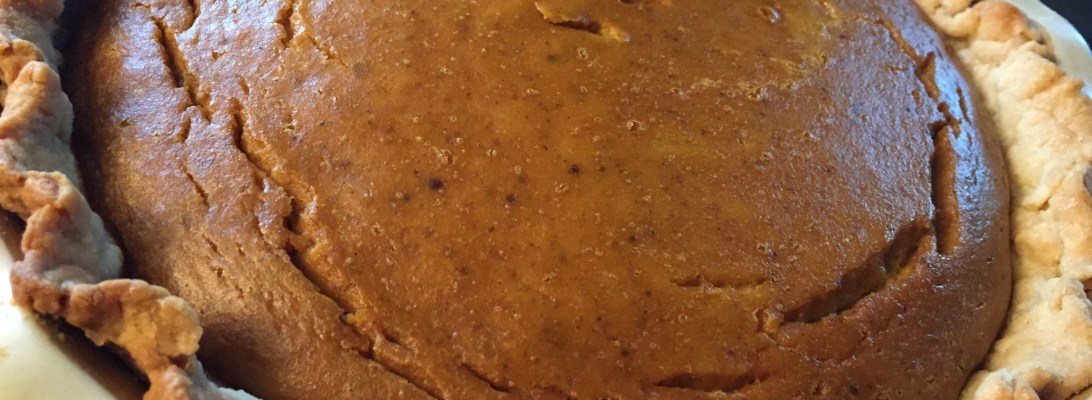
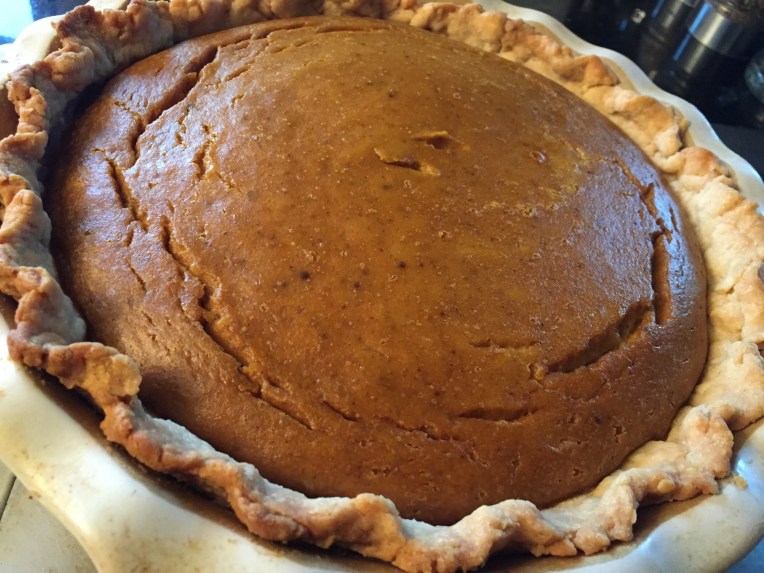
This year's pumpkin pie.
This year’s pumpkin pie.

Holidays: The Sanctified and Unholy

From my dear friend Gracia, who, like me, grew up communally. Loved reading her Thanksgiving nostalgia!

babygrapes's avatarWhat Would Babygrapes Say

When I was growing up, we didn’t do Christmas. Christmas was eschewed as a Pagan Holiday established by the Ancient Romans in observance of the Winter Solstice and celebrated by the Modern Harlot Church, whose followers chose to dwell blindly in the Outer Court. Nay, we were a Sanctified Holy Remnant faithfully abstaining from such Worldly traditions.

View original post 1,169 more words