Lollo Rosso… Aster?

In a supreme act of sacrifice, I allowed all of my lettuces this year to bolt, and then further allowed them to remain in the garden and take up valuable space — all so you, dear readers, could see what happens when Lollo Rosso lettuce (a red loose-leaf) flowers. Some may say this was due to laziness. Others may speculate I merely forgot about them, allowing my memory to be consumed with the minutia of daily life. Whatever. Haters gonna hate. I’m sticking to my story: sacrifice, all for you.

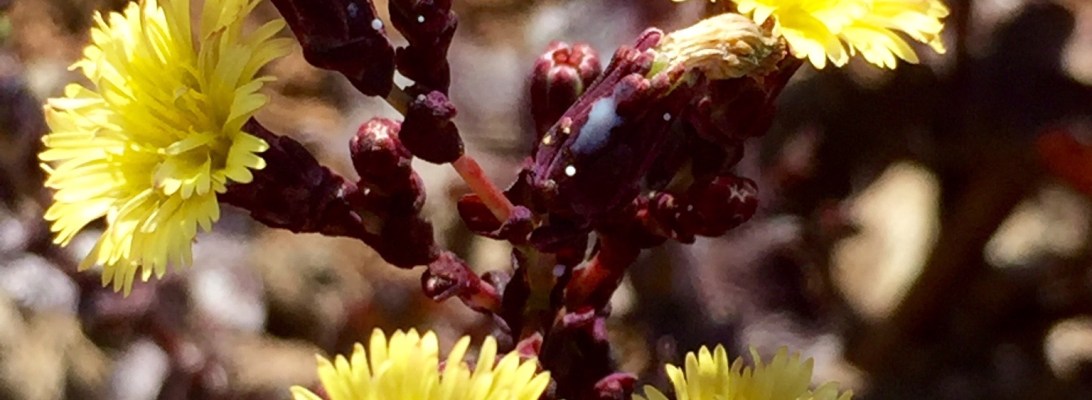
Lollo Rosso lettuce flower

I always assumed, if I thought about it at all, that lettuce was somehow related to cabbage, which is a brassica, like broccoli and mustard. I have to admit, there was never any basis for this assumption. Broccoli leaves aren’t at all similar to lettuce, after all. I suppose my belief came from the similarity between cabbage and lettuce heads.

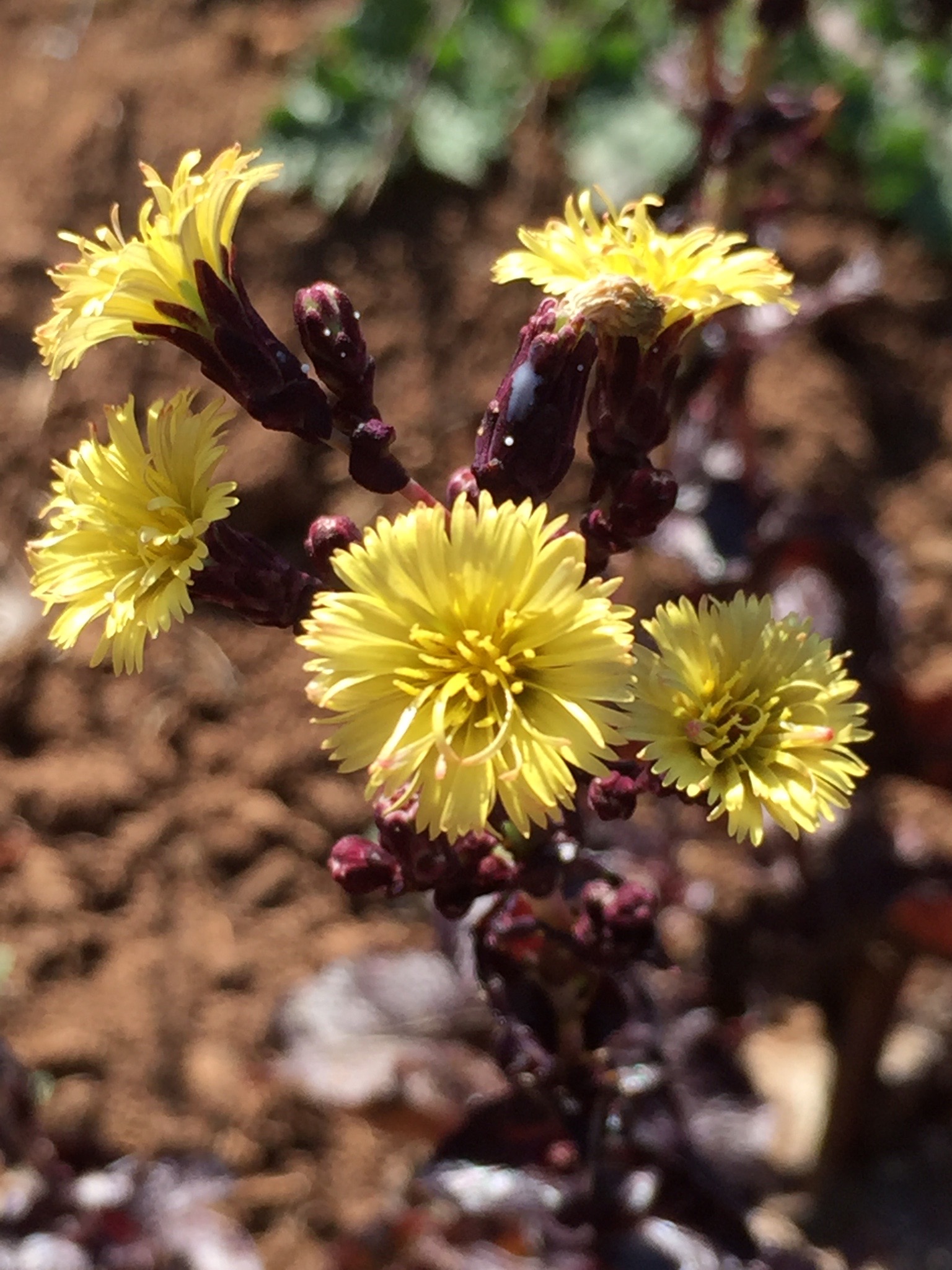
When cabbage and broccoli bolt, they make very tall stalks covered all over in five-petaled yellow flowers (yes, I’ve got some of those too). Not so with the lettuce. I was amazed to see these soft, aster-like, yellow flowers growing above the Lollo Rosso’s red leaves. They’re surprisingly decorative.

Lollo Rosso lettuce flower

Naturally, I turned to the ever-knowledgeable Internet to explore the mystery. As the appearance of their flowers suggest, lettuce is a member of the aster family, as are daisies and chrysanthemums. I had no idea. All this time, I’ve been munching edible daisy leaves in my salads and on my sandwiches. We might as well rename our bacon-lettuce-tomato sandwiches, BDTs. Or we could call them BATs (the A for aster, of course), and cut them into appropriate shapes as Halloween treats. I’m staggered by today’s garden discovery, as I’m absolutely certain you are. Aren’t you glad I made the sacrifice of that patch of garden so we could all learn this valuable new fact?

(Not Sun-) Dried Tomatoes

Last night, as I was finalizing bedtime with kiddos, Aaron went out into the moonlit garden (it was a waxing gibbous moon, he told me) to pick two buckets of Roma tomatoes, a total of about four gallons. He had decided to make dried tomatoes. He loves sundried tomatoes; I don’t particularly, so he took the job on. These won’t be sundried tomatoes. These are simple dehydrated tomatoes. I’m not sure the difference will be substantial, however. They came out smelling absolutely delicious, with a beautiful deep red color. I’m really happy with them. Here’s what we did:

Step One: Lay fairly thick slices — about a quarter of an inch thick — onto dehydrator trays (metal cooling racks on a baking sheet are a perfectly viable option, too). Aaron sliced about three gallons of whole tomatoes and filled eight round trays.

Lay 1/4 inch slices on the dehydrator trays.

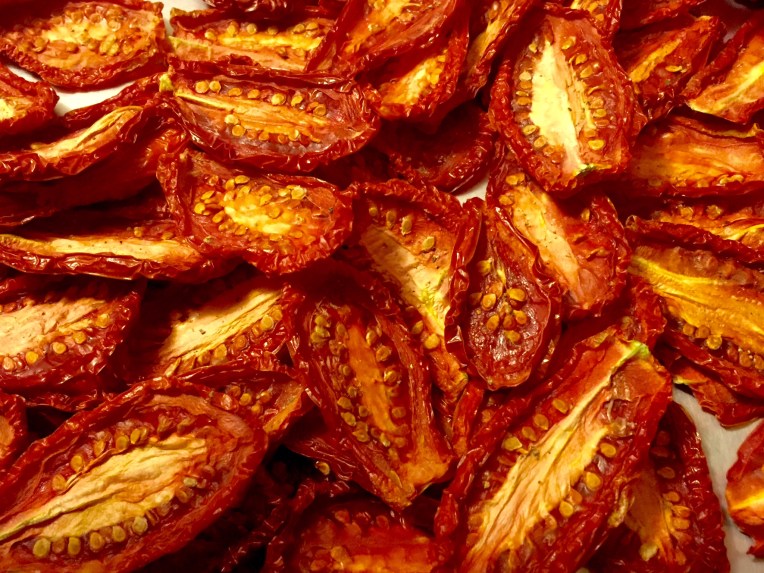
Step Two: Let the dehydrator work for about ten to twelve hours at 140-160 degrees. If you don’t have a dehydrator, use an oven at the same temperature setting if possible, or 200 if that’s as low as yours will go — but use extra caution if that’s the case to be sure they don’t dry too fast and scorch. You may find a few of the thinner tomatoes are thoroughly dried after only eight hours. You’ll know they’re dry when they’re nicely crisp with a rustly sound when you touch them. Some of the thicker ones may feel ever so slightly supple when dry, but there should be no hint of stickiness or moisture. Thicker ones or end pieces will take longer to dry (a few of ours took up to sixteen hours).  Keep checking back about every hour. In an oven, check more frequently. Unless you have a convection oven or some other method of keeping air moving constantly, there’s a good chance the tomatoes won’t dry evenly, so you’ll need to turn the pan periodically and trade top and bottom pans if you’re doing more than one pan.

Beautiful dried tomatoes.

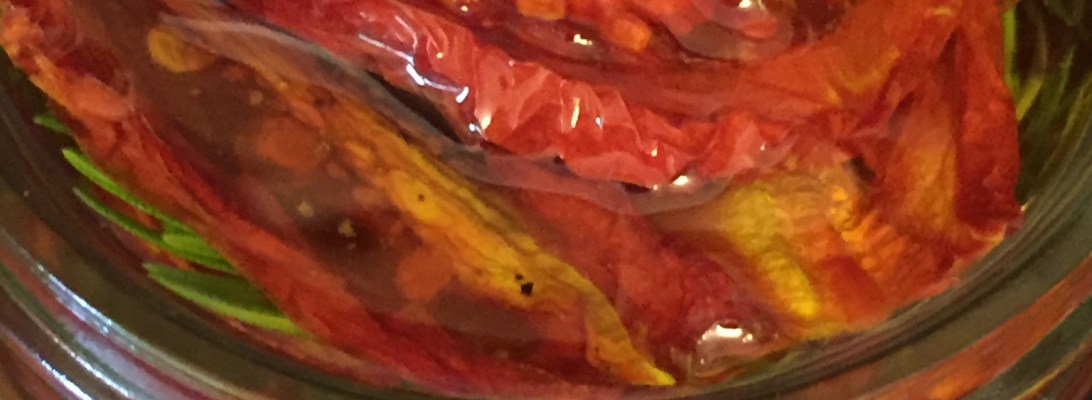
Step Three: Soak a few in herb-infused olive oil. It’s not recommended to store food long-term in oil (the oil can actually protect tiny pockets of liquid in which botulism, a potentially fatal bacterium, can grow — not good!), but this is a delicious way to prepare the dried tomatoes to eat. I layered the dried tomatoes with fresh rosemary and thyme in a jelly jar, packed fairly tightly.

Then I poured olive oil into the jar up to the top, and put the lid on tightly. Note: one small jar. I repeat, this isn’t a long-term storage solution. This is a way of making the texture softer and more chewable, and of adding flavor to the tomatoes in preparation for eating them or cooking with them. Store them for up to four days in the fridge if you’ve used fresh herbs, as I did, or if you’ve added garlic into the jar. The olive oil will solidify at the cooler temperature, but if you let it sit at room temperature before you need the tomatoes it should become liquid again pretty quickly.

If you use dried herbs, you should be safe letting the tomato-and-herb mixture in oil sit on a shelf for a few days, or storing it in the fridge for a bit longer than with fresh herbs. (Should I repeat the no long-term storage in oil thing, again?) One exception to the only a few days thing: If you’re really attached to your beautiful tomato-and-oil mixture (it really is pretty), and you can’t use it all up in a short time, dump it into a bag and freeze it! Problem solved.

Step Four: Seal the rest of the dried tomatoes in double-bagged zipper bags or vacuum packs, in small quantities so you don’t waste them once opened. Be sure to label them with the contents and date. If they’re well-sealed, you should be able to store them for up to a year. I plan to repeat step three above each time I open a bag of the dried tomatoes.

Step Five: Enjoy! Chop and add to a savory bread dough, spread across a pizza, toss with creamy pasta, add to a salad… The list goes on and on.

Here are some good resources for vegetable drying, oil and vinegar infusing, and vegetables in oil; and safe storage of all of the above. These articles are where I got a lot of my details about how long it’s safe to store the dried tomatoes in oil versus bagged. Yes, I really read them all. Haven’t I mentioned I’m a compulsive reader?

  • An article from The National Center for Home Food Preservation, hosted by the University of Georgia, gives several methods of preserving methods, including canning, drying, pickling, and freezing. The author, Elizabeth L. Andress, Ph.D., emphatically reminds you not to preserve dried tomatoes in oil. Because BOTULISM. Okay?
  • Oregon State University’s Extension Service has an article called “Food Safety & Preservation: Herbs and Vegetables in Oil,” which gives safe times for storing infused oils and vegetables in oil (hint: the times are short).
  • Authors P. Kendall and J. Rausch, from Colorado State University, also give information about flavored oils and vinegars in an article called “Flavored Vinegars and Oils.”
  • Another University of Georgia resource is “Drying Vegetables,” from the Food and Nutrition series, by P. Kendall, P. DiPersio and J. Sofos. This one has a lot of details on different methods and includes facts on food-safe materials for drying racks..

Meow

There are parents out there — you know who you are — who freely, glibly, almost joyfully lie to their children on a regular basis. Behavior modification, comfort, pure and simple fun — all are justifications for these routine lies. They range from “Jimmy Kimmel told me to eat all your Halloween candy” (do a YouTube search for that –there are some heartbreakingly funny videos out there), to “Santa won’t bring you any toys if you pull the puppy’s tail,” to “Yes, sweetie, your purple polka-dot shirt looks charming with those camouflage capris,” to “That green stuff on your plate is elf farts, and if you eat it all you’ll be able to fly! (Oh, how sad, I guess you must have missed some crumbs on your plate.)” Lies, boldfaced lies, and I’ve never truly understood the common propensity toward this parenting approach. It’s one area that brings me perilously close to the brink of breaching my personal life philosophy of non-judgement. 

I guess my near-yielding to temptation to judging others might be why I found myself in a sticky situation a couple of days ago: a demonstration of just why parents might feel moved to act in such ways. 

We’d had a long morning, and opted to stop in for a bite at McDonald’s so we could finish shopping before going home. Immediately inside the door was a display of the Happy Meal toys: wind-up monster trucks, and Hello Kitty toys. Sofia, who will be two in about three months, adores “meows” and instantly recognized Hello Kitty as such, and began hopping up and down in joy as she shouted “Meow! Meow!” I glanced at the options: a little tin with stickers, and several figures. I could see the tin would be too difficult for Sofia’s little hands to manage, so I resolved to request a figure instead. 

After the meal, I realized I’d forgotten to request a Hello Kitty figure. I checked the bag: yes, it was a tin. I carried it to the counter, which was, I was thankful to see, nearly abandoned on the customer side, and apologetically explained the situation. The server was understanding — I guessed she had kids of her own — and did a quick search for a replacement. 

Unfortunately, they were all tins. She had just one figure. She brought it to me, shaking her head, as she showed me that it was even worse — it featured an ink stamp on the bottom. “Let me look in the back.” She was doing way more than she needed to, and I was grateful and by now feeling guilty, but she was gone before I could say I’d just take the tin anyway. 

She returned in a few minutes. “There weren’t any more Hello Kitty toys. I just found this.” She extended a rather adorable purple, bewinged, single-horned, flowing-haired My Little Pony. 

I was torn. I recalled Sofia’s eager bouncing and exclamations of “Meow! Meow!” On the other hand, I couldn’t possibly reject this woman’s hard work to help make a little girl happy. She had had no obligation to try anywhere close to that hard; there was no way I could hand the toy back. I smiled, thanked her for her generous help, and returned to the table. 

I handed the toy to Sofia, pasting an enthusiastic smile onto my face. “Look! A PURPLE PONY!”

Her face fell. She pulled her hands back, shook her head sadly. “Meow?” She looked around, as if expecting a cat to materialize from empty air next to her. “Meow!”

I took a deep breath. I gritted my teeth. I drew on my deepest reserves of parenting strength. And then, my friends, I held up that pony in front of my toddler’s sad little face, and I said, in a voice imbued with the very richest sincerity I could muster, “This is a meow. Look! Meow!” I danced it toward her, making highly authentic cat sounds. 

The light returned to my little girl’s eyes. She squealed with delighted laughter, startling the nearby diners, and grabbed the purple pony with a triumphant crow of “Meow!” 

 From then on, we have referred to the pony as a meow. Even Niko, our literalist, was convinced to adapt the new terminology when he realized what was at stake. 

And I realized, once again, that judging other parents just isn’t kind. You really don’t know why they’re making the choices they’re making, why they’re in the situation you see. I still don’t get the humor in getting  kids to cry as you tell them that Jimmy Kimmel told you to eat all their Halloween candy, but I’m willing to accept that maybe even those parents aren’t actually terrible parents. We all make different choices, based on what our children (and we) need. And maybe what those parents needed after an exhausting Halloween was some side-splitting laughter at their children’s expense. I guess. (No, sorry, I still don’t get that one.)

 So next time I hear you lie to your child, I promise, I’ll try a little harder not to judge, as I remember the transformation from devastation to joy that I saw on my own daughter’s face when I told one tiny little lie myself two days ago. Meow.  

Kissing the Meow

Pickle Spice

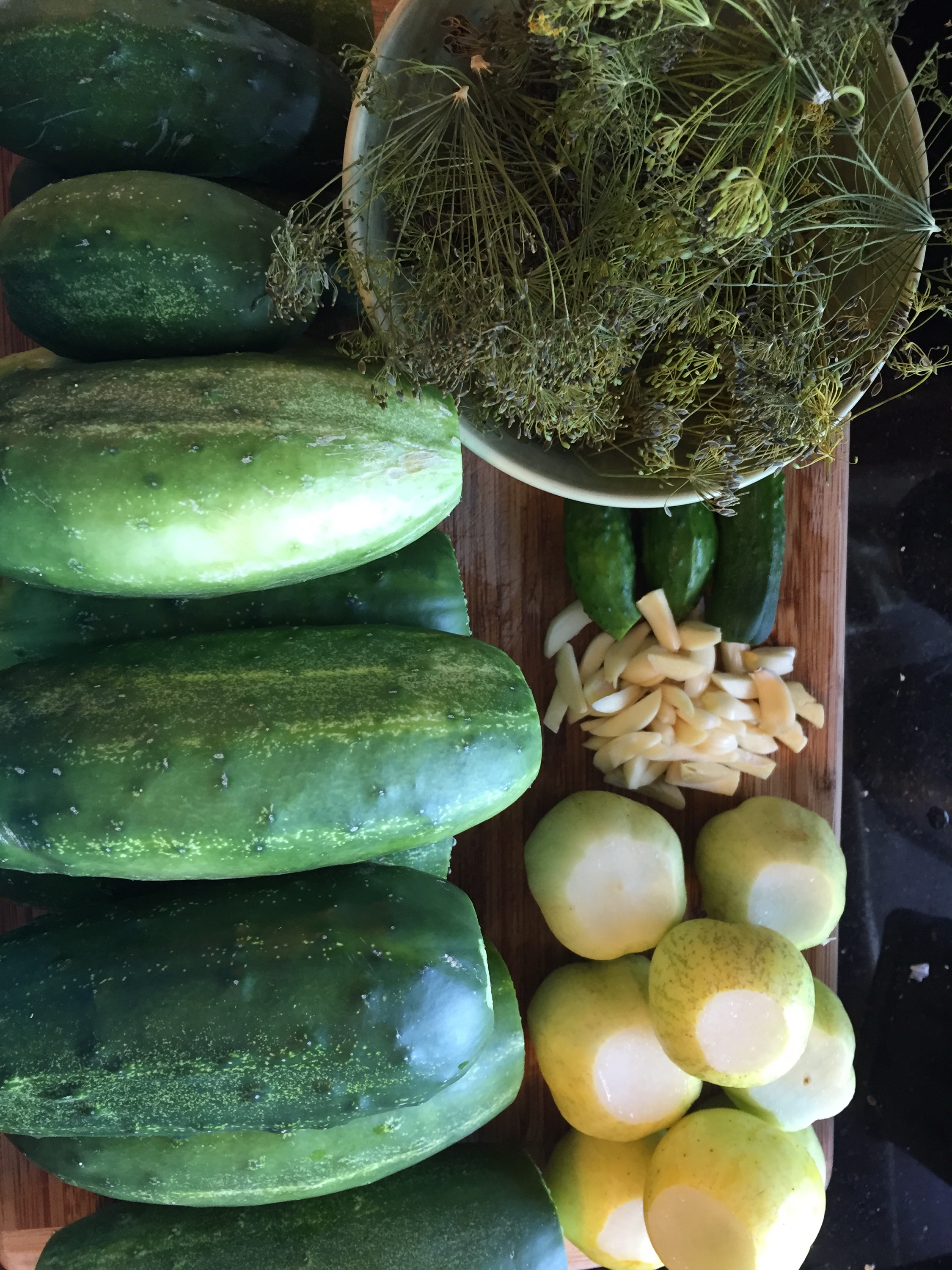
I’ve been making pickles all summer. At first my pickling cucumber vines produced only a few little cucumbers per picking, and I had to save them up in the fridge all week just to get enough for three pint jars. But then they took off! And that’s when I offered a little prayer of thanks that I’d mixed up a time-saving batch of pickling spice early on.  

Last summer, and the summer before, I experimented with pickle flavors. I found various seeds and spices I liked, and I painstakingly measured each one individually into each jar of pickles. It added quite a bit of time to the process. This year, I thought… Why am I doing this?

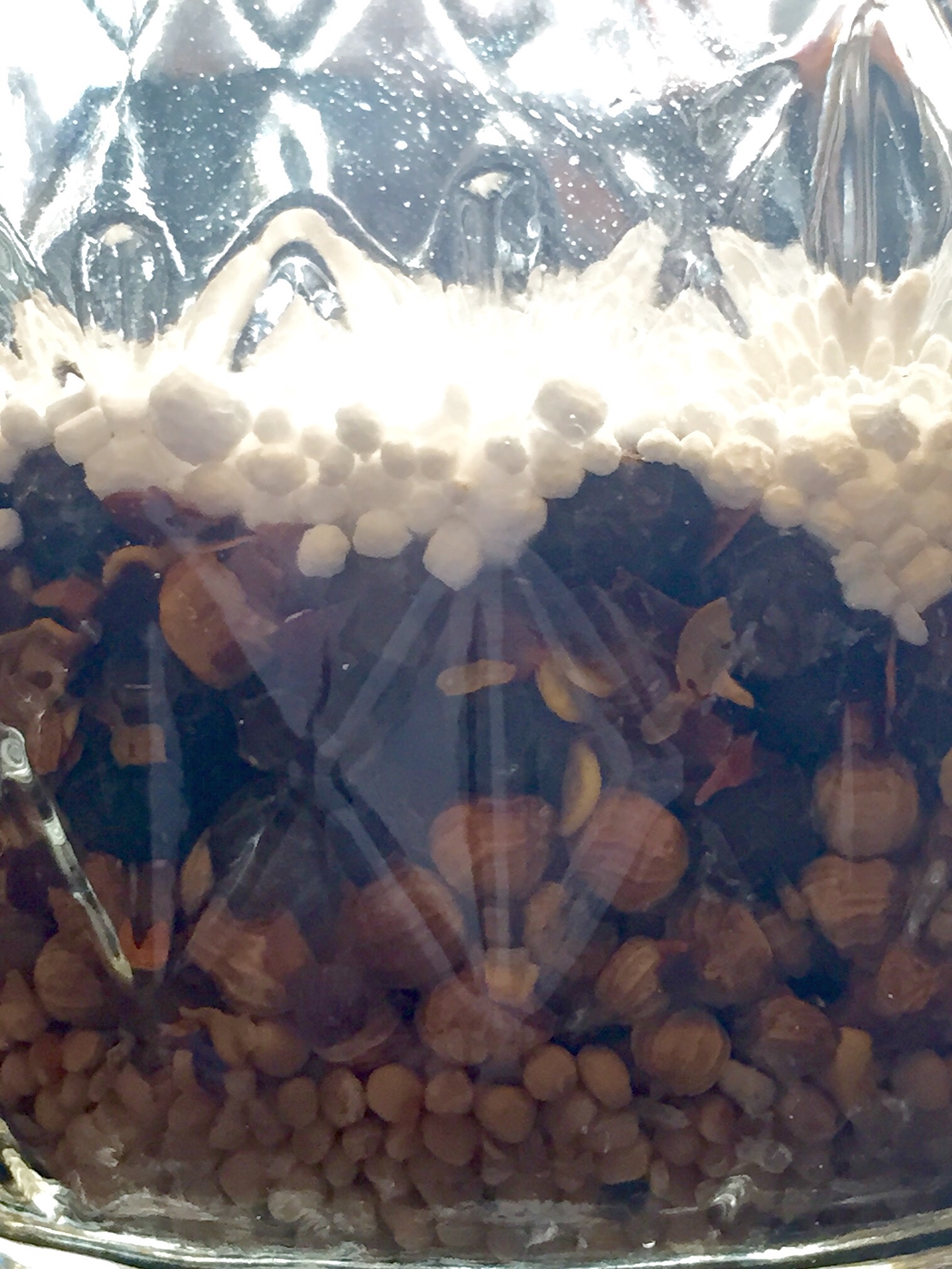
I measured my favorite spices into a jar in the proportions that matched the balance of flavors that work best. Then I added in some Pickle Crisp, which I get at the grocery store with all the canning supplies. The final step, believe it or not, was to measure out a half-teaspoon of the finished spice mix and pick out all the Pickle Crisp into a measuring spoon, to make sure my calculations were correct and each scoop would have one-eighth teaspoon of the little granules. (I was correct, and it added up. Phew!)  

  You’ll notice there’s no dill in this recipe. That’s because I like to use fresh dill in my jars. If you prefer to use dill seed, just add some in and increase the amount of Pickle Crisp accordingly. 

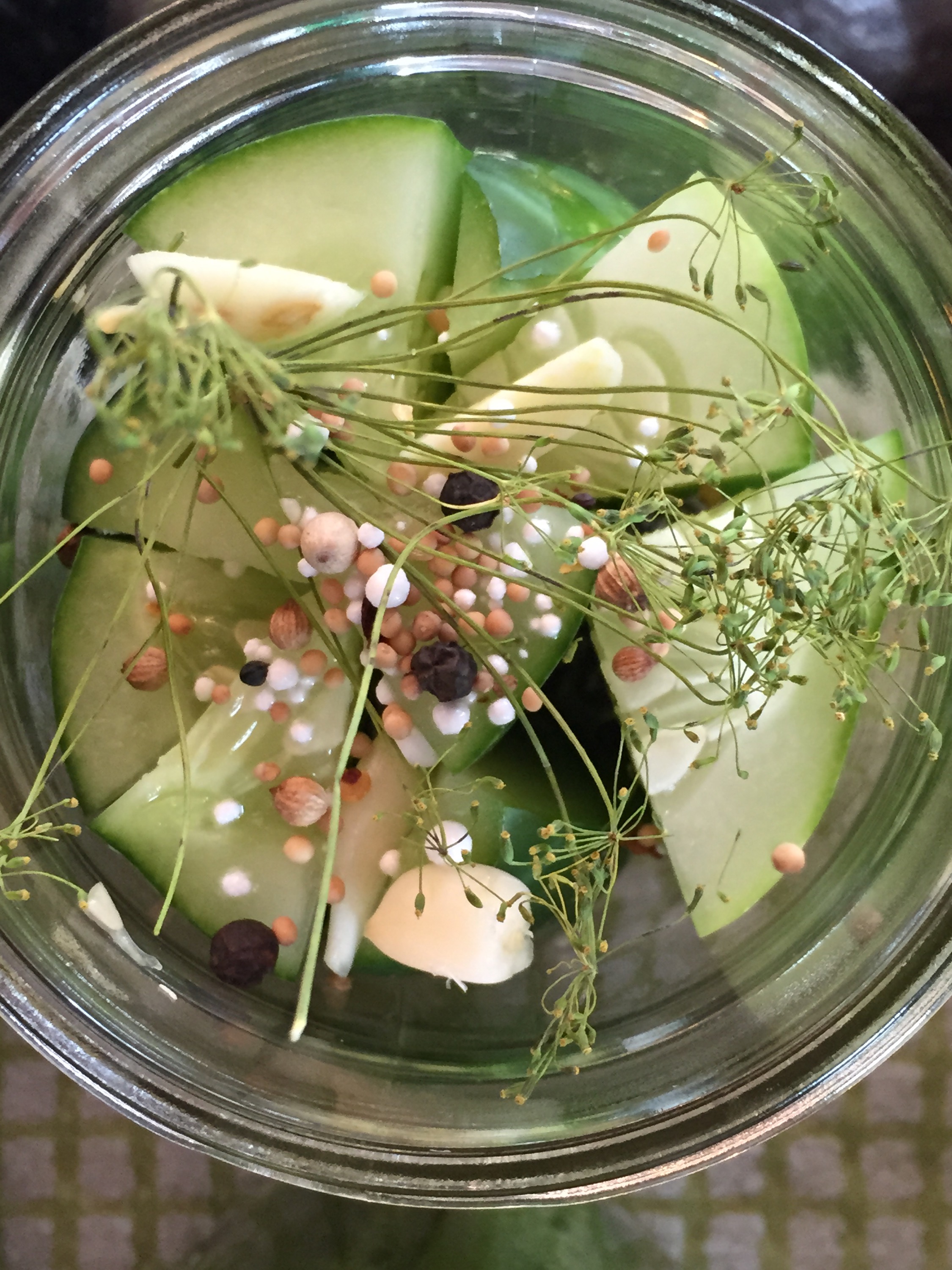
Now when I make pickles, in addition to garlic, dill, and brine (and cucumbers, of course), I just dump a half-teaspoon of my spice mix into the top of each jar. No more individual measuring and counting of seeds! 
 Here’s my recipe:

Mix together well in a container with a tightly-fitting lid the following ingredients:               

  •  1 T mustard seeds       
  •  1 T coriander seeds
  • 1 T Pickle Crisp granules
  • 1 1/2 tsp black peppercorns 
  • 1 tsp red pepper flakes

Add 1/2 teaspoon per pint of cucumber dill pickles. Stir jar of pickling spice before each use. For zucchini dill pickles, add an additional 1/8 teaspoon Pickle Crisp per pint, but expect them to still be softer than cucumber pickles. Follow a recipe for adding brine and processing jars. 

Big Max

A few weeks ago my husband Aaron came in from the garden and said, “I turned your squash for you.”

“You huh wha bleh?” I said. I had absolutely no idea what he had just said. 

“Your squash,” he repeated patiently. “You have a bunch of squash and pumpkin and melon things out there, and some of them are getting mildewy on the bottom. So I turned them.”

“Oh,” I said, still feeling a little bewildered. “Thank you.”

This would have made more sense to me if it had been a little longer since the recent episode that sent me to the ER and taught me the term hemiplegic migraine, but unfortunately one continuing effect of a major episode like that is that I sometimes have moments — less frequently as I gain distance from the attack — when ordinary things just don’t compute. Things like the word “squash” as related to the concepts of “garden” and “turning,” for example. 

In any case, later pondering revealed the wisdom and kindness of Aaron’s action, and I thanked him with more cognizant gratitude. It also occurred to me that the squash and melons ought to be raised off the damp soil so they didn’t continue to mildew.  

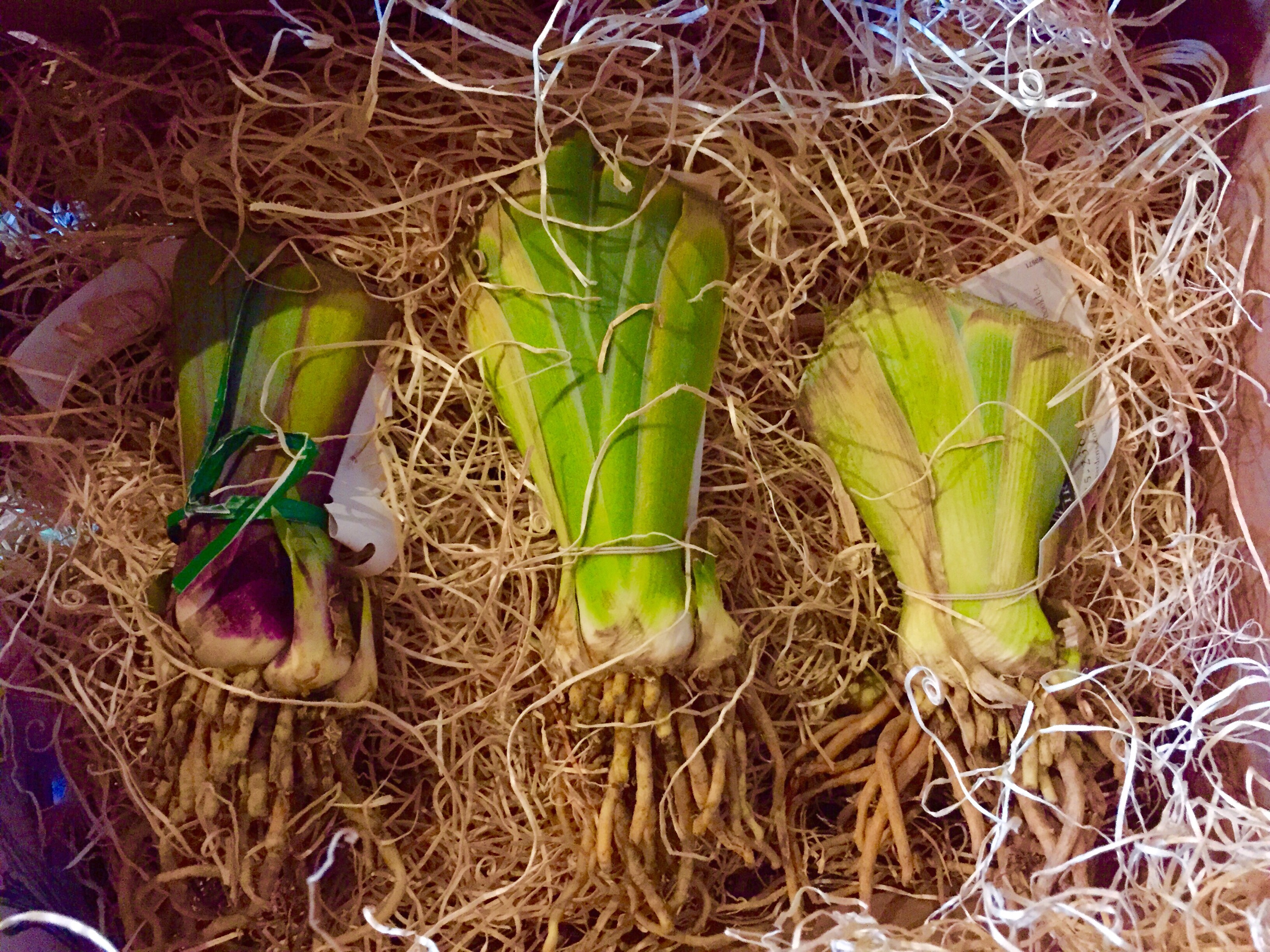
We had just received a shipment of iris rhizomes from a nearby iris farm, and they’d come packed in swirls of long slender wood shavings. The touch and scent of them had immediately carried my mind to my father’s wood shop, my fingers tangling in just such shavings as I breathed in the fresh sharp piney smell of the picture frames or chair legs or jewelry boxes being urged into beautiful forms by my dad’s skilled fingers on the lathe that he’d built himself. Those swirling shavings, I thought, might work to elevate our precious squash and melons above the damp soil. 

Newly arrived iris rhizomes
Newly arrived iris rhizomes in wood shavings

By the way, I’ve been researching — not the real, blood-sweat-and-tears research of libraries and journal articles and interviews, just intermittent online searches — and no one else is talking about having to regularly turn their squash, or pile fluffy wood shavings under them, to keep them from mildewing. I’m pretty sure this is user error. That is, I’ve noticed that the soil in that garden is exceptionally clayey, and I haven’t done much about it. When Aaron helped me plant the squash, I told him they needed fertile and well-drained hills, so he made tall compost-filled piles for them, and they thrived. But the vines, of course, spread well away from the hills, where the soil doesn’t drain as well. So we’re getting standing water with the sprinkler, condensation even when we don’t water, and, sadly, mildew and rot if we don’t provide a bit of extra tender loving care. 

User error, then, is why I’ve been piling shavings under all my lovely bright-orange Big Max pumpkins, my acorn squash, and my honeydew melons, and anchoring them (probably unnecessarily) with burlap for fear of strong winds blowing them away. Periodically I go out and check on the ones that were too small to worry about last time, and give them the wood-shavings treatment, and give my others a gentle turn while wiping condensation off. Now that the fall rains have started again — sort of — we’ve stopped watering that garden, but the squashes are still getting damp.  

Big Max. So shiny! So orange!


Pretty honeydew.

 
The melons, lovely green honedews, are a source of pride, anticipation, and anxiety for me. Like the squash, I’ve never grown them before,and for some reason I’m really absurdly excited about them. One day in mid-August I spied one I thought seemed extra-large, and I picked it and brought it inside with enormously high hopes. Those hopes were mercilessly dashed. The melon was terrible. Hard, tart, but otherwise flavorless. Pretty, though.  

Once again I turned to my speedy version of modern research. Ripe honeydews, I learned, have lost their skin’s soft fuzz and have shiny, waxy surfaces. They might sound a bit hollow if you tap them, and sometimes you can see veining on the skin. The blossom end should give a little when gently probed, and they should be fragrant.

That’s why, every few days, as I progress through the squash patch, turning, checking for mildew, supporting with shavings, I pause occasionally by a large honeydew. I glance surreptitiously around. I lift, probe gently, tap, sniff. 

It’s moments like those that I feel a small sense of shameful relief that the home of our kind, sheep-raising neighbors, who almost certainly can tell a ripe honeydew at a glance, is just barely too distant for them to glimpse me wandering through the garden and sniffing the melons. 

Don’t Get Lost

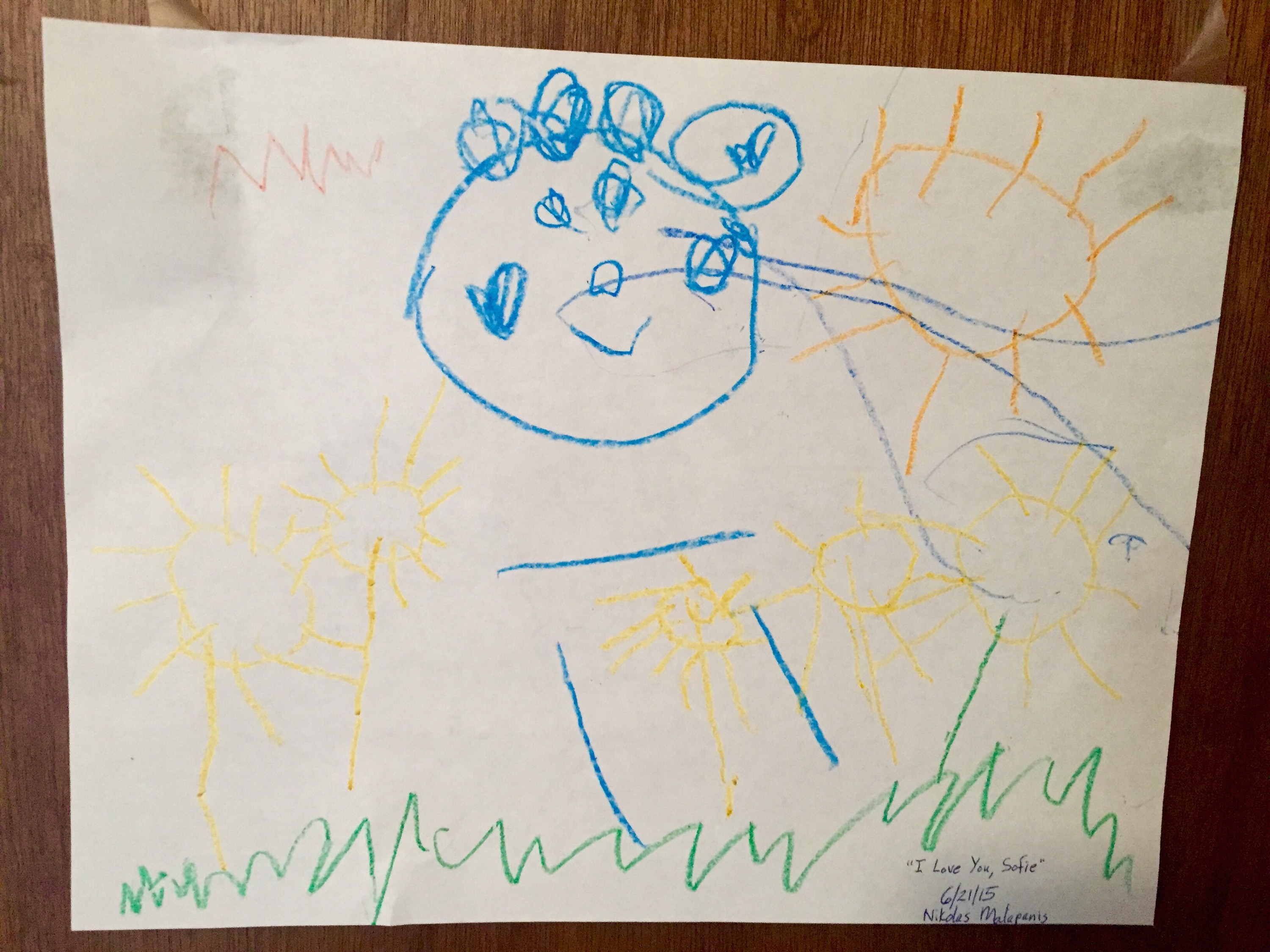
Last week, I had a doctor’s appointment, and I left the kids home with Aaron. I came home to find drawings taped up all over the house. “They’re signs!” my 4-year-old son informed me proudly. 

On closer examination, I realized that they were, indeed, signs, and each one bore a distinct resemblance to what one might find through that door. The front door’s sign was a green tree, which makes sense, as one might see a tree were one to open it. The door to the sun room bore an image of…a door. Which had a certain logic, after all, since there is another door beyond that one. Every single door had a sign. His room:     

Sofia’s room (he must have been in a hurry, as he actually drew it a few months ago, and it’s been hanging on his wall all this time):   

Every door, and a few windows too, were labeled. He explained confidingly to me that this was to keep us from getting lost when we were walking around inside our house. 

That’s my son, keeping our family safe and on track, one sign at a time. What would we ever do without him?

 God’s Finger

I’ve mentioned it a few times, the Big Hemiplegic Migraine that sent me to the ER in a dramatic sort of full body alert that I’d never before experienced, unable to speak or fully use my right side, barely able to remember how to form words on paper, too weak to walk alone, and very very scared. Those big and obvious symptoms have long faded, and now the extreme versions of other symptoms are starting to recede a bit too, but right now those lesser, non-scary symptoms are still somewhat ramped up and extreme, and a little distracting.

My ADHD brain has taken this distraction and run with it, constantly making analogies to explain and categorize the odd sensations I’ve been experiencing. I’ve cataloged them here for your reading pleasure. I hope you enjoy them more than I do.

Nearly all the time, there’s a gentle vibrating tickle at the back of my neck, trailing down my spine. If you were raised in a church with a leaning toward Pentecostal, Apostolic, Charismatic, or some other such Holy Spirit-led group, or belonged to another fervent religious group, this may be a familiar sensation to you. You’re caught up in the heights of ecstatic praise, and a brother or sister or elder begins shouting out a prophetic message in the exact words of the Scripture you read that morning: there it is, that gentle tickle on the back of your neck. A more mundane setting for this sensation might be a struggling single mom who brings a five-dollar coat for her child to the register at a secondhand store, and happens to slip her hand into the pocket, where she finds…a five-dollar bill. I guarantee she feels a tickle on the back of her neck, a shimmer along her spine. That, dear readers, is the finger of God.

I feel the finger of God a lot these days. It’s a little disconcerting. When I was a teenager, my Aunt Gaye and her sister, my sort-of Aunt Julie, used to run their fingers down our spines (or their knuckles, if they felt like being emphatic) when their daughters and nieces were demonstrating poor posture. I grew to half-expect this from my aunts; one never quite expects God’s finger to hover permanently over one’s spine.

Most days, this tickle intensifies and spreads upwards into my scalp. My hair lifts, and my skin prickles. I can describe this one easily, in terms everyone will understand: spooky stories during a sleepover! Or… that feeling when you know you’re sharing space with a ghost.

About fifteen years ago, when I was a student at a Christian college which was part of a network of communes spread across mostly North America (with a few elsewhere worldwide, too), I was visiting friends at the home of one of the commune’s hosting families (that is, they were commune residents who hosted college students during the school year). It was just us five girls, the high-school-aged daughter of the family and four college girls. We knew we were in the house alone; we’d recently been upstairs, where we were the only ones present, and were now down in the kitchen getting a snack. During a pause in conversation, we heard footsteps. Heavy footsteps, above our heads. Five heads swiveled toward the stairs, then back toward each other. Sherri shook her head; no, she confirmed, no one else was home. We listened in utter silence as the footsteps moved back and forth from room to room. And then. The footsteps came to the top of the stairs. We clearly heard footsteps descending. Vertebrae in five necks crackled as our heads whipped toward the staircase, which was in clear view from the kitchen counter.

No one was there.

Oh yes, our scalps were prickling.

I feel that way a lot these days. I’m pursued by ghosts.

Some days, the gentle tickle and the prickling scalp intensify still more and spreads into my face and hands and sometimes my toes. It becomes a tingle punctuated with numb spots. Usually it’s merely bothersome, though occasionally, rarely, it’s enough to make my hands clumsy or make eating difficult. It concentrates around my eye sockets, temples, nostrils, mouth. Sometimes my lips, tongue, and roof of my mouth become partly numb. Is this sounding a bit familiar? Yes, indeed. It’s like a visit to the dentist.

I’m a redhead, incidentally. In addition to feeling certain types of pain differently than other people, redheads are also, weirdly, resistant to certain types of pain medication, like the lidocaine dentists use. Often this isn’t too much of an issue, but I remember one horrific incident. Really unpleasant. My childhood dentist, the wild-eyebrowed, kind-eyed, bluntly-spoken Dr. LeCoq, to whom all the commune mothers took their children, was preparing me for an extra-deep filling one day in my late teens. I’d had plenty of fillings before, and had often felt a little pain with drilling (though the good Dr. LeCoq didn’t entirely believe me), but this time was different. This time, I never went entirely numb.

Dr. LeCoq gave me a shot, told me I would soon be able to feel pressure but not pain, demonstrated by tapping my thumbnail, and left the room. He returned the appropriate amount of time later, cheerfully tapping my gum with some metal instrument of torture. “Ow,” I said. “Huh,” he said, “that’s odd,” and gave me another shot. This continued as long as was ethically allowable — at some point I’d had as much lidocaine as I could possibly have, and he simply had to either drill or let me go home. I was almost numb, really, so I told him to drill. Oh, yes. There’s a reason anesthesia is widely used in modern times.

Well. Anyway. That’s not really the point. The point is, my face often feels like that. It feels like my dentist — who felt terrible about the whole thing, by the way — has given me the first ineffective shot of lidocaine, and I haven’t gone entirely numb: I can smile with both sides of my mouth, talk clearly, eat without drooling; but it feels…funny. On those days, I’m in a perpetual visit to the dentist. But no one’s giving me free toothbrushes.

Most days, that’s as bad as it gets. I mean, there are a few days when the facial sensations are amped up to electric fly swatter levels, when I’m nearly convinced that should a fly happen to land on my face, it would be zapped to death. It’s mildly painful. Mildly, as in, there are mild electrical shocks running across my face and sometimes through my hands without stopping. It could be worse. It’s nothing like sciatica, which feels more like the sensation of running full bore into an electric livestock fence, concentrated into one area of back and hip. So, really, it’s mild. Fly swatter… electric fence… meh, I’ll take the fly swatter, thanks.

So there you have it. If you’re a family member, and a friend is asking after me, and you REALLY feel you wish to give them all the details, just remember: finger of God, ghost stories, dentist’s office, electric fly swatter.

I’m fine, by the way — energy is returning bit by bit, to the point that daily life is about back to normal; migraines have receded completely, thanks to preventative medication; I’ve recovered nearly all the normal use of my right hand, only noticing issues if I’m trying to thread a needle or write in a small space; I haven’t had trouble walking in nearly a month. The painful electrical sensation in my face is rare, usually lasting just a short time. I’m thankful that, so far, this is affecting me less than it seems to affect other people who experience hemiplegic migraines. Those symptoms I listed above? Weird; strange; distracting; sometimes amusing. Almost never painful. They don’t interfere with daily activities. So yes, really: I’m okay. 

I’ll just be even more happy when the finger of God lifts for awhile, the ghost goes off to haunt someone else, the dentist gives up and sends me away, and the batteries in the fly swatter give out.
IMG_2098.JPG

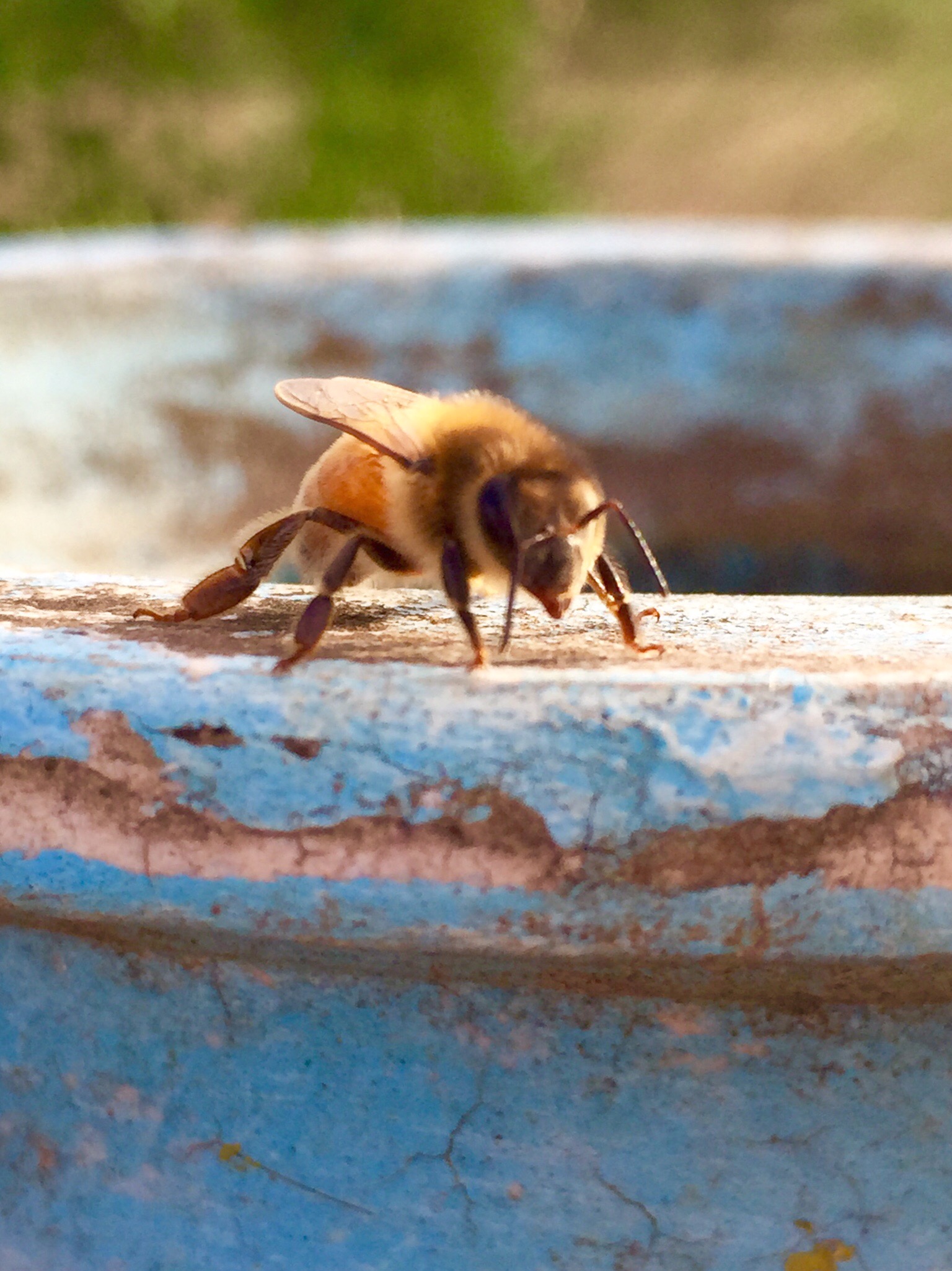
Lonely Bee

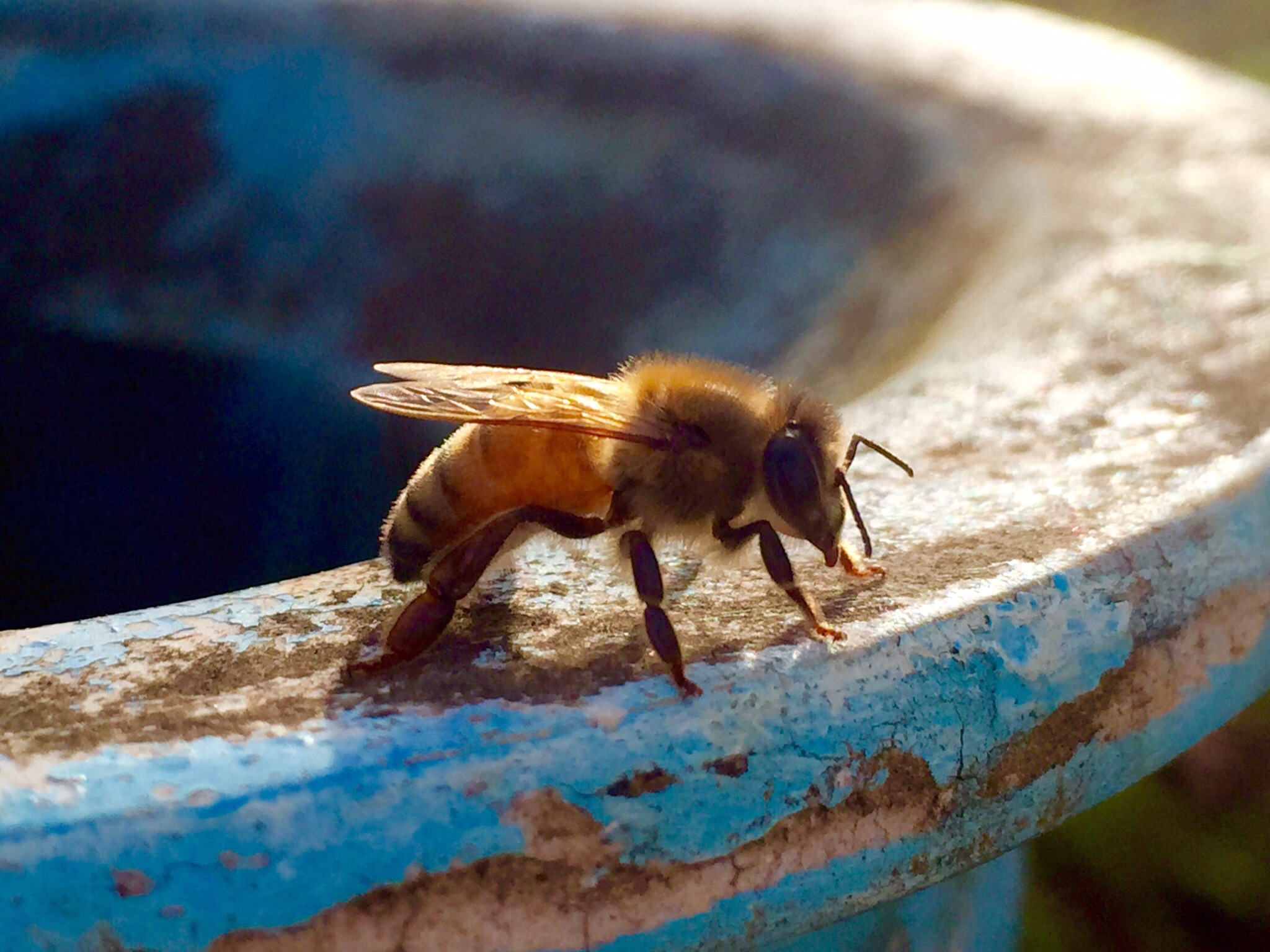
  I don’t know her story. She seemed a little lost, and slow, maybe chilled, despite the sun. She stretched her legs and walked slowly around the edge of the gazing ball’s empty plinth, her pollen baskets empty despite the unfortunately bolted broccoli flowers, the pepper blossoms, and surprising array of late summer and early autumn strawberry blossoms and berries, all within three feet of her perch.  
 I wondered if perhaps she was an aged parishioner of a neighboring hive, out for a last hurrah as her pollen- and nectar-gathering days drew to a close. Or perhaps she fancied herself royalty, small and alone though she was. She was in no hurry to leave, and obliged my photographical excesses with a polite coolness, occasionally shifting angle or direction to provide a more flattering angle, but never being so gauche as to actually direct her attention toward the giant imposter.  

 Whoever she was, I was delighted that she paused in her travels to alight in the middle of our garden at just the right time for me to spy her.    


Irises, Earthworms, Estivation!

A week or so ago, there was a tap on the door. I almost didn’t respond, thinking it was a hopping bird or swaying branch — who taps instead of ringing doorbells, when presented with so conveniently placed a doorbell as ours, and with no thoughtfully hung “Shhhh…Naptime!” sign next to it? But I did go to the door, and when I saw the big box on the porch and the back of the mail carrier vanishing into his truck with a cheerful wave, I was flooded both with pleased anticipation at the prospect of opening a package, and with bewildered gratefulness at the stranger’s oddly kind consideration. How did he KNOW my kids were napping and I would have curled up in a fetal ball of anguished despair, uttering ululating wails of mourning for the prematurely ended quiet time, had the doorbell rung?
The box was full of iris rhizomes. I’ve never planted irises before, so I was fascinated to see them. The individual iris roots were cushioned by swirls of long, fine wood shavings, reminiscent of those that would pile up under my dad’s lathe when he turned chair legs or picture frames or jewelry boxes. The irises are surprisingly pretty, with fan-shaped crowns rising above the lumpy rhizomes and twisty roots. They look like this:

Newly arrived iris rhizomes from Schreiner’s Iris Gardens    

A couple of days later we said goodbye to my mom, who’d just spent a delightfully out-of-character spontaneous weeklong visit with us, and I was left feeling at loose ends. After we waved her off, I commented to Aaron how nice it was for the morning to still be fairly cool. That’s when I realized it would be a good time to distract myself and the somewhat dejected Niko from missing Meemaw, and dig up the irises’ new home.

The garden bed against our shed, which is a potting and storage shed in one end and a woodworking shop in the larger remaining space, is filled with perennials that could be charming in the right setting but really just… aren’t. They all flower together, in the mid-to-late spring, and then simultaneously turn to scraggle and seed. The various plants all seem to flower along tall stems, with flowers dying near the base as new ones bud and open closer to the top, so they can’t be tidied up by deadheading. They’re always half full of dead flowers, browning leaves, collapsing stems, and seed fluff. This is our second summer here, and I’m finally realizing it’s OUR garden and I don’t have to maintain plants I don’t like. So, when we visited Schreiner’s Iris Gardens this spring, we decided that this haggard, overgrown garden would be the perfect place to fill with vividly colored irises and spring and summer bulbs. No more scraggle and slump.  Gleefully destroying a flower bed.

We’d dug up about a third of the bed, and were starting to think about lunch, when a clump of hard, dry dirt broke open and I saw the oddest thing: a ball of two or three earthworms entwined inside the nearly rock-hard lump. Their little wormy ball was slightly moist, as earthworms are, despite the extreme aridity of the ground that hadn’t seen rain in months. I was fascinated. Turns out, earthworms do something that’s like hibernation, only not, because scientists enjoy using precise words to describe precise activities, and this is something that occurs with certain creatures, including some insects and lizards, during extremely dry seasons rather than cold seasons. Various species approach it differently, but the general idea is the same: they protect themselves by retreating into the ground and going dormant, until moisture wakens them and signals them that their environment is once again friendly. It’s called estivation.

Estivation. Estivate. I love that. Estivation. I rolled that word around in my head for the rest of the day. Estivate. Don’t ask my why I love it so much, I just do. Estivation. And now, not only will we have a much prettier garden bed (thanks to Aaron’s finishing digging it up for me before the first rain since March arrived), but I have learned a new fascinating thing about earthworms, AND I have learned a delightful new word to murmur to myself whenever I need a quiet little bit of tranquillity.

Estivate.