Ladybug Morning

Saturday morning, I put Sofia’s playpen on the porch and started in to some long-put-off cutting back of dead peonies and ferns while Niko and Cody the puppy chased each other over the lawn. It was such a good feeling to enjoy the fresh air without a heavier-by-the-day one-year-old bouncing up and down on my back. (She refuses to bounce in her bouncy seat, but on my back? Upanddownandupanddown, over and over. Owwwww.)

As I cut the last of the brown fern leaves, I saw a flash of bright red. I leaned in for a closer look. A ladybug!

Cold ladybug
Cold ladybug

I’d always assumed ladybugs just died in the winter, or something, but here was this little guy, perched on a leaf. When I lifted the leaf for a closer look, he rolled across the leaf, tiny legs folded in against his body, too cold to move. I breathed on him, and in a few seconds his legs came out and he started crawling. I gently set his leaf on the trunk of the maple tree in the sunlight. Maybe the sun will warm him enough for him to find a safer spot before my red-breasted sapsucker returns for a snack.

Since I’m a compulsive questioner, I was then forced to do some quick online searches, where I found both facts and photos much better than mine. The National Geographic page was my favorite. It has a whole gallery of ladybug photos, some of which are really beautiful. It also informed me that a ladybug can live 2-3 years.

Feathers and Sprouts

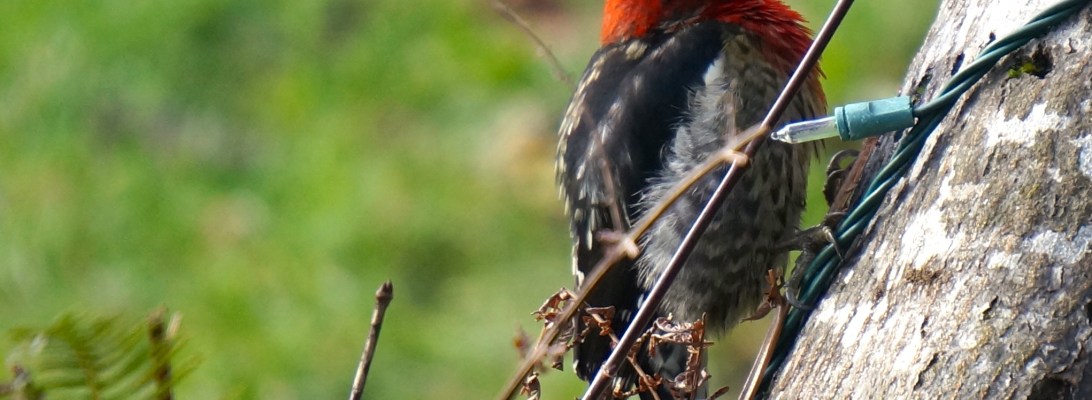
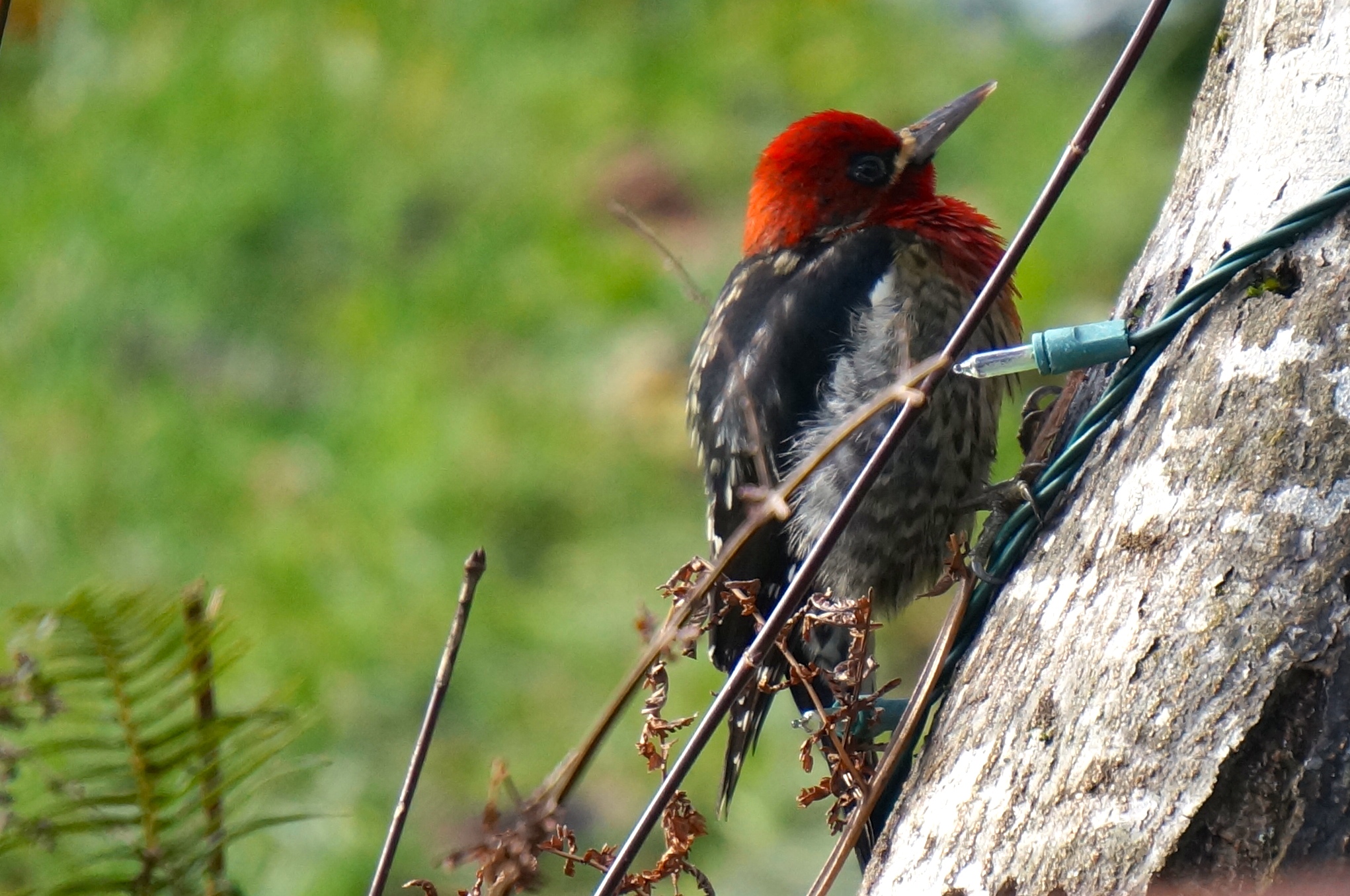
A couple of days ago, I saw a new bird through my kitchen window. He wasn’t at the feeder; instead, he was perched on the broad trunk of the maple tree that grows by our front porch and shades the koi pond. After doing some searching, I concluded that he MIGHT be a red-breasted sapsucker.

Red-breasted sapsucker... probably
Red-breasted sapsucker… probably

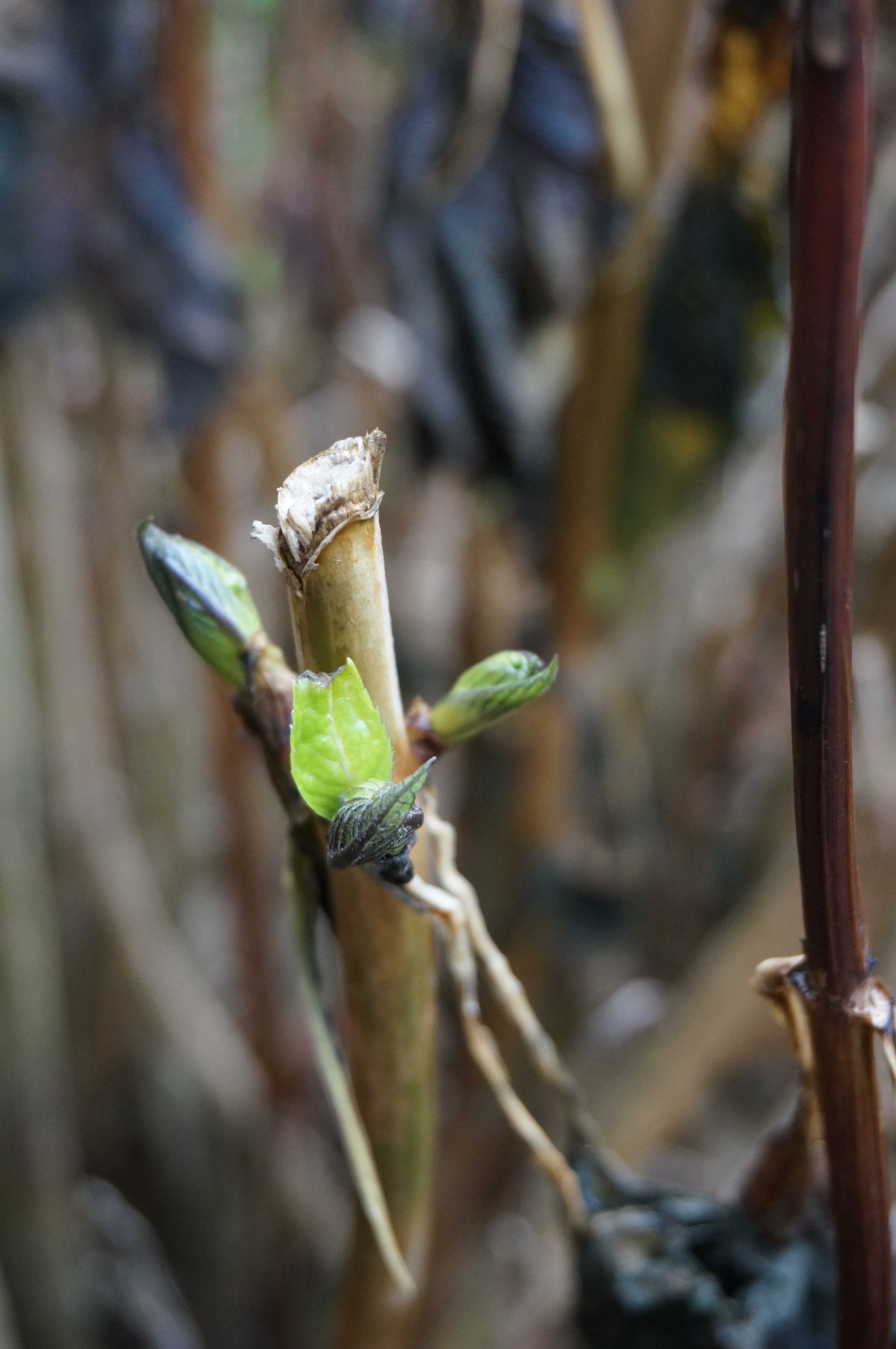
Anyway, I carefully crept out onto the porch to get a picture — after snapping a few through the kitchen window, just to be safe — and I got one good one before he flew away. As I turned back to the house, I saw something startling on the hydrangea next to the front door: green buds and emerging leaves! Last year, this plant didn’t put out a single leaf until, if I remember correctly, late May or even June. Perhaps coincidentally, it had also been cut back almost to ground level the previous year. And it had barely flowered. We decided that this year we just wouldn’t cut it at all, since some hydrangeas bloom from second-year canes. So that could be the reason it’s leafing out so early — maybe hydrangeas always do this, and last year the cutting back damaged it? The previous owners also mentioned that last winter had some especially hard freezes that could have slowed growth, too.

Leaf buds on a hydrangea... in December!
Leaf buds on a hydrangea… in December!

Of course I squelched barefoot off the porch to get a picture of the miraculous leaf buds, and as I did, I noticed suspiciously anenome-shaped leaves swaying in the breeze next to the marker labeled “Anenome” that I’d pushed into the soil where I’d planted bulbs. Glancing along the front garden, I saw more green. The kids were inside without me, eating lunch, so I couldn’t prowl around with the camera as much as I wanted to. That had to wait till Friday morning, when Niko was in school and Sofia was napping. I wandered around and found more and more new growth. One that particularly surprised me was the raised bed of chrysanthemums. Last year, the bed was empty until early summer, when the dead-looking roots I’d been refraining from disturbing finally started sending up shoots. I was glad I’d left them, of course. I figured I’d just have to deal with a long bed filled with nothing until midsummer every year. But this year we have green in December. Who knows, maybe they’ll flower in April this year!

And all of this is happening before Christmas. It’s not even midwinter yet. I’m not sure what to think. Do I need to be worried about frost damage? Is this normal? I want to be excited, but as this is my first year gardening in Oregon, I’m reserving judgement.

Budding Camellia

Not long ago, I wrote a post about how delightfully odd I am finding it to be not just tending the garden, but actually finding new growth — in the middle of fall and, now, winter. I’m not totally sure when people around here consider the start of winter; there are still golden and orange leaves on some trees, but we get a skim of ice on our ponds now, and we’re expecting snow this week. In Anchorage, my most recent home, and Northwestern Ontario and British Columbia, my childhood homes, we’d be well into winter now.

In any case, whatever the official season, we keep finding more examples. Yesterday Aaron came in from doing some yard work and announced that the big maple in the back has leaf buds. A few weeks ago, I discovered that my brand-new, freshly-planted grape hyacinths had popped up already. I see fresh young leaves on the unidentified shrub in front of our house.

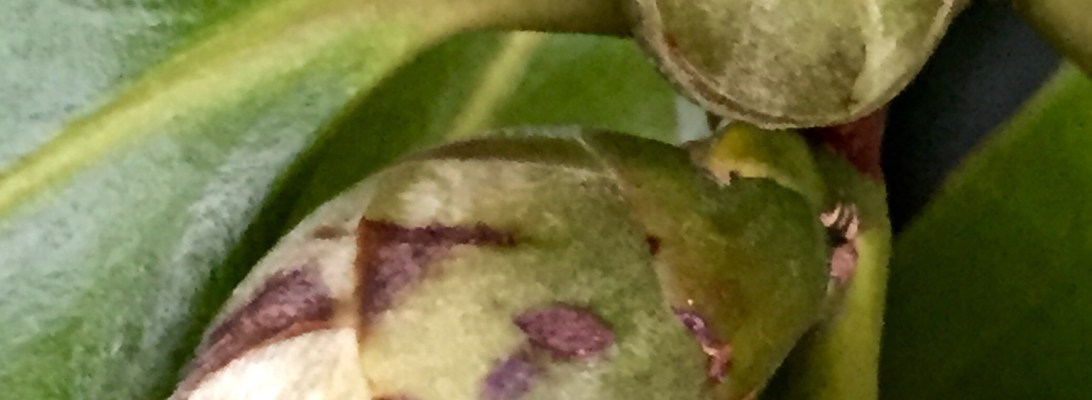
Today I was taking the puppy out for a potty break and paused by the camellia behind our garage while I waited for him. And what did I see? Flower buds! They’re small and tightly furled, with no color showing, but they’re unmistakably flower buds. Amazing.

I don’t know what kind of camellia it is or when to expect blooms. I did a quick search of the Internet to make sure my plant hadn’t lost its mind and discovered that, indeed, some varieties bloom in winter, and some in spring. I suspect ours will flower in the spring. When we moved here at the end of April, the ground underneath it was littered with rotten-looking, unopened, coral-tipped buds. I’m hopeful that was a one-time problem and this spring’s flowers will succeed.

For those who share my questions, here are two sites that provided some information and advice: Carolyn’s Shade Gardens, and Growing a Greener World.


Goldfish Carnage

Late yesterday afternoon, after naps and just before dark, I decided it was high time I cleaned out the little pond behind our house. During our first big storm, it had filled with fallen leaves — at first they’d been piled up on top, but then they slowly sank until they filled the whole thing. For about a week and a half I couldn’t do anything about it because the leaves were all frozen in place, but now that everything had thawed, I had no excuses. I thought it was a job Niko could easily help me with. We would build good work habits, I thought. It would be stress-free because he really couldn’t mess it up, and if he wandered off briefly to play it wouldn’t be a big deal. And he would have so much fun. Water, fall leaves, a rake just his size — what could be more fun?

IMG_1304-0
Fun, right?

I didn’t count on having to incorporate a conversation on death, decomposition, and the inability of dead goldfish to lie on their bellies.

I don’t know what exactly caused the fish to die. They were probably pretty badly traumatized by being among the last to be rescued from the muck when we cleaned out our big pond, which turned out to contain a HUGE school of goldfish, mostly in shades of black and brown. I’m sure having their entire pool filled with dead leaves didn’t help. Nor did the frozen surface do anything to relieve their difficulties. Combine those problems with the fact that this pond isn’t filtered or oxygenated with a little waterfall or fountain (because the sweet little waterfall the previous owners constructed is so leaky that the pool loses half its water within an  hour), and you’ve got a recipe for disaster. Who knows at what point these poor creatures breathed their last?

I started scooping the leaves into the wheelbarrow with a large plastic rake while Niko fished for leaves with his. I thought the rake would be a better tool than the big net because it wouldn’t capture the fish. I needn’t have worried. I was about three scoops in when I noticed the Smell. Yes, it was bad enough to warrant the capital letter.

I checked the bottoms of my magenta mud boots: no dog poop. I eyed Niko suspiciously, but I knew it wasn’t him. He hasn’t had a poop accident in forever — even when we were potty training it was rare. On my back, Sofia bounced and babbled happily. Couldn’t be her: she does not appreciate a messy diaper.

Two more scoops, and the first fish bobbed to the surface, blanched and stiff, eyes bulging. I quickly fished it out with the rake, but I wasn’t fast enough. “Is that fish DEAD?” exclaimed my son. I confirmed that yes, it was dead, as I carried it to an out-of-the-way spot between a large tree and the fence. As we discussed NEVER touching dead things, the next one popped up. This one was deposited with the first.

After I’d carried two more on their long-handled bier to the tree, I gave up. As seven more fish rose to the surface, their rest disturbed by my scoops, I set them aside on a flat rock. They lay there, stiff, on their sides, a grotesque tableau of the Feeding of the Multitudes with just a few little fish (no loaves here).

Niko eyed them. “Are they dead too?” Yes. “Are they making that yucky smell?” Yes. “Can you make them go back on their tummies? I don’t like them like that. ” No, sorry. “Can I catch one with my rake too?” NonononoNO, absolutely NOT. No touching dead things! Even with a rake! “But you are, Mommy.”

All told, I scooped eleven dead fish out of there. I’m now terrified to clean out the smaller pond next to the garage, now. Three of those fish are nearly as large as my hand and beautifully golden-orange, plus numerous black-and-orange and plain black or brown ones. That pond was similarly filled with leaves and frozen, but it has the advantage of having a filter and a koi-shaped fountain for oxygenation. And the refugees from the big pond who ended up here were earlier rescues. They may have survived. But I’m not very hopeful.

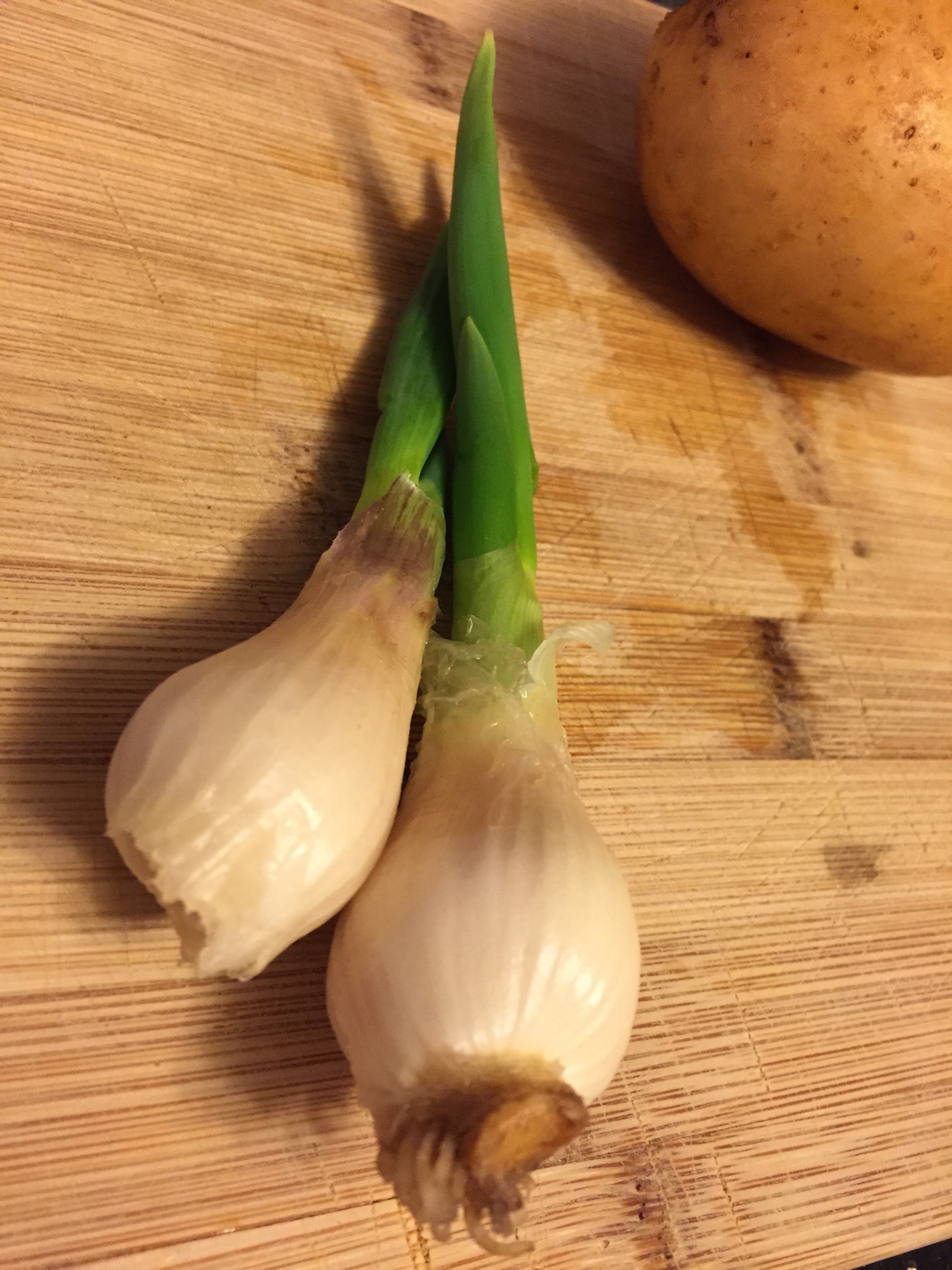
On the bright side, the onions? scallions? that I harvested last week and then forgot to lay out to dry did not rot, and I chopped up two for our chicken and dumplings that I made to cheer me up after having to dispose of eleven smelly fish. So…that’s nice, right?

Delicious oniony things.

Sayonara, Hummingbird

When we came to view our home before purchasing it, the owners had a pretty glass hummingbird feeder hanging in the tree that grows next to the pond and stretches its branches over the porch. They generously left a lot of gardening tools, even fish and bird food, but they took the hummingbird feeder with them.

There was a gap of about twelve hours between the feeder being removed and our arrival. When we walked up onto our porch that first morning to start unloading, we were greeted by a furious hummingbird. It dive bombed my head and then swooped, chirping angrily, around the empty spot. I quickly drove to the convenience store about ten minutes away, found a similar glass feeder, and hung it in exactly the same place.

The hummingbird was not placated, nor were its friends and family satisfied. Despite having fed from that identical locatio not five feet from my face on each of our visits before we took possession, they all refused to use the new feeder while I watched. All summer, I did not see them feed from it even once. They ate from the petunias hanging on the porch, from the wisteria, from the gladioli, from the bright red Crocosmia across the pond, but they never allowed me to witness them at the feeder. Gradually, as the summer passed, I noticed the nectar level dropping; slowly at first, then more quickly. I would see the tiny birds buzz past the feeder. They’d fly toward it, then swerve away. Sometimes I’d see them perching above it, even on it, never feeding — making a point of not feeding. I am positive that they watched for the car to drive away before flocking to the green glass feeder to greedily consume the red nectar.

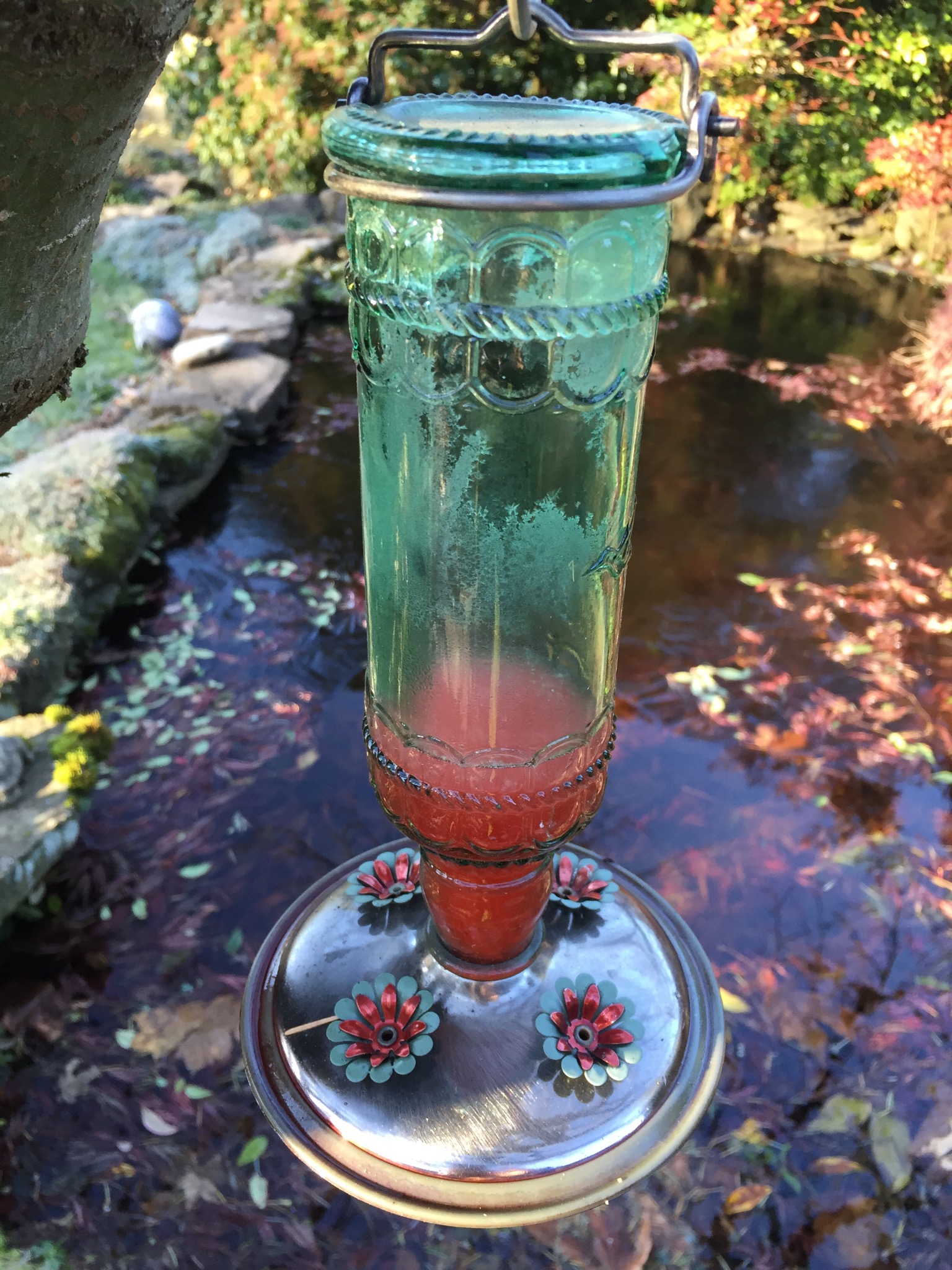
Until today. For the past week, we’ve had a skim of ice on the ponds this morning. Today, for the first time, it was cold enough to freeze the nectar. There was an intricate frost pattern on the glass, and the red nectar was hard and slightly opaque. No more pretending to avoid the feeder; now it’s unavailable, inaccessible, frozen.

Sayonara, hummingbirds. See you next year.

IMG_1250-1.JPG

Ice, Wind, Leaves

Early last week we had a small ice and wind storm. It was worse in other areas — friends who live about half an hour away got actual snow, and their schools were closed. We got a pebbly ice coating on our porch and back door, a layer of ice on our ponds and plants, and leaves and small branches in drifts in odd places.

The leaves blew into big piles against walls and in corners, leaving the lawn mostly leafless. They piled up on the surface of the ponds. Our puppy, Cody, tried to walk through what appeared to be a pile of dry leaves and instead fell through them into the goldfish pond — a moment which, regrettably, I failed to capture.

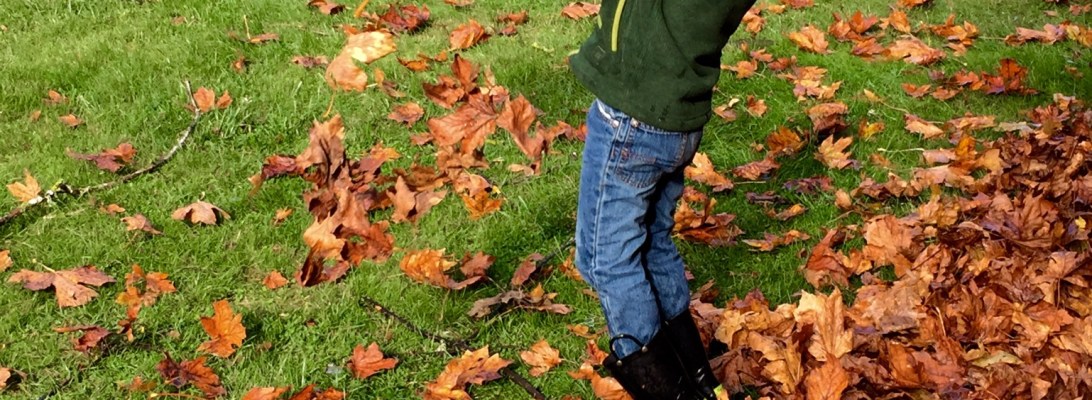
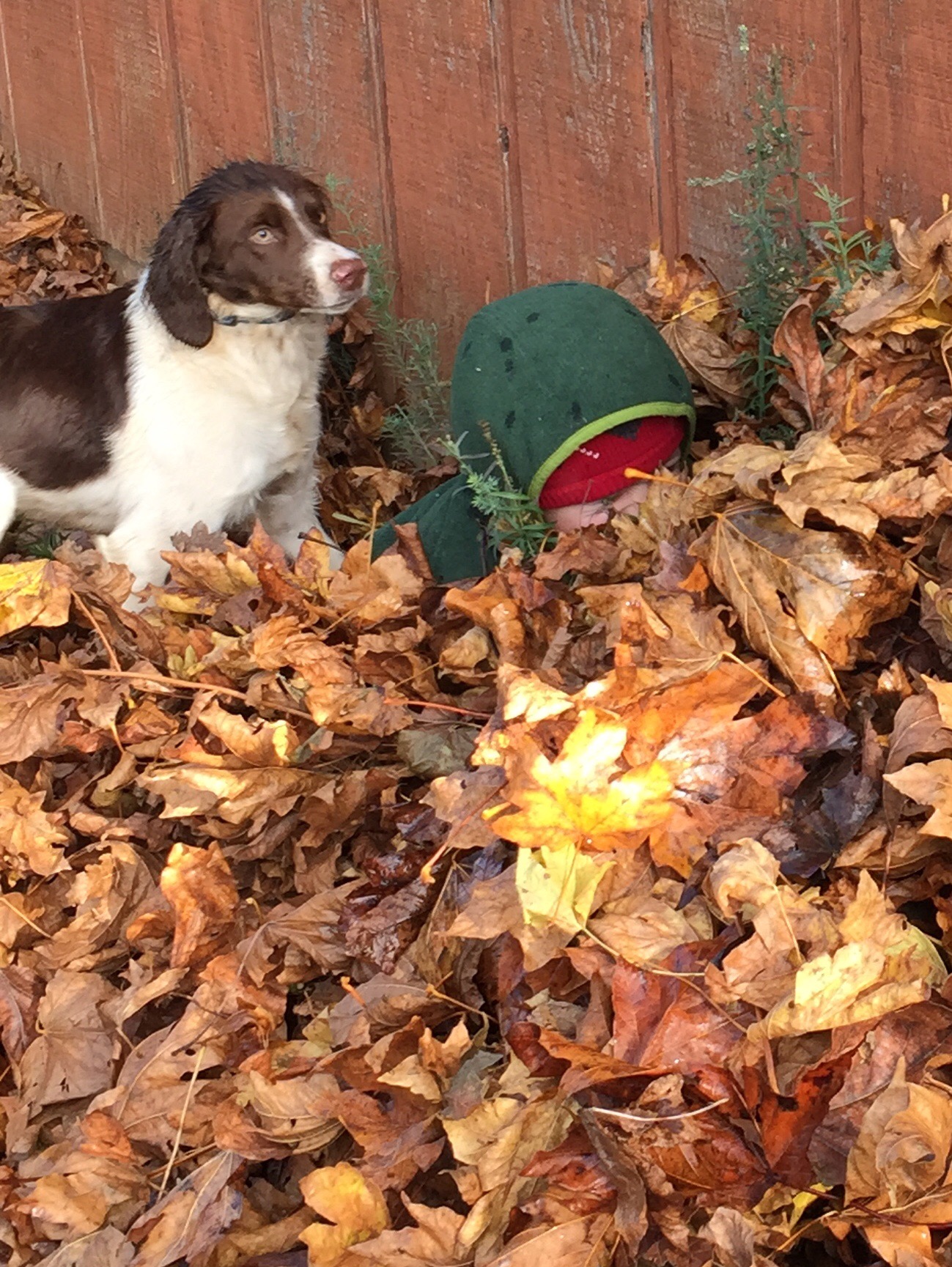
Niko was thrilled by the leaves. Entranced. Giddy. We and the puppy walked over to the shed on Wednesday to finish storing water lily roots for the winter, and he stopped and stared when he saw the three-foot drift of leaves against the wall. “Mommy. Look! At the LEAVES!” And then, amazement turning to joy, he was in the pile, Cody leaping after him. He disappeared completely — all that was visible was his nose and the top of his head.IMG_1196

He spent a quarter hour leaping, running, tunneling through the leaves. Tossing them into the air and dancing under them. Flinging them at the dog and shouting with laughter when Cody, bewildered by the featherweight barrage, tried to dodge. So much joy.

Yesterday we did some outside work. I took care of uprooting dead green bean vines and cutting back the blackened dahlia stems and asparagus fronds. (Asparagus makes pretty red berries. I had no idea.) And Aaron got out our new leaf blower/vacuum/mulcher and cleaned up the giant piles of leaves.

Niko had been tagging around with Aaron, happy to be helping Dad, but while Aaron was getting the leaf vacuum ready, he was inside getting a drink. So he had no warning that his beloved leaves were about to disappear. We came around the corner of the house together to see this:IMG_1238

And poor Niko froze in horror, his mouth open, a look of panic on his face. Then his disbelief turned to grief and rage, and he started howling: “No, Daddy, NO! Please don’t! I WANTED TO PLAY IN THOSE!”

But between the noise of the engine and the headphones, Aaron couldn’t hear (and, having only a short time to work, would probably have finished the job anyway), and every leaf got sucked up and mulched. I guess Niko will just have to wait for the next wind storm.

Water Lily Rescue!

What we’re doing today: rescuing root bound water lilies. Some of them were just buried in the muck at the bottom of our pond, which Aaron dredged out a couple of weeks ago — which is quite a story on its own. Those ones weren’t root bound, but they need to be trimmed, potted, and redistributed. I’m going to have far more than I can manage. Anyone want some water lilies?

IMG_1042.JPG

IMG_1044.JPG

IMG_1043.JPG

IMG_1038.JPG

IMG_1046-0.JPG

IMG_1045.JPG

Burn Pile?

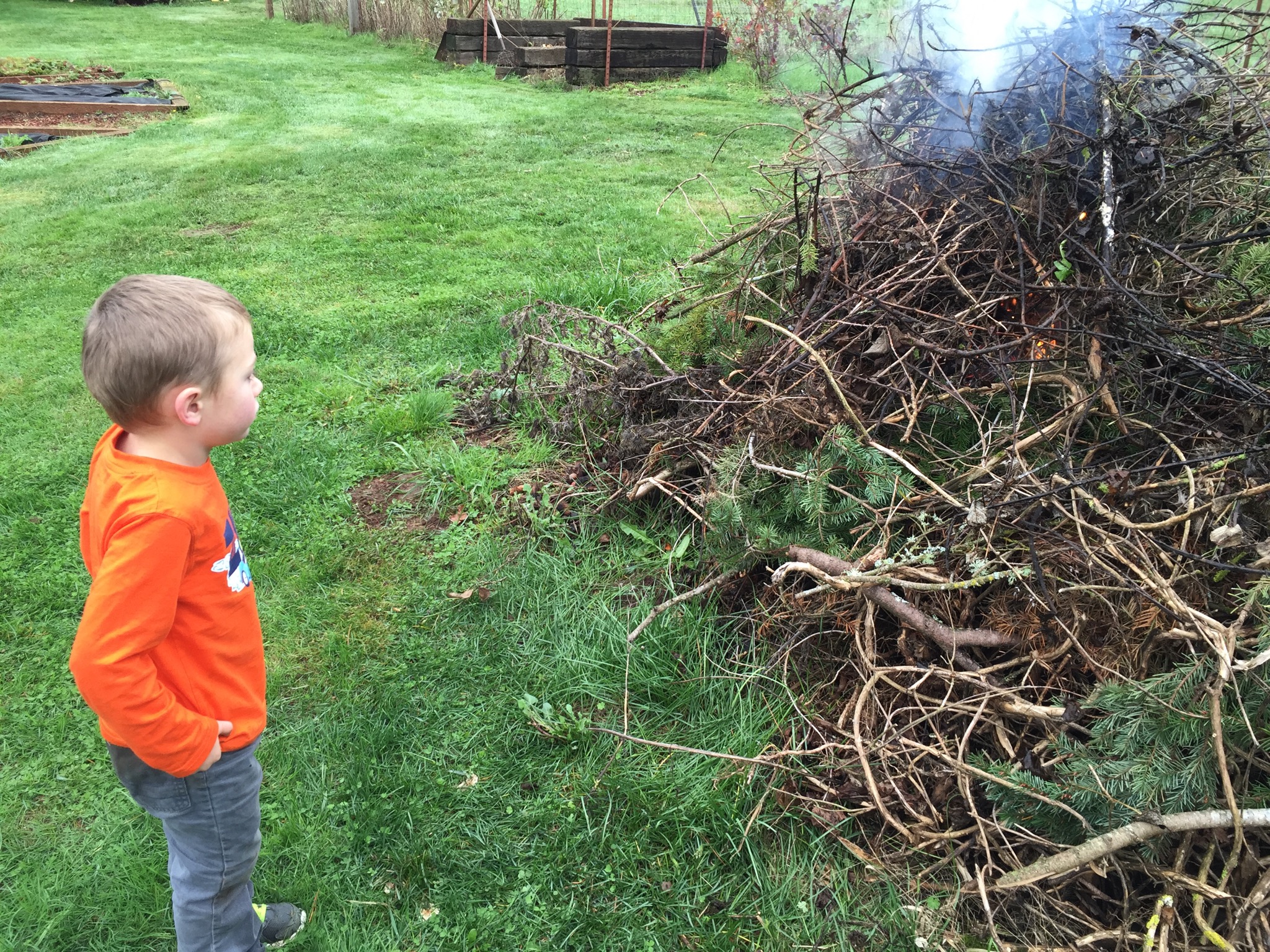
When we moved to this home in the spring, there was a tiny burn pile. More of an ash circle, really. Over the summer it’s grown as we’ve trimmed and cleaned up bushes and shrubs and vines. Niko has been fascinated with the idea of a burn pile. A pile made just for burning! He’s asked me nearly every week, “Will we light the burn pile soon?” Of course, the start of burn season coincided with the start of autumn rain, and we haven’t had a good weekend for it. Today was the first time it’s been not raining while Aaron has been free to manage the burning. Niko was fascinated with the flames! However, it turns out that a day so humid that you accumulate water droplets on your clothes and hair is not conducive to burning. It flamed long enough for Niko to get excited, then damped down again.

IMG_0996.JPG

Spring in October

I’m a northern girl by heritage but not, it turns out, by disposition. I was raised in the frigid winter climate of Northwestern Ontario and the deep snow of northern British Columbia, then migrated to the somewhat milder Anchorage, Alaska. Every year since I was old enough to take notice, I’ve hated the long, dark winters of the north more and more. After the excitement of the winter’s first flakes and drifts, snow is just one more way for my feet to get wet and cold. Watching the sun set at 3:30 in the afternoon as I wave goodbye to my students. shivering, is not my idea of enjoying the majesty of Alaska’s nature. Searching for a dry, snow-free spot to sit at the end-of-school picnic in May brings me no joy. No, beautiful as Alaska is, it’s not the place for me.

IMG_0901-2

About seven years ago, my husband and I formulated a “five-year plan.” We would keep our new Anchorage condo until we had built up enough equity to make money selling it. That would be our ticket out of Alaska. We would move to a place where you didn’t have to use a flashlight to navigate to your car at four o’clock on a winter afternoon, where the highway wasn’t littered with traffic accidents every time fall turns to winter. Every. Single. Time. Lifelong Alaskans forget how to drive in snow, each and every winter. We dreamed of finding a place where people grew crops like melons and tomatoes right outside in their yards, no greenhouses and heaters needed. A place where summer was summer, and fall was a riot of color. A place where there was no snow to shovel. In other words: paradise.

A year and a half ago, we packed up our belongings and son, and, with the help of my best friend who helped me stay sane on the long drive to Juneau, Alaska so that we could take the ferry to the state of Washington, we left the place that had been home for Aaron for thirty-one years (only fourteen for me).

Now we’ve been in our “forever home,” a low brown house on two acres, built in 1979, for one summer, after renting for a year while house hunting. And it is paradise. Here it is, the end of October, and the slight chill of the last few rainy days feels like a rainy day at the height of Alaskan summer. Friends and family in my former homes of Ontario and Alaska are already shoveling driveways and bundling up for the walk from front door to car. Today I was out shopping in a cardigan over a thin summer shirt, and was perfectly comfortable.

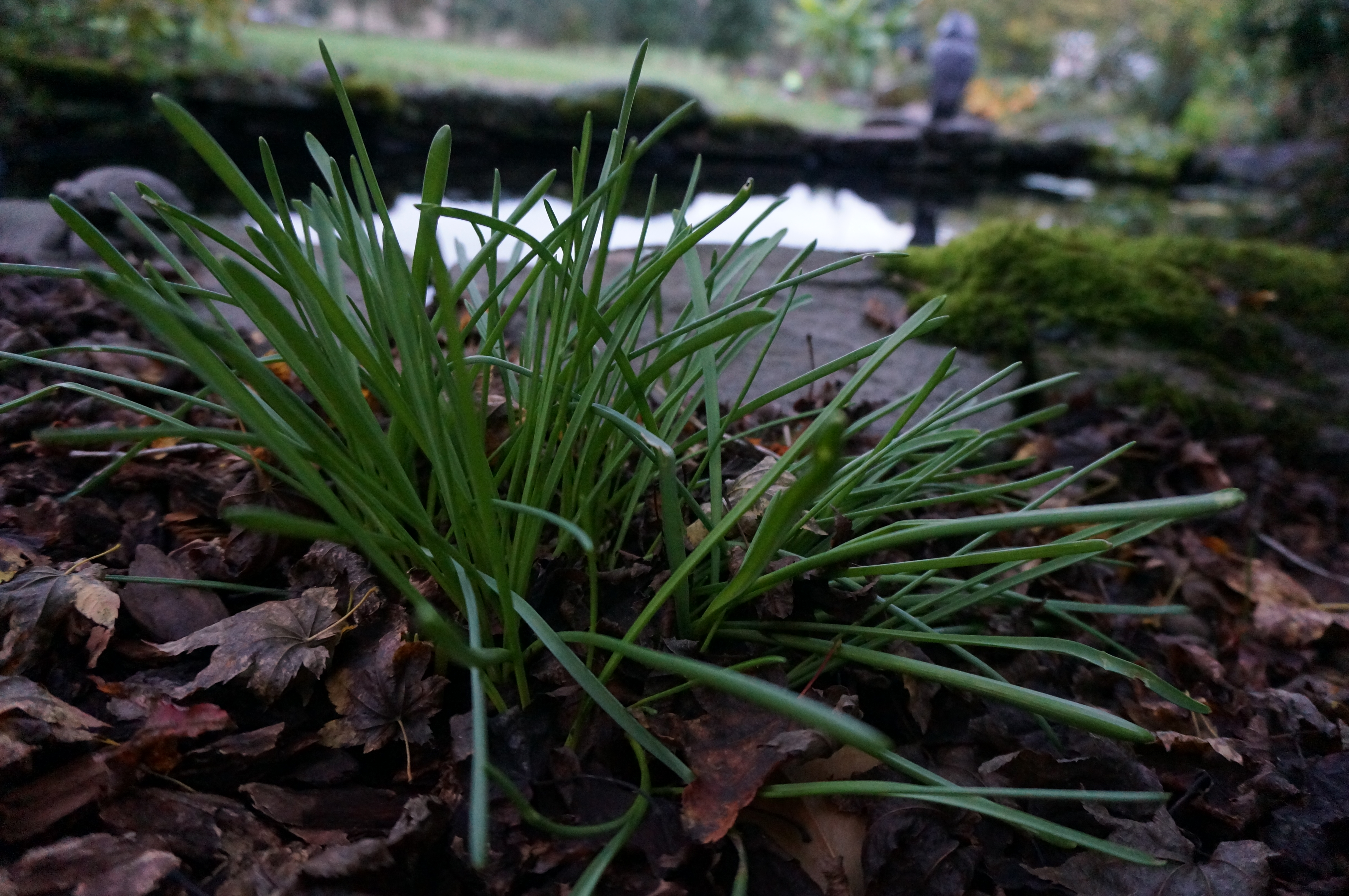
But the comfort of a moderate climate is small compared to the sense of amazement I find as I garden here. A couple of weeks ago I saw shoots coming up near our pond, where last spring grape hyacinths had bloomed. I went to the omniscient Google and discovered that these amazing little bulbs sprout in the fall. Plants that come up in October? I had no idea plants did that!

DSC03917

That same weekend, I did some fall planting of bulbs that will provide brightIMG_0560 springtime color next year. Planting in the fall! Now, I know people in Anchorage must IMG_0605have done this too, because I have seen with my own eyes crocuses pushing up through snow in late April and early May. But I have never myself done fall gardening. It’s a mind-boggling and delightful concept for someone to whom October means the first snowfall of the year.

Things just grow on their own here, with no help from human hands. In the soil half  of my compost bin (that is, the half that is done decomposing and is now rich garden dirt, as opposed to the half that is freshly discarded leaves and kitchen scraps), I just discovered five young tomato plants and a large patch of parsley, joining a melon plant that has an almost-ripe melon that we’ll pick soon. In fact, this isn’t good, not from a gardening perspective. It’s a sign that the compost pile isn’t decomposing properly, killing seeds with internal heat as it ought to. But I can’t bring myself to uproot these miracle plants. Young parsley and tomatoes sprouting in October, as if no one told them they’re supposed to be curling up and dying under a layer of snow, rigid inside a foot of frozen earth. Incredible.

DSC03926

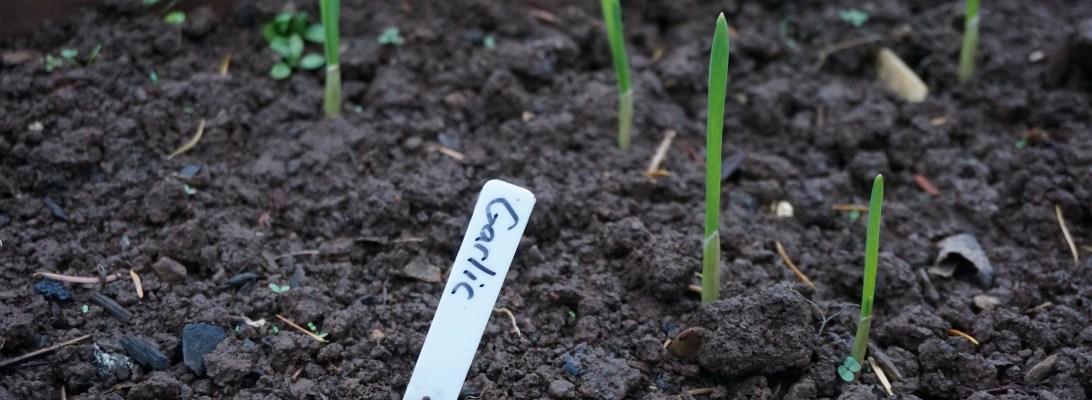
But, oddly, the plant that has solidified this sense of magical fall growth has been garlic. Researching this summer, I discovered that garlic is best planted either in fall, for a late-winter/early spring crop, or in late winter for an early summer crop. So said, again, the all-knowing Google. But I didn’t truly believe it. What northern gardener would put plants into the ground in October and expect to harvest in winter? I planted anyway, obedient to the wisdom of search engines, shaking my head at the crazy idea of a January harvest.

IMG_0567

And then. And then. Last weekend I strolled past the garden bed where I’d planted the garlic. And – NO WAY! Seven fresh green sprouts against the dark brown earth. Sprouts in October, promising a winter crop, a frail green proof of paradise.

DSC03923

Oregon. My own paradise, found.